Friday, September 11, 2026
Naturenews.africa
Advertisement
  • Home
  • Environment
    • Ecology
    • Climate
    • Desertification 
    • Flooding
    • Erosion
    • Oil spillage
    • Ozone layer
  • Sustainability
    • Energy
    • Green House
    • Wildlife
    • Maritime
    • Tourism
  • Agriculture
  • Advisory Board
    • Emir Muhammad Hamim Nuhu Sanusi CFR
    • Prof. Abdoulaye Bathily
    • Mr. Nnimmo Bassey
    • Prof. Mark Mwandosya
    • Ms. Hawe Hamman Bouba
    • Professor Salah Arafa
    • Mr. Desmond Majekodunmi
    • Ms. Ikal Angelei
    • Professor Jimmy Adegoke
  • UN Days
  • Fact Check
  • Donate
  • Africa
    • Central Africa
    • East Africa
    • North Africa
    • Southern Africa
    • West Africa
  • More
    • About Us
    • Advisory Board
    • Contact Us
    • Terms of Use
    • Donation
Naturenews.africa
  • Home
  • Environment
    • Ecology
    • Climate
    • Desertification 
    • Flooding
    • Erosion
    • Oil spillage
    • Ozone layer
  • Sustainability
    • Energy
    • Green House
    • Wildlife
    • Maritime
    • Tourism
  • Agriculture
  • Advisory Board
    • Emir Muhammad Hamim Nuhu Sanusi CFR
    • Prof. Abdoulaye Bathily
    • Mr. Nnimmo Bassey
    • Prof. Mark Mwandosya
    • Ms. Hawe Hamman Bouba
    • Professor Salah Arafa
    • Mr. Desmond Majekodunmi
    • Ms. Ikal Angelei
    • Professor Jimmy Adegoke
  • UN Days
  • Fact Check
  • Donate
  • Africa
    • Central Africa
    • East Africa
    • North Africa
    • Southern Africa
    • West Africa
  • More
    • About Us
    • Advisory Board
    • Contact Us
    • Terms of Use
    • Donation
No Result
View All Result
Naturenews.africa
No Result
View All Result
Home News

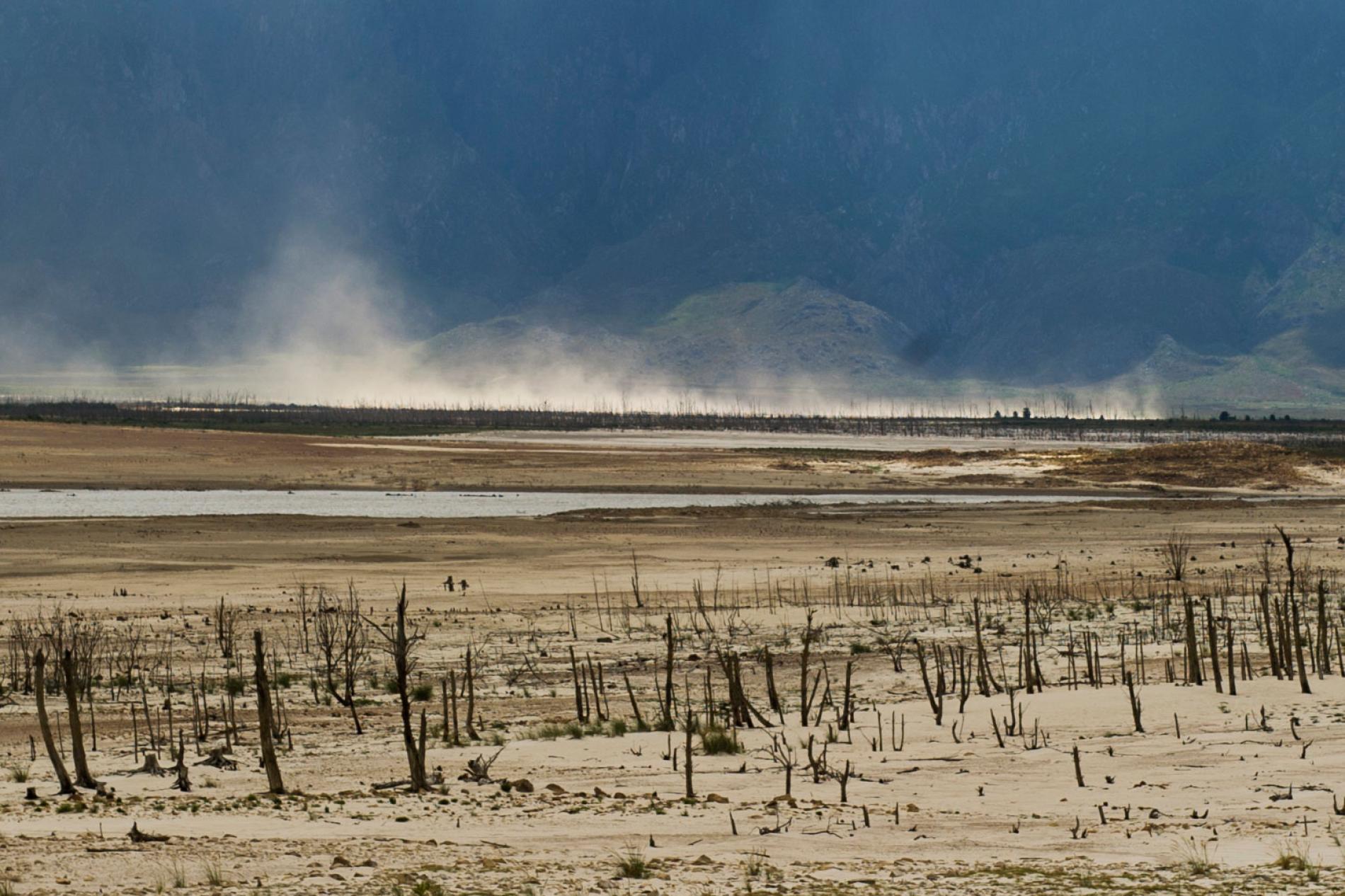
South Africa fighting to avoid drought-like conditions, postpone day zero

by NatureNews
November 30, 2020
in News
Reading Time: 2 mins read
0
South Africa fighting to avoid drought-like conditions, postpone day zero
Share on FacebookShare on Twitter

Scientists in South Africa are suggesting launching tiny particles in the upper atmosphere to reflect sunlight and make conditions dimmer in Cape Town.
According to a statement released by the University of Cape Town, dimming the sun by injecting reflective particles into the upper atmosphere could help reduce chances of ‘Day Zero’ level droughts in Cape Town by as much as 90 percent.
The paper was recently published in Environmental Research Letters.
As per the statement, the research team assessed the potential impact of ‘solar radiation management’ geoengineering (SRM) on drought and water availability.
They used a climate model to figure out how likely severe droughts like the one that nearly caused the City of Cape Town to run out of water in the summer of 2017-2018 would become near the end of the century with or without solar radiation management.
According to the scientists, blocking a small amount of solar radiation from reaching the Earth’s surface, by injecting reflective aerosols into the upper atmosphere could keep global temperature rises below the global target of 2°C.
However, they pointed out that the approach has its limits as it will only mask the effects of greenhouse gases but won’t be able to reverse the acidification of the ocean.
Speaking about the study, lead author Dr Romaric C Odoulami said that their findings suggest that SRM could help lower future risks of severe droughts in Cape Town, adding that, a change of location, model, or SRM deployment design, however, might produce significantly different results.
The team found that dimming the sun, using reflective aerosols to maintain global mean warming at 2020 level could offset up to 90 percent risk of droughts in Cape Town. However, researchers have stated that this should not be viewed as an alternative to cutting emissions.
Professor Mark New, one of the study’s coauthors added that researchers already know that the best way to avoid global warming and its impact is to cut greenhouse gas emissions radically. He added that they need to understand other options as well and their wider implications.
According to him, emissions cuts prove insufficient to avoid climate damages and the study is an important step for African involvement in SRM research.

Tags: DroughtSouth Africa

Related Posts

45% of migratory bird species in decline, BirdLife report warns

45% of migratory bird species in decline, BirdLife report warns

September 11, 2026
Kaduna prioritises agriculture, health, education in 2027 budget

Kaduna prioritises agriculture, health, education in 2027 budget

September 10, 2026
NADDC, UniAbuja partner on electric vehicle battery innovation

NADDC, UniAbuja partner on electric vehicle battery innovation

September 10, 2026
NIWE calls for urgent reforms to strengthen Nigeria’s water security

NIWE calls for urgent reforms to strengthen Nigeria’s water security

September 9, 2026

Today’s Weather

Abuja, Nigeria
Friday, September 11, 2026
Patchy rain nearby
23 ° c
91%
6.8mh
25 c 21 c
Sat
26 c 21 c
Sun
  • Trending
  • Comments
  • Latest
$1bn forest funding: FG unveils 10-year plan  to restore 2m hectares,  create 1.5m green jobs

$1bn forest funding: FG unveils 10-year plan to restore 2m hectares, create 1.5m green jobs

September 4, 2026
Daily Times@100, My 40 Years On The Beat

Daily Times@100, My 40 Years On The Beat

September 5, 2026
COP17 unlocks $1.3bn for Africa as expert urges Nigeria to compete with data

COP17 unlocks $1.3bn for Africa as expert urges Nigeria to compete with data

August 29, 2026
Human activities fueling environmental crisis across Nigeria —EDEN

Human activities fueling environmental crisis across Nigeria —EDEN

September 1, 2026
Ex-MD of Nigeria’s Daily Times Unveils Environment Newspaper, NatureNews

Ex-MD of Nigeria’s Daily Times Unveils Environment Newspaper, NatureNews

4
Sports Minister Dare to tee-off Liz-Ulumaranma inaugural golf tourney

Sports Minister Dare to tee-off Liz-Ulumaranma inaugural golf tourney

1
PwC Identifies Poor Infrastructure as Major Barrier to Agricultural Trade in Nigeria

PwC Identifies Poor Infrastructure as Major Barrier to Agricultural Trade in Nigeria

1

FAO Says 9.8 Million Residents across 16 States, FCT are Hungry

1
45% of migratory bird species in decline, BirdLife report warns

45% of migratory bird species in decline, BirdLife report warns

September 11, 2026
Youth coalition seeks stronger role in Nigeria’s NDC 3.0 implementation

Youth coalition seeks stronger role in Nigeria’s NDC 3.0 implementation

September 11, 2026
Why Language and Indigenous Knowledge Matter for Socioecological Transformation (SeT)

Why Language and Indigenous Knowledge Matter for Socioecological Transformation (SeT)

September 11, 2026
When a City Burns: Environmental Lessons from the GNI Building Fire in Lagos

When the Mountains Move: What Nepal’s Catastrophic Flood Teaches Africa About Living with a Changing Climate

September 10, 2026
Show Transparency Report
Naturenews.africa

© 2026 Nature News

  • Home
  • Contact Us
  • Privacy & Policy
  • Donation

No Result
View All Result
  • Home
  • Environment
    • Ecology
    • Climate
    • Desertification 
    • Flooding
    • Erosion
    • Oil spillage
    • Ozone layer
  • Sustainability
    • Energy
    • Green House
    • Wildlife
    • Maritime
    • Tourism
  • Agriculture
  • Advisory Board
    • Emir Muhammad Hamim Nuhu Sanusi CFR
    • Prof. Abdoulaye Bathily
    • Mr. Nnimmo Bassey
    • Prof. Mark Mwandosya
    • Ms. Hawe Hamman Bouba
    • Professor Salah Arafa
    • Mr. Desmond Majekodunmi
    • Ms. Ikal Angelei
    • Professor Jimmy Adegoke
  • UN Days
  • Fact Check
  • Donate
  • Africa
    • Central Africa
    • East Africa
    • North Africa
    • Southern Africa
    • West Africa
  • More
    • About Us
    • Advisory Board
    • Contact Us
    • Terms of Use
    • Donation

© 2026 Nature News

This website uses cookies. By continuing to use this website you are giving consent to cookies being used. Visit our Privacy and Cookie Policy.