Naturenews.africa
Advertisement
  • Environment
    • Ecology
    • Climate
    • Desertification 
    • Flooding
    • Erosion
    • Oil spillage
    • Ozone layer
  • Sustainability
    • Energy
    • Green House
    • Wildlife
    • Maritime
    • Tourism
  • Agriculture
  • Advisory Board
    • Emir Muhammad Hamim Nuhu Sanusi CFR
    • Prof. Abdoulaye Bathily
    • Mr. Nnimmo Bassey
    • Prof. Mark Mwandosya
    • Ms. Hawe Hamman Bouba
    • Professor Salah Arafa
    • Mr. Desmond Majekodunmi
    • Ms. Ikal Angelei
    • Professor Jimmy Adegoke
  • UN Days
  • Fact Check
  • Donate
  • Africa
    • Central Africa
    • East Africa
    • North Africa
    • Southern Africa
    • West Africa
Naturenews.africa
  • Environment
    • Ecology
    • Climate
    • Desertification 
    • Flooding
    • Erosion
    • Oil spillage
    • Ozone layer
  • Sustainability
    • Energy
    • Green House
    • Wildlife
    • Maritime
    • Tourism
  • Agriculture
  • Advisory Board
    • Emir Muhammad Hamim Nuhu Sanusi CFR
    • Prof. Abdoulaye Bathily
    • Mr. Nnimmo Bassey
    • Prof. Mark Mwandosya
    • Ms. Hawe Hamman Bouba
    • Professor Salah Arafa
    • Mr. Desmond Majekodunmi
    • Ms. Ikal Angelei
    • Professor Jimmy Adegoke
  • UN Days
  • Fact Check
  • Donate
  • Africa
    • Central Africa
    • East Africa
    • North Africa
    • Southern Africa
    • West Africa
No Result
View All Result
Naturenews.africa
No Result
View All Result
Home Waste management

Global E-waste Monitor 2024: Electronic Waste Surges, Recycling Efforts Lag Behind

by Editor
July 23, 2024
in Waste management
Reading Time: 3 mins read
0
83% of global e-waste not properly recycled, says UNCTAD
Share on FacebookShare on Twitter

By Faridat Salifu

Geneva / Bonn – The United Nations’ fourth Global E-waste Monitor (GEM) has revealed a concerning trend: electronic waste generation is increasing five times faster than recycling efforts.

In 2022, a record 62 million tonnes (Mt) of e-waste were produced, marking an 82% rise from 2010. Projections indicate this figure will climb another 32%, reaching 82 million tonnes by 2030.

The report, a collaborative effort between the International Telecommunications Union (ITU) and the United Nations Institute for Training and Research (UNITAR), highlights the vast amounts of valuable resources squandered and the significant environmental and health risks posed by improper e-waste management. Currently, only 1% of the global demand for rare earth elements is met through e-waste recycling.

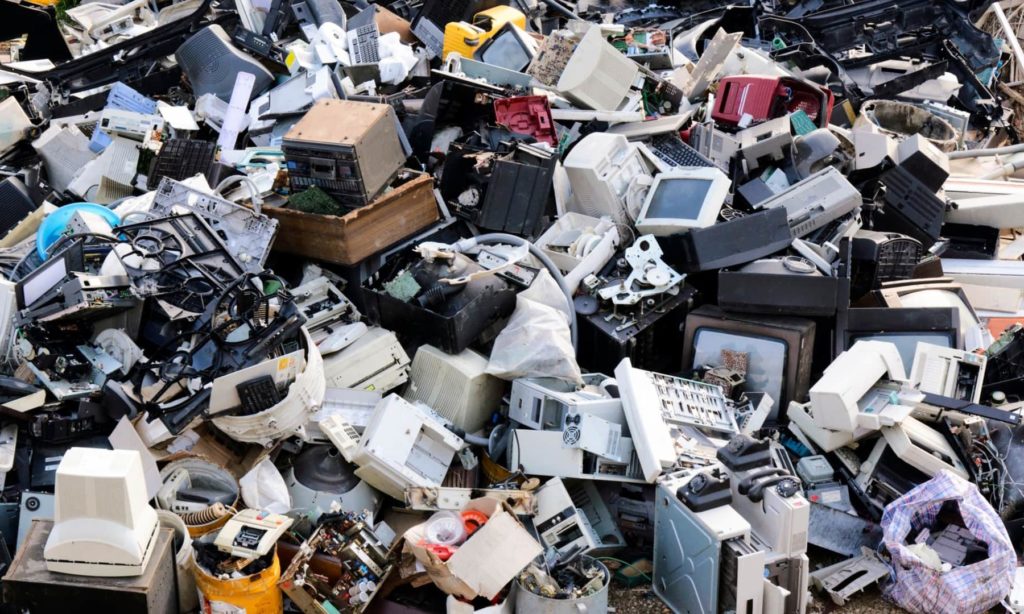
The 62 million tonnes of e-waste generated in 2022 are enough to fill 1.55 million 40-tonne trucks, which would encircle the equator if lined up bumper to bumper. Despite this immense volume, less than a quarter (22.3%) of this e-waste was properly collected and recycled. This left $62 billion worth of recoverable natural resources unaccounted for, exacerbating pollution risks worldwide.

The annual generation of e-waste is increasing by 2.6 million tonnes, putting it on track to reach 82 million tonnes by 2030. E-waste, defined as any discarded product with a plug or battery, contains toxic additives and hazardous substances such as mercury, which can cause severe damage to the human brain and coordination system.

The GEM report forecasts a decline in the documented collection and recycling rate from 22.3% in 2022 to 20% by 2030, due to the growing gap between recycling efforts and the rapid increase in e-waste generation. Factors contributing to this widening gap include technological advancements, higher consumption rates, limited repair options, shorter product life cycles, increasing electronification of society, design shortcomings, and inadequate e-waste management infrastructure.

To address these challenges, the report suggests that achieving a 60% e-waste collection and recycling rate by 2030 would generate benefits exceeding costs by more than $38 billion, primarily through minimized human health risks and environmental protection.

In response to the e-waste crisis, the Nigerian government, the Global Environment Facility (GEF), and the United Nations Environment Programme launched a $15 million initiative in 2019 aimed at establishing a sustainable electronics economy in Nigeria. This project aims to transform Nigeria’s hazardous informal recycling sector into a formally legislated system that includes a small fee on electronic sales to subsidize formal recycling.

According to the ITU, electronic waste in Nigeria and other countries is expected to rise by 33% to 82 million tonnes by 2030. E-waste encompasses any discarded electronic appliance, from burnt phone chargers to damaged television sets, and it has become the fastest-growing waste stream globally.

The ITU’s recent report underscores that improper disposal of these devices poses significant health and environmental hazards, including exposure to toxic substances like mercury.

Reports indicate that over 500,000 containers of e-waste enter Nigeria every month, exposing the population to severe health risks, including DNA damage, cancer, and cardiovascular disease.

“From discarded televisions to dumped telephones, an enormous amount of e-waste is generated around the world. With less than half of the world implementing and enforcing approaches to manage the problem, this raises the alarm for sound regulations to boost collection and recycling,” said Cosmas Luckyson Zavazava, director of the ITU Telecommunication Development Bureau.

As new gadgets continue to be invented, the growth of e-waste is set to increase. Although most of these gadgets are not manufactured in Africa, they often end up on the continent, which has become a dumping ground for electronic waste.

The Nigerian initiative aims to address these challenges by creating safe employment opportunities and protecting the environment. This project serves as a global model for a circular electronics system, demonstrating the possibility of managing electronic waste sustainably and equitably.

Related Posts

Global Recycling Rates Decline Amid Materials Consumption Surge – Report

Global Recycling Rates Decline Amid Materials Consumption Surge – Report

May 18, 2025
Tunisian Entrepreneur Converts Olive Waste Into Eco-friendly Fuel, Slashes Emissions

Tunisian Entrepreneur Converts Olive Waste Into Eco-friendly Fuel, Slashes Emissions

May 18, 2025
LAWMA Chief Urges Lagosians to See Waste as Economic Opportunity

LAWMA Chief Urges Lagosians to See Waste as Economic Opportunity

May 17, 2025
From Cradle to Landfill: The Hidden Cost of Your Smartphone in the Age of E-waste

From Cradle to Landfill: The Hidden Cost of Your Smartphone in the Age of E-waste

May 7, 2025

Today’s Weather

Abuja, Nigeria
Monday, August 31, 2026
Fog
22 ° c
93%
8.3mh
28 c 21 c
Tue
25 c 19 c
Wed
  • Trending
  • Comments
  • Latest
COP17 unlocks $1.3bn for Africa as expert urges Nigeria to compete with data

COP17 unlocks $1.3bn for Africa as expert urges Nigeria to compete with data

August 29, 2026
Nigeria must act now on drought resilience, says Ifatimehin

Nigeria must act now on drought resilience, says Ifatimehin

August 29, 2026
Pan-Amazon forum rejects jaguar carbon credits

Pan-Amazon forum rejects jaguar carbon credits

August 28, 2026
NBTI unveils Tinubu Light Initiative, targets one million MSMEs

Why Mongolia’s COP17 Matters for Nigeria’s Climate Action

August 23, 2026
Ex-MD of Nigeria’s Daily Times Unveils Environment Newspaper, NatureNews

Ex-MD of Nigeria’s Daily Times Unveils Environment Newspaper, NatureNews

4
Sports Minister Dare to tee-off Liz-Ulumaranma inaugural golf tourney

Sports Minister Dare to tee-off Liz-Ulumaranma inaugural golf tourney

1
PwC Identifies Poor Infrastructure as Major Barrier to Agricultural Trade in Nigeria

PwC Identifies Poor Infrastructure as Major Barrier to Agricultural Trade in Nigeria

1

FAO Says 9.8 Million Residents across 16 States, FCT are Hungry

1
Sanga Moses: Turning agricultural waste into clean energy for Africa

Sanga Moses: Turning agricultural waste into clean energy for Africa

August 30, 2026
Abuja city with cattle  grazing unbated

Masterplan Review Amidst Prevailing Contraventions

August 30, 2026
Shortage of foundation seed threatens West Africa’s improved crop supply

Shortage of foundation seed threatens West Africa’s improved crop supply

August 30, 2026
WCS urges stronger global action on rangeland conservation

WCS urges stronger global action on rangeland conservation

August 30, 2026
Show Transparency Report
Naturenews.africa

© 2026 Nature News

  • Home
  • Advertisement
  • Contact Us
  • Privacy & Policy
  • Donation

No Result
View All Result
  • Environment
    • Ecology
    • Climate
    • Desertification 
    • Flooding
    • Erosion
    • Oil spillage
    • Ozone layer
  • Sustainability
    • Energy
    • Green House
    • Wildlife
    • Maritime
    • Tourism
  • Agriculture
  • Advisory Board
    • Emir Muhammad Hamim Nuhu Sanusi CFR
    • Prof. Abdoulaye Bathily
    • Mr. Nnimmo Bassey
    • Prof. Mark Mwandosya
    • Ms. Hawe Hamman Bouba
    • Professor Salah Arafa
    • Mr. Desmond Majekodunmi
    • Ms. Ikal Angelei
    • Professor Jimmy Adegoke
  • UN Days
  • Fact Check
  • Donate
  • Africa
    • Central Africa
    • East Africa
    • North Africa
    • Southern Africa
    • West Africa

© 2026 Nature News

This website uses cookies. By continuing to use this website you are giving consent to cookies being used. Visit our Privacy and Cookie Policy.