Naturenews.africa
Advertisement
  • Environment
    • Ecology
    • Climate
    • Desertification 
    • Flooding
    • Erosion
    • Oil spillage
    • Ozone layer
  • Sustainability
    • Energy
    • Green House
    • Wildlife
    • Maritime
    • Tourism
  • Agriculture
  • Advisory Board
    • Emir Muhammad Hamim Nuhu Sanusi CFR
    • Prof. Abdoulaye Bathily
    • Mr. Nnimmo Bassey
    • Prof. Mark Mwandosya
    • Ms. Hawe Hamman Bouba
    • Professor Salah Arafa
    • Mr. Desmond Majekodunmi
    • Ms. Ikal Angelei
    • Professor Jimmy Adegoke
  • UN Days
  • Fact Check
  • Donate
  • Africa
    • Central Africa
    • East Africa
    • North Africa
    • Southern Africa
    • West Africa
Naturenews.africa
  • Environment
    • Ecology
    • Climate
    • Desertification 
    • Flooding
    • Erosion
    • Oil spillage
    • Ozone layer
  • Sustainability
    • Energy
    • Green House
    • Wildlife
    • Maritime
    • Tourism
  • Agriculture
  • Advisory Board
    • Emir Muhammad Hamim Nuhu Sanusi CFR
    • Prof. Abdoulaye Bathily
    • Mr. Nnimmo Bassey
    • Prof. Mark Mwandosya
    • Ms. Hawe Hamman Bouba
    • Professor Salah Arafa
    • Mr. Desmond Majekodunmi
    • Ms. Ikal Angelei
    • Professor Jimmy Adegoke
  • UN Days
  • Fact Check
  • Donate
  • Africa
    • Central Africa
    • East Africa
    • North Africa
    • Southern Africa
    • West Africa
No Result
View All Result
Naturenews.africa
No Result
View All Result
Home News

Shortage of foundation seed threatens West Africa’s improved crop supply

by Online Editor
August 30, 2026
in News
Reading Time: 3 mins read
0
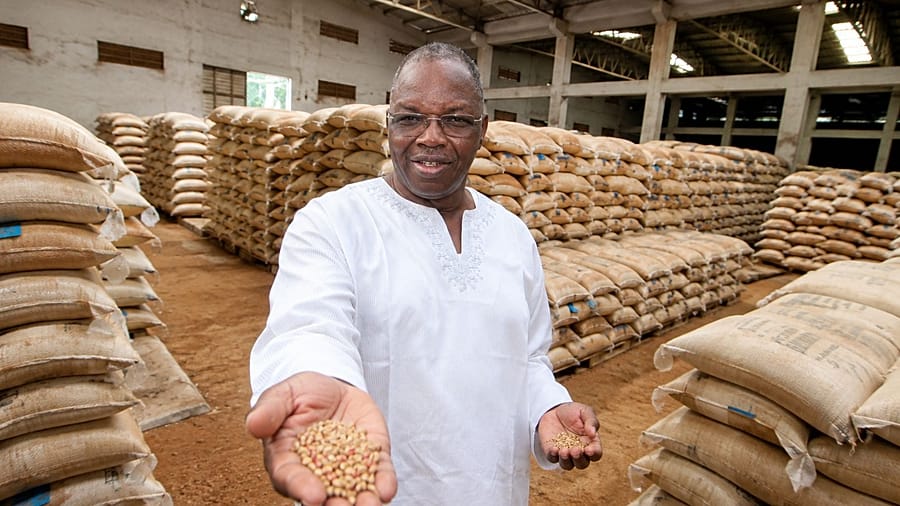
Shortage of foundation seed threatens West Africa’s improved crop supply
Share on FacebookShare on Twitter


By Faridat Salifu

A shortage of early generation seed is emerging as one of the biggest constraints to expanding access to improved crop varieties across West Africa, even as countries work to strengthen regional seed trade.

Early generation seed, mainly produced by public agricultural research institutions, forms the foundation of the commercial seed supply chain because private companies depend on it to multiply certified seed for farmers.

Ousmane Ndoye, representing the West and Central African Council for Agricultural Research and Development (CORAF), said shortages of the seed are limiting the production of certified varieties, particularly those with the highest demand.

In Nigeria, more than 90% of early generation seed is still supplied by public research institutions, highlighting the heavy dependence of commercial seed producers on government-backed research systems.

The issue was among the concerns raised at a regional seed systems meeting organised by the Centre of Excellence for Seed Systems in Africa (CESSA), an AGRA initiative, recently , ahead of the Africa Food Systems Forum in Kigali.

More than 200 researchers, regulators, entrepreneurs and financial partners from seven countries participated in the meeting, which examined the barriers preventing improved varieties from moving efficiently across West African markets.

Participants said that while ECOWAS has had a framework for mutual recognition of certified seed since 2008, implementation remains uneven, meaning a variety released and certified in one country can still face difficulties entering another market.

An agreement signed in 2018 between ECOWAS, the West African Economic and Monetary Union and the Permanent Interstate Committee for Drought Control in the Sahel extended regional seed cooperation to 17 countries, but differences in national systems continue to slow implementation.

Ndoye called for greater investment in seed technology training, increased production of early generation seed and stronger national laboratories capable of meeting international standards.

Some private companies are already seeking ways to address the supply gap by establishing longer-term arrangements with research institutions.

In Mali, seed company Faso Kaba has entered multi-year contracts with national research institutions, allowing it to plan seed production as far as five years ahead.

New multiplication technologies are also expanding the supply of planting materials for crops such as cassava and yam, where historically fewer than one in 10 improved varieties developed by breeders reached farmers.

Mercy Diebiru-Ojo, a specialist at the International Institute of Tropical Agriculture and 2025 Africa Food Prize laureate, said rapid multiplication had helped move the sector from a situation of scarcity towards greater availability.

The financing of private seed companies was identified as another critical requirement for expanding production and distribution.

Martin Fregene, director of agriculture and agro-industry at the African Development Bank, called for affordable lending and longer repayment periods for private-sector seed businesses.

“If I had an additional dollar to invest, I would put it in the private sector,” Fregene said.

Hermann Messan, country director of the International Fund for Agricultural Development in Côte d’Ivoire, said governments should concentrate on regulation while research institutions provide support and entrepreneurs build the seed industry.

The region has recorded significant progress over the past two decades, with CESSA reporting that more than 650 scientists have been trained and over 685 varieties released, about 60% of which have been commercialised.

The initiative also reported supporting around 100 seed companies, while adoption of improved varieties has risen from 6% to more than 30%.

However, civil society organisations have questioned whether the expansion has placed too much emphasis on a limited number of crops and reduced attention to agricultural diversity.

For AGRA’s regional director for West Africa, Natasha Kofoworola Quist, the challenge now is to move beyond individual national successes and create a functioning regional seed market.

She said harmonised standards, efficient markets, trade corridors and fewer border barriers would be necessary to ensure improved seed and, ultimately, food can move more easily across the region.

The issue is expected to receive further attention at the Africa Food Systems Forum in Kigali from September 1 to 4 and the African Union’s first summit dedicated to seeds in Mbabane, Eswatini, from October 5 to 7.

Quality journalism costs money. Today, we're asking that you support us to do more. Support our work by sending in your donations.

The donation can be made directly into NatureNews Account below

Guaranty Trust Bank, Nigeria

0609085876

NatureNews Online

Related Posts

Nestoil deploys $28m drilling rig asset to boost oil production

Nestoil deploys $28m drilling rig asset to boost oil production

August 30, 2026
COP17 unlocks $1.3bn for Africa as expert urges Nigeria to compete with data

COP17 unlocks $1.3bn for Africa as expert urges Nigeria to compete with data

August 29, 2026
Nigeria must act now on drought resilience, says Ifatimehin

Nigeria must act now on drought resilience, says Ifatimehin

August 29, 2026
Pan-Amazon forum rejects jaguar carbon credits

Pan-Amazon forum rejects jaguar carbon credits

August 28, 2026

Today’s Weather

Abuja, Nigeria
Monday, August 31, 2026
Mist
23 ° c
94%
10.4mh
28 c 21 c
Tue
27 c 20 c
Wed
  • Trending
  • Comments
  • Latest
COP17 unlocks $1.3bn for Africa as expert urges Nigeria to compete with data

COP17 unlocks $1.3bn for Africa as expert urges Nigeria to compete with data

August 29, 2026
Nigeria must act now on drought resilience, says Ifatimehin

Nigeria must act now on drought resilience, says Ifatimehin

August 29, 2026
Pan-Amazon forum rejects jaguar carbon credits

Pan-Amazon forum rejects jaguar carbon credits

August 28, 2026
NBTI unveils Tinubu Light Initiative, targets one million MSMEs

Why Mongolia’s COP17 Matters for Nigeria’s Climate Action

August 23, 2026
Ex-MD of Nigeria’s Daily Times Unveils Environment Newspaper, NatureNews

Ex-MD of Nigeria’s Daily Times Unveils Environment Newspaper, NatureNews

4
Sports Minister Dare to tee-off Liz-Ulumaranma inaugural golf tourney

Sports Minister Dare to tee-off Liz-Ulumaranma inaugural golf tourney

1
PwC Identifies Poor Infrastructure as Major Barrier to Agricultural Trade in Nigeria

PwC Identifies Poor Infrastructure as Major Barrier to Agricultural Trade in Nigeria

1

FAO Says 9.8 Million Residents across 16 States, FCT are Hungry

1
Sanga Moses: Turning agricultural waste into clean energy for Africa

Sanga Moses: Turning agricultural waste into clean energy for Africa

August 30, 2026
Abuja city with cattle  grazing unbated

Masterplan Review Amidst Prevailing Contraventions

August 30, 2026
Shortage of foundation seed threatens West Africa’s improved crop supply

Shortage of foundation seed threatens West Africa’s improved crop supply

August 30, 2026
WCS urges stronger global action on rangeland conservation

WCS urges stronger global action on rangeland conservation

August 30, 2026
Show Transparency Report
Naturenews.africa

© 2026 Nature News

  • Home
  • Advertisement
  • Contact Us
  • Privacy & Policy
  • Donation

No Result
View All Result
  • Environment
    • Ecology
    • Climate
    • Desertification 
    • Flooding
    • Erosion
    • Oil spillage
    • Ozone layer
  • Sustainability
    • Energy
    • Green House
    • Wildlife
    • Maritime
    • Tourism
  • Agriculture
  • Advisory Board
    • Emir Muhammad Hamim Nuhu Sanusi CFR
    • Prof. Abdoulaye Bathily
    • Mr. Nnimmo Bassey
    • Prof. Mark Mwandosya
    • Ms. Hawe Hamman Bouba
    • Professor Salah Arafa
    • Mr. Desmond Majekodunmi
    • Ms. Ikal Angelei
    • Professor Jimmy Adegoke
  • UN Days
  • Fact Check
  • Donate
  • Africa
    • Central Africa
    • East Africa
    • North Africa
    • Southern Africa
    • West Africa

© 2026 Nature News

This website uses cookies. By continuing to use this website you are giving consent to cookies being used. Visit our Privacy and Cookie Policy.