Naturenews.africa
Advertisement
  • Environment
    • Ecology
    • Climate
    • Desertification 
    • Flooding
    • Erosion
    • Oil spillage
    • Ozone layer
  • Sustainability
    • Energy
    • Green House
    • Wildlife
    • Maritime
    • Tourism
  • Agriculture
  • Advisory Board
    • Emir Muhammad Hamim Nuhu Sanusi CFR
    • Prof. Abdoulaye Bathily
    • Mr. Nnimmo Bassey
    • Prof. Mark Mwandosya
    • Ms. Hawe Hamman Bouba
    • Professor Salah Arafa
    • Mr. Desmond Majekodunmi
    • Ms. Ikal Angelei
    • Professor Jimmy Adegoke
  • UN Days
  • Fact Check
  • Donate
  • Africa
    • Central Africa
    • East Africa
    • North Africa
    • Southern Africa
    • West Africa
Naturenews.africa
  • Environment
    • Ecology
    • Climate
    • Desertification 
    • Flooding
    • Erosion
    • Oil spillage
    • Ozone layer
  • Sustainability
    • Energy
    • Green House
    • Wildlife
    • Maritime
    • Tourism
  • Agriculture
  • Advisory Board
    • Emir Muhammad Hamim Nuhu Sanusi CFR
    • Prof. Abdoulaye Bathily
    • Mr. Nnimmo Bassey
    • Prof. Mark Mwandosya
    • Ms. Hawe Hamman Bouba
    • Professor Salah Arafa
    • Mr. Desmond Majekodunmi
    • Ms. Ikal Angelei
    • Professor Jimmy Adegoke
  • UN Days
  • Fact Check
  • Donate
  • Africa
    • Central Africa
    • East Africa
    • North Africa
    • Southern Africa
    • West Africa
No Result
View All Result
Naturenews.africa
No Result
View All Result
Home Big Story

Human-caused Climate Change may lead to 1 billion premature deaths, Study reveals

by Editor
August 31, 2023
in Big Story, Climate change , News
Reading Time: 2 mins read
0
Renewables, solution to global climate catastrophe – UN Chief
Share on FacebookShare on Twitter

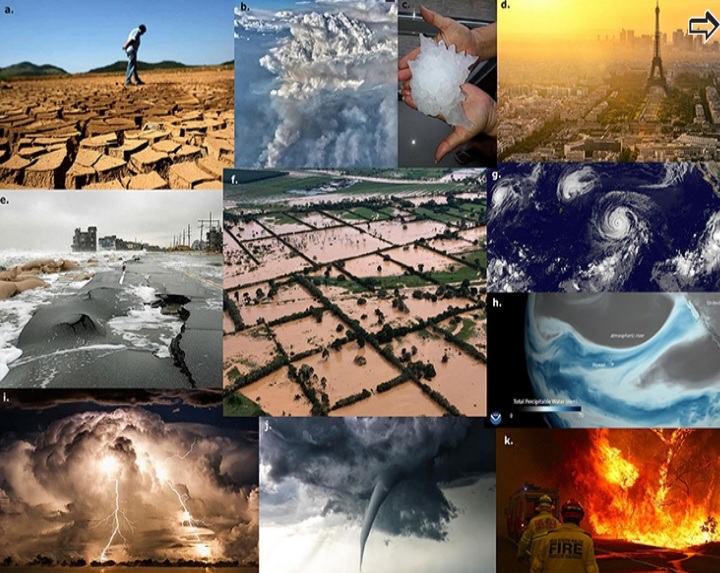
Climate change induced by human activity is likely to be responsible for the premature death of about one billion people over the next century, if global warming reaches two degrees Celsius, a study suggests.

The oil and gas industry is directly and indirectly responsible for over 40 per cent of carbon emissions – impacting the lives of billions of people, many living in the world’s most remote and low-resourced communities, the researchers said.

The study, published in the journal Energies, proposes aggressive energy policies that would enable immediate and substantive decreases to carbon emissions. It also recommends a heightened level of government, corporate and citizen action to accelerate the decarbonisation of the global economy, aiming to minimise the number of projected human deaths.

The researchers found the peer-reviewed literature on the human mortality costs of carbon emissions converged on the “1,000-ton rule,” which is an estimate that one future premature death is caused every time approximately 1,000 tons of fossil carbon are burned.

“If you take the scientific consensus of the 1,000-ton rule seriously, and run the numbers, anthropogenic global warming equates to a billion premature dead bodies over the next century. Obviously, we have to act. And we have to act fast,” said Joshua Pearce, a professor at the University of Western Ontario in Canada.

Mr Pearce hopes by changing and challenging the language and metrics of global warming, more policymakers and industry leaders will better understand the hard truths about the world’s reliance on fossil fuels.

“As predictions of climate models become clearer, the harm we are doing to children and future generations can increasingly be attributed to our actions,” said Mr Pearce.

When this direct correlation is recognised, greenhouse gas emissions liabilities can no longer be ignored, the researchers said.

The study found that to limit these enormous future liabilities and save many human lives, humanity needs to stop burning fossil fuels as quickly as possible by following a more aggressive approach to energy efficiency and renewable energy.

“To be clear, predicting the future accurately is hard. The 1,000-ton rule is only an order of magnitude best estimate. The number of caused deaths will likely lie between a tenth of a person and 10 people per 1,000 tons. Regardless, the bottom line that we need to act fast is still crystal clear,” Mr Pearce added.

Quality journalism costs money. Today, we're asking that you support us to do more. Support our work by sending in your donations.

The donation can be made directly into NatureNews Account below

Guaranty Trust Bank, Nigeria

0609085876

NatureNews Online

Related Posts

Shortage of foundation seed threatens West Africa’s improved crop supply

Shortage of foundation seed threatens West Africa’s improved crop supply

August 30, 2026
New study links mental stress, infection to climate change

New study links mental stress, infection to climate change

August 30, 2026
Nestoil deploys $28m drilling rig asset to boost oil production

Nestoil deploys $28m drilling rig asset to boost oil production

August 30, 2026
COP17 unlocks $1.3bn for Africa as expert urges Nigeria to compete with data

COP17 unlocks $1.3bn for Africa as expert urges Nigeria to compete with data

August 29, 2026

Today’s Weather

Abuja, Nigeria
Monday, August 31, 2026
Mist
23 ° c
94%
10.4mh
28 c 21 c
Tue
27 c 20 c
Wed
  • Trending
  • Comments
  • Latest
COP17 unlocks $1.3bn for Africa as expert urges Nigeria to compete with data

COP17 unlocks $1.3bn for Africa as expert urges Nigeria to compete with data

August 29, 2026
Nigeria must act now on drought resilience, says Ifatimehin

Nigeria must act now on drought resilience, says Ifatimehin

August 29, 2026
Pan-Amazon forum rejects jaguar carbon credits

Pan-Amazon forum rejects jaguar carbon credits

August 28, 2026
NBTI unveils Tinubu Light Initiative, targets one million MSMEs

Why Mongolia’s COP17 Matters for Nigeria’s Climate Action

August 23, 2026
Ex-MD of Nigeria’s Daily Times Unveils Environment Newspaper, NatureNews

Ex-MD of Nigeria’s Daily Times Unveils Environment Newspaper, NatureNews

4
Sports Minister Dare to tee-off Liz-Ulumaranma inaugural golf tourney

Sports Minister Dare to tee-off Liz-Ulumaranma inaugural golf tourney

1
PwC Identifies Poor Infrastructure as Major Barrier to Agricultural Trade in Nigeria

PwC Identifies Poor Infrastructure as Major Barrier to Agricultural Trade in Nigeria

1

FAO Says 9.8 Million Residents across 16 States, FCT are Hungry

1
Sanga Moses: Turning agricultural waste into clean energy for Africa

Sanga Moses: Turning agricultural waste into clean energy for Africa

August 30, 2026
Abuja city with cattle  grazing unbated

Masterplan Review Amidst Prevailing Contraventions

August 30, 2026
Shortage of foundation seed threatens West Africa’s improved crop supply

Shortage of foundation seed threatens West Africa’s improved crop supply

August 30, 2026
WCS urges stronger global action on rangeland conservation

WCS urges stronger global action on rangeland conservation

August 30, 2026
Show Transparency Report
Naturenews.africa

© 2026 Nature News

  • Home
  • Advertisement
  • Contact Us
  • Privacy & Policy
  • Donation

No Result
View All Result
  • Environment
    • Ecology
    • Climate
    • Desertification 
    • Flooding
    • Erosion
    • Oil spillage
    • Ozone layer
  • Sustainability
    • Energy
    • Green House
    • Wildlife
    • Maritime
    • Tourism
  • Agriculture
  • Advisory Board
    • Emir Muhammad Hamim Nuhu Sanusi CFR
    • Prof. Abdoulaye Bathily
    • Mr. Nnimmo Bassey
    • Prof. Mark Mwandosya
    • Ms. Hawe Hamman Bouba
    • Professor Salah Arafa
    • Mr. Desmond Majekodunmi
    • Ms. Ikal Angelei
    • Professor Jimmy Adegoke
  • UN Days
  • Fact Check
  • Donate
  • Africa
    • Central Africa
    • East Africa
    • North Africa
    • Southern Africa
    • West Africa

© 2026 Nature News

This website uses cookies. By continuing to use this website you are giving consent to cookies being used. Visit our Privacy and Cookie Policy.