Naturenews.africa
Advertisement
  • Environment
    • Ecology
    • Climate
    • Desertification 
    • Flooding
    • Erosion
    • Oil spillage
    • Ozone layer
  • Sustainability
    • Energy
    • Green House
    • Wildlife
    • Maritime
    • Tourism
  • Agriculture
  • Advisory Board
    • Emir Muhammad Hamim Nuhu Sanusi CFR
    • Prof. Abdoulaye Bathily
    • Mr. Nnimmo Bassey
    • Prof. Mark Mwandosya
    • Ms. Hawe Hamman Bouba
    • Professor Salah Arafa
    • Mr. Desmond Majekodunmi
    • Ms. Ikal Angelei
    • Professor Jimmy Adegoke
  • UN Days
  • Fact Check
  • Donate
  • Africa
    • Central Africa
    • East Africa
    • North Africa
    • Southern Africa
    • West Africa
Naturenews.africa
  • Environment
    • Ecology
    • Climate
    • Desertification 
    • Flooding
    • Erosion
    • Oil spillage
    • Ozone layer
  • Sustainability
    • Energy
    • Green House
    • Wildlife
    • Maritime
    • Tourism
  • Agriculture
  • Advisory Board
    • Emir Muhammad Hamim Nuhu Sanusi CFR
    • Prof. Abdoulaye Bathily
    • Mr. Nnimmo Bassey
    • Prof. Mark Mwandosya
    • Ms. Hawe Hamman Bouba
    • Professor Salah Arafa
    • Mr. Desmond Majekodunmi
    • Ms. Ikal Angelei
    • Professor Jimmy Adegoke
  • UN Days
  • Fact Check
  • Donate
  • Africa
    • Central Africa
    • East Africa
    • North Africa
    • Southern Africa
    • West Africa
No Result
View All Result
Naturenews.africa
No Result
View All Result
Home News

Plastic waste in rivers may carry dangerous microbes – Study

by Editor
November 9, 2023
in News, Pollution
Reading Time: 2 mins read
0
Stakeholders advocate community inclusiveness to reduce marine plastic pollution
Share on FacebookShare on Twitter

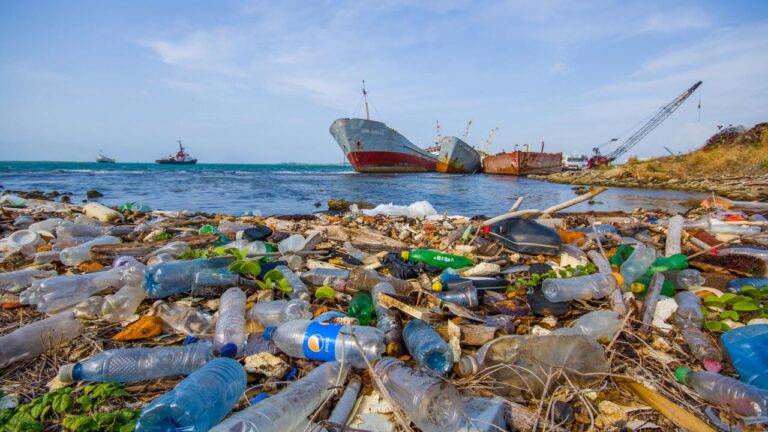
Plastic litter in rivers might be allowing dangerous pathogens to hitch-hike downstream, a new study has found.

The research, which focused on one UK river, found that dumped plastic, wooden sticks and the water itself were a breeding ground for communities of microorganisms, potentially providing a reservoir for bacteria and viruses known to cause human diseases and antibiotic resistance.

“Our findings indicate that plastics in freshwater bodies may contribute to the transport of potential pathogens and antibiotic resistance genes,” said lead author Vinko Zadjelovic of the University of Antofagasta in Chile.

“This could have indirect but significant implications for human health,” he told AFP.

Antibiotic resistance is a growing public health threat. In 2019, infections related to antibiotic resistance are estimated to have killed 2.7 million people worldwide.

By 2050 they are predicted to cause 10 million deaths worldwide, according to the study, published in the journal Microbiome.

When plastic ends up in water its surface is overrun within minutes by nearby microbes.

The researchers submerged samples for a week in the River Sowe in Warwickshire and West Midlands England, downstream from a wastewater treatment plant.

They found significant differences in the microbe communities depending on the material sampled.

Wastewater is required to be treated and disinfected to reduce microbial hazards and any adverse impacts they might have on human and environmental health.

But the water samples that the researchers collected in February of 2020 harbored human pathogens such as Salmonella, Escheria most commonly known as E.Coli, and Streptococcus responsible for strep throat.

That underscores “the pressing need for stricter monitoring of wastewater treatment plants,” said Zadjelovic.

Meanwhile, the plastic and wood samples attracted “opportunistic” bacteria such as Pseudomonas aeruginosa and aeromonas, known to pose risk to people with compromised immune systems.

P.aeruginosa, which causes infections in hospital patients, was found to be nearly three times more abundant on “weathered plastic” that the researchers manipulated to resemble the way plastic breaks down in nature, when compared to the wood.

That weathered plastic also showed a greater abundance of the genes responsible for antibiotic resistance.

In recent months, British water companies have come under fire over the pumping of raw sewage into the UK’s waterways and the underreporting of pollution events, provoking widespread public anger.

Rivers are the main way plastic enters the world’s oceans, channeling anywhere between 3.5 thousand metric tons to 2.41 million metric tons of the manmade material to the sea annually.


 

Related Posts

Shortage of foundation seed threatens West Africa’s improved crop supply

Shortage of foundation seed threatens West Africa’s improved crop supply

August 30, 2026
Nestoil deploys $28m drilling rig asset to boost oil production

Nestoil deploys $28m drilling rig asset to boost oil production

August 30, 2026
COP17 unlocks $1.3bn for Africa as expert urges Nigeria to compete with data

COP17 unlocks $1.3bn for Africa as expert urges Nigeria to compete with data

August 29, 2026
Nigeria must act now on drought resilience, says Ifatimehin

Nigeria must act now on drought resilience, says Ifatimehin

August 29, 2026

Today’s Weather

Abuja, Nigeria
Monday, August 31, 2026
Mist
23 ° c
94%
10.4mh
28 c 21 c
Tue
27 c 20 c
Wed
  • Trending
  • Comments
  • Latest
COP17 unlocks $1.3bn for Africa as expert urges Nigeria to compete with data

COP17 unlocks $1.3bn for Africa as expert urges Nigeria to compete with data

August 29, 2026
Nigeria must act now on drought resilience, says Ifatimehin

Nigeria must act now on drought resilience, says Ifatimehin

August 29, 2026
NBTI unveils Tinubu Light Initiative, targets one million MSMEs

Why Mongolia’s COP17 Matters for Nigeria’s Climate Action

August 23, 2026
Pan-Amazon forum rejects jaguar carbon credits

Pan-Amazon forum rejects jaguar carbon credits

August 28, 2026
Ex-MD of Nigeria’s Daily Times Unveils Environment Newspaper, NatureNews

Ex-MD of Nigeria’s Daily Times Unveils Environment Newspaper, NatureNews

4
Sports Minister Dare to tee-off Liz-Ulumaranma inaugural golf tourney

Sports Minister Dare to tee-off Liz-Ulumaranma inaugural golf tourney

1
PwC Identifies Poor Infrastructure as Major Barrier to Agricultural Trade in Nigeria

PwC Identifies Poor Infrastructure as Major Barrier to Agricultural Trade in Nigeria

1

FAO Says 9.8 Million Residents across 16 States, FCT are Hungry

1
Sanga Moses: Turning agricultural waste into clean energy for Africa

Sanga Moses: Turning agricultural waste into clean energy for Africa

August 30, 2026
Abuja city with cattle  grazing unbated

Masterplan Review Amidst Prevailing Contraventions

August 30, 2026
Shortage of foundation seed threatens West Africa’s improved crop supply

Shortage of foundation seed threatens West Africa’s improved crop supply

August 30, 2026
WCS urges stronger global action on rangeland conservation

WCS urges stronger global action on rangeland conservation

August 30, 2026
Show Transparency Report
Naturenews.africa

© 2026 Nature News

  • Home
  • Advertisement
  • Contact Us
  • Privacy & Policy
  • Donation

No Result
View All Result
  • Environment
    • Ecology
    • Climate
    • Desertification 
    • Flooding
    • Erosion
    • Oil spillage
    • Ozone layer
  • Sustainability
    • Energy
    • Green House
    • Wildlife
    • Maritime
    • Tourism
  • Agriculture
  • Advisory Board
    • Emir Muhammad Hamim Nuhu Sanusi CFR
    • Prof. Abdoulaye Bathily
    • Mr. Nnimmo Bassey
    • Prof. Mark Mwandosya
    • Ms. Hawe Hamman Bouba
    • Professor Salah Arafa
    • Mr. Desmond Majekodunmi
    • Ms. Ikal Angelei
    • Professor Jimmy Adegoke
  • UN Days
  • Fact Check
  • Donate
  • Africa
    • Central Africa
    • East Africa
    • North Africa
    • Southern Africa
    • West Africa

© 2026 Nature News

This website uses cookies. By continuing to use this website you are giving consent to cookies being used. Visit our Privacy and Cookie Policy.