

Naturenews.africa
Advertisement
  • Environment
    • Ecology
    • Climate
    • Desertification 
    • Flooding
    • Erosion
    • Oil spillage
    • Ozone layer
  • Sustainability
    • Energy
    • Green House
    • Wildlife
    • Maritime
    • Tourism
  • Agriculture
  • Advisory Board
    • Emir Muhammad Hamim Nuhu Sanusi CFR
    • Prof. Abdoulaye Bathily
    • Mr. Nnimmo Bassey
    • Prof. Mark Mwandosya
    • Ms. Hawe Hamman Bouba
    • Professor Salah Arafa
    • Mr. Desmond Majekodunmi
    • Ms. Ikal Angelei
    • Professor Jimmy Adegoke
  • UN Days
  • Fact Check
  • Donate
  • Africa
    • Central Africa
    • East Africa
    • North Africa
    • Southern Africa
    • West Africa
Naturenews.africa
  • Environment
    • Ecology
    • Climate
    • Desertification 
    • Flooding
    • Erosion
    • Oil spillage
    • Ozone layer
  • Sustainability
    • Energy
    • Green House
    • Wildlife
    • Maritime
    • Tourism
  • Agriculture
  • Advisory Board
    • Emir Muhammad Hamim Nuhu Sanusi CFR
    • Prof. Abdoulaye Bathily
    • Mr. Nnimmo Bassey
    • Prof. Mark Mwandosya
    • Ms. Hawe Hamman Bouba
    • Professor Salah Arafa
    • Mr. Desmond Majekodunmi
    • Ms. Ikal Angelei
    • Professor Jimmy Adegoke
  • UN Days
  • Fact Check
  • Donate
  • Africa
    • Central Africa
    • East Africa
    • North Africa
    • Southern Africa
    • West Africa
No Result
View All Result
Naturenews.africa
No Result
View All Result
Home News

Ocean eddies intensify coastal climate extremes, study reveals

by Online Editor
April 19, 2026
in News
Reading Time: 2 mins read
0
Ocean eddies intensify coastal climate extremes, study reveals
Share on FacebookShare on Twitter


By Abbas Nazil

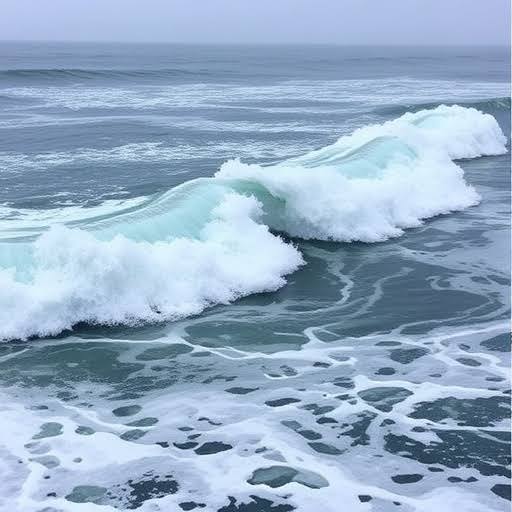
Scientists have found that ocean eddies are significantly intensifying climate extremes in coastal seas, reshaping how marine environments respond to global warming.

The new research, published in Nature Climate Change, shows that these swirling currents, which break off from major ocean flows, are accelerating surface warming while simultaneously cooling deeper waters, creating increasingly unstable marine conditions.

The study focused on the Agulhas Current, a powerful ocean current flowing along the southeast coast of Africa, where researchers collected detailed measurements over a two-year period using high-resolution instruments.

The data revealed that growing eddy activity is driving major changes in temperature, salinity, and nutrient distribution between the open ocean and coastal regions.

According to the researchers, small-scale instabilities and larger meanders within the current act as dynamic transport systems, moving heat, salt, and nutrients across different layers of the ocean.

This process leads to a striking contrast, where surface waters warm rapidly while deeper waters remain comparatively cool due to enhanced upwelling of cold, nutrient-rich water.

The result is a layered ocean structure that amplifies environmental extremes and places additional stress on coastal ecosystems.

Scientists warn that these changes could disrupt marine life, fisheries, and coastal economies that depend on stable ocean conditions.

The findings also help explain a long-observed mystery in the region, where surface temperatures have been rising at rates three to four times higher than the global ocean average, despite a decline in the total heat transported by the current to higher latitudes.

Researchers attribute this paradox to intensified eddy activity, which traps heat near the surface while redistributing cooler water below.

At the same time, these ocean dynamics have been linked to increased rainfall patterns in parts of South Africa, demonstrating the broader climatic influence of ocean circulation changes.

Importantly, the study found that these dramatic shifts are occurring even though the overall strength of the Agulhas Current has remained stable.

This suggests that structural changes within the current, rather than its speed or volume, are driving the emerging climate impacts.

Beyond southern Africa, scientists believe the findings have global implications, as similar processes may be occurring in other major ocean systems, including the Gulf Stream along the United States East Coast.

The researchers propose that intensifying eddies could serve as a unifying explanation for widespread changes observed in ocean currents worldwide under climate change.

They emphasize that understanding these smaller-scale processes is crucial for improving climate models and predicting future environmental conditions.

The study highlights the growing importance of ocean dynamics in shaping climate outcomes, particularly in coastal regions where human populations and ecosystems are most vulnerable.

As climate change continues to alter ocean behavior, scientists caution that eddy-driven extremes could become more frequent and severe, underscoring the need for continued research and monitoring.


Related Posts

Shortage of foundation seed threatens West Africa’s improved crop supply

Shortage of foundation seed threatens West Africa’s improved crop supply

August 30, 2026
Nestoil deploys $28m drilling rig asset to boost oil production

Nestoil deploys $28m drilling rig asset to boost oil production

August 30, 2026
COP17 unlocks $1.3bn for Africa as expert urges Nigeria to compete with data

COP17 unlocks $1.3bn for Africa as expert urges Nigeria to compete with data

August 29, 2026
Nigeria must act now on drought resilience, says Ifatimehin

Nigeria must act now on drought resilience, says Ifatimehin

August 29, 2026

Today’s Weather

Abuja, Nigeria
Monday, August 31, 2026
Fog
22 ° c
93%
8.3mh
28 c 21 c
Tue
25 c 19 c
Wed
  • Trending
  • Comments
  • Latest
COP17 unlocks $1.3bn for Africa as expert urges Nigeria to compete with data

COP17 unlocks $1.3bn for Africa as expert urges Nigeria to compete with data

August 29, 2026
Nigeria must act now on drought resilience, says Ifatimehin

Nigeria must act now on drought resilience, says Ifatimehin

August 29, 2026
Pan-Amazon forum rejects jaguar carbon credits

Pan-Amazon forum rejects jaguar carbon credits

August 28, 2026
NBTI unveils Tinubu Light Initiative, targets one million MSMEs

Why Mongolia’s COP17 Matters for Nigeria’s Climate Action

August 23, 2026
Ex-MD of Nigeria’s Daily Times Unveils Environment Newspaper, NatureNews

Ex-MD of Nigeria’s Daily Times Unveils Environment Newspaper, NatureNews

4
Sports Minister Dare to tee-off Liz-Ulumaranma inaugural golf tourney

Sports Minister Dare to tee-off Liz-Ulumaranma inaugural golf tourney

1
PwC Identifies Poor Infrastructure as Major Barrier to Agricultural Trade in Nigeria

PwC Identifies Poor Infrastructure as Major Barrier to Agricultural Trade in Nigeria

1

FAO Says 9.8 Million Residents across 16 States, FCT are Hungry

1
Sanga Moses: Turning agricultural waste into clean energy for Africa

Sanga Moses: Turning agricultural waste into clean energy for Africa

August 30, 2026
Abuja city with cattle  grazing unbated

Masterplan Review Amidst Prevailing Contraventions

August 30, 2026
Shortage of foundation seed threatens West Africa’s improved crop supply

Shortage of foundation seed threatens West Africa’s improved crop supply

August 30, 2026
WCS urges stronger global action on rangeland conservation

WCS urges stronger global action on rangeland conservation

August 30, 2026
Show Transparency Report
Naturenews.africa

© 2026 Nature News

  • Home
  • Advertisement
  • Contact Us
  • Privacy & Policy
  • Donation

No Result
View All Result
  • Environment
    • Ecology
    • Climate
    • Desertification 
    • Flooding
    • Erosion
    • Oil spillage
    • Ozone layer
  • Sustainability
    • Energy
    • Green House
    • Wildlife
    • Maritime
    • Tourism
  • Agriculture
  • Advisory Board
    • Emir Muhammad Hamim Nuhu Sanusi CFR
    • Prof. Abdoulaye Bathily
    • Mr. Nnimmo Bassey
    • Prof. Mark Mwandosya
    • Ms. Hawe Hamman Bouba
    • Professor Salah Arafa
    • Mr. Desmond Majekodunmi
    • Ms. Ikal Angelei
    • Professor Jimmy Adegoke
  • UN Days
  • Fact Check
  • Donate
  • Africa
    • Central Africa
    • East Africa
    • North Africa
    • Southern Africa
    • West Africa

© 2026 Nature News

This website uses cookies. By continuing to use this website you are giving consent to cookies being used. Visit our Privacy and Cookie Policy.