

By Abbas Nazil
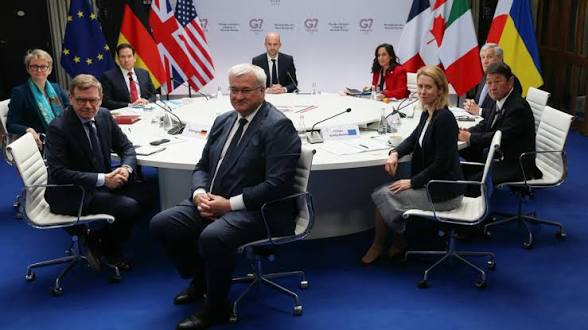
G7 environment ministers have begun a meeting in Paris, but climate change has been excluded from the agenda in an effort to avoid a political dispute with the United States, according to French officials.
France’s ecology ministry stated that the decision was taken to preserve unity among member states and to ensure discussions focus on less divisive environmental issues during the two-day summit hosted in France.
French Ecology Minister Monique Barbut explained that the approach reflects a strategic effort to maintain cohesion within the G7 while still advancing cooperation on environmental priorities such as oceans and biodiversity.
Officials noted that the United States has withdrawn from several global climate agreements under the administration of Donald Trump and has weakened domestic environmental protections since returning to office in 2025, creating tensions within multilateral climate discussions.
The United States will not send its environment minister but will instead be represented by a senior official from the Environmental Protection Agency, while France, Germany, Italy, Japan, Canada, and the United Kingdom are attending at ministerial level.
Despite the omission of climate change, the agenda includes discussions on ocean conservation, biodiversity financing, desertification control, marine protected areas, water pollution, and forest protection, including a scheduled visit to Fontainebleau woodland near Paris.
Environmental groups strongly criticized the exclusion of climate change, arguing that global leaders are failing to respond adequately to accelerating environmental crises and warning that sidelining the issue weakens collective international action.
Activists from Climate Action Network said the G7 risks losing credibility if it continues aligning its pace with US political positions, stressing that such compromises undermine urgent climate responsibility.
The meeting comes shortly before a global conference in Colombia where more than 50 countries are expected to focus on strategies to phase out fossil fuels, which remain the primary driver of global climate change.
France is also pushing a biodiversity financing initiative aimed at mobilizing public and private funding, including a proposed $800 million package to support national parks across approximately 20 African countries.
Environmental organizations such as WWF France welcomed the financial commitments but warned that any new funding must be additional and not replace existing environmental budgets already under pressure.
Overall, the Paris meeting highlights growing divisions within international climate diplomacy, as geopolitical tensions increasingly shape how global environmental issues are prioritized and addressed within major economic forums.
