

By Barbara Nwaiwu
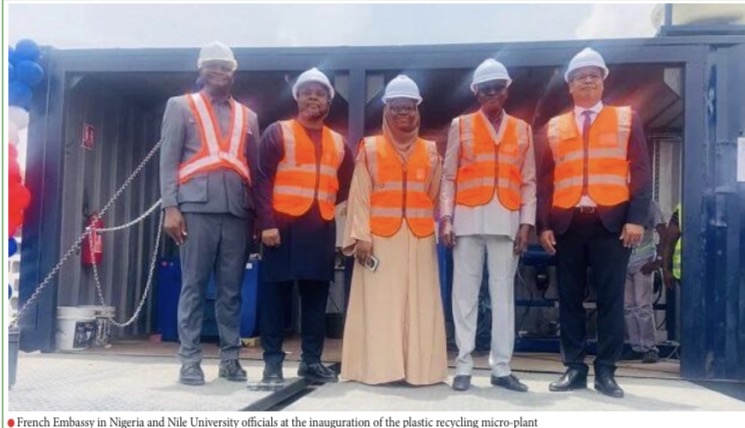
The French Embassy in Nigeria and Nile University have inaugurated a plastic recycling micro-plant in Abuja to promote environmental sustainability, research and entrepreneurship amid growing concerns over plastic pollution.
Speaking at the inauguration ceremony on Thursday in Abuja, the French Ambassador to Nigeria, Marc Fonbaustier, represented by the Deputy Head of Cooperation at the Embassy of France, Pierre Andriamampianina, said the initiative reflected France’s commitment to supporting Nigerian universities in tackling plastic pollution.
Fonbaustier said the project would strengthen environmental sustainability, research and innovation within Nigerian universities while contributing to wider efforts against environmental degradation.
According to him, the project marks the culmination of a partnership aimed at advancing research, innovation and environmental responsibility through practical solutions to plastic waste challenges.
He described plastic pollution as a major global concern and referenced the United Nations Conference co-chaired by France and Costa Rica in Nice in June 2025, where combating plastic pollution emerged as a key priority.
He also referred to a declaration issued during the World Health Summit in Lyon, France, on the harmful effects of plastics on global health systems.
The envoy commended Nigeria for introducing a national policy on plastic waste management in 2021 to regulate the lifecycle of plastics while promoting recycling and reuse.
He said the project demonstrated how local action could connect with wider global efforts against plastic pollution.
Fonbaustier praised students, researchers and staff members committed to environmental sustainability, adding that the recycling micro-plant would create opportunities for research, innovation and entrepreneurship.
According to him, the facility would also improve campus life and support the local economy through the production and sale of recycled products.
In his remarks, the Vice-Chancellor of Nile University, Dili Dogo, described the collaboration with the French Embassy as a demonstration of long-term commitment to education and development.
Dogo recalled that the French Ambassador had visited the university several times within the past two years, including to commission a fabrication laboratory donated to the institution.
He added that the embassy later organised training for representatives of 14 Nigerian universities on the use of fabrication laboratories after the establishment of the Fab Lab.
According to Dogo, the recycling micro-plant aligns with broader goals of environmental protection, entrepreneurship and skills development.
He said innovation remained important in addressing environmental and economic challenges linked to plastic waste.
The vice-chancellor expressed concern over the growing problem of plastic waste across Nigerian cities and called for stronger efforts to convert waste into productive resources.
He also said universities must promote vocational and entrepreneurial education capable of reducing unemployment and preparing young people with practical skills for the future.
Dogo disclosed that Nile University was working toward establishing a vocational skills school to equip students with practical competencies and support education for impact.
According to him, the university is part of a pan-African education network with institutions across 10 countries and more than 125,000 students.
He assured the French Embassy that the recycling facility would be properly utilised and maintained to achieve its environmental and educational objectives.
