Naturenews.africa
Advertisement
  • Environment
    • Ecology
    • Climate
    • Desertification 
    • Flooding
    • Erosion
    • Oil spillage
    • Ozone layer
  • Sustainability
    • Energy
    • Green House
    • Wildlife
    • Maritime
    • Tourism
  • Agriculture
  • Advisory Board
    • Emir Muhammad Hamim Nuhu Sanusi CFR
    • Prof. Abdoulaye Bathily
    • Mr. Nnimmo Bassey
    • Prof. Mark Mwandosya
    • Ms. Hawe Hamman Bouba
    • Professor Salah Arafa
    • Mr. Desmond Majekodunmi
    • Ms. Ikal Angelei
    • Professor Jimmy Adegoke
  • UN Days
  • Fact Check
  • Donate
  • Africa
    • Central Africa
    • East Africa
    • North Africa
    • Southern Africa
    • West Africa
Naturenews.africa
  • Environment
    • Ecology
    • Climate
    • Desertification 
    • Flooding
    • Erosion
    • Oil spillage
    • Ozone layer
  • Sustainability
    • Energy
    • Green House
    • Wildlife
    • Maritime
    • Tourism
  • Agriculture
  • Advisory Board
    • Emir Muhammad Hamim Nuhu Sanusi CFR
    • Prof. Abdoulaye Bathily
    • Mr. Nnimmo Bassey
    • Prof. Mark Mwandosya
    • Ms. Hawe Hamman Bouba
    • Professor Salah Arafa
    • Mr. Desmond Majekodunmi
    • Ms. Ikal Angelei
    • Professor Jimmy Adegoke
  • UN Days
  • Fact Check
  • Donate
  • Africa
    • Central Africa
    • East Africa
    • North Africa
    • Southern Africa
    • West Africa
No Result
View All Result
Naturenews.africa
No Result
View All Result
Home Agriculture

Drought wreaked havoc on Morocco’s cereal harvest

by Editor
July 24, 2024
in Agriculture, News
Reading Time: 3 mins read
0
Climate change: Concern over 2023 famine prediction
Share on FacebookShare on Twitter

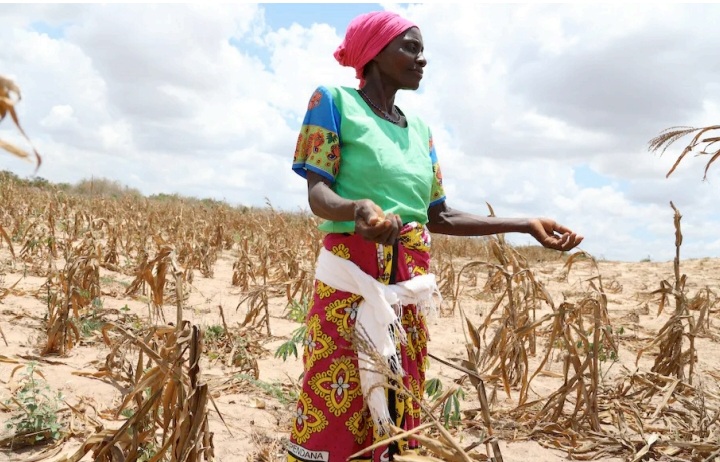
The wheat has grown and is ready to harvest in Morocco’s Amer Soufflia Commune. But these golden fields are a disappointment.

As combine harvesters whirr into life to collect the crop, farmers are certain the haul will be far less than they wanted.

A drought means the yield has dropped compared to previous years.

“In the past, we used to have a bounty, lot of wheat. But during the last seven or eight years, the harvest has been very low because of the drought. This year, the harvest is much lower than last’s year. Last year was OK, but this year, the harvest is very low,“ says Al Housni Belhoussni, who runs a small farm.

In some regions, the water shortage has been so severe that farmers have not even bothered cultivating their lands.

Kenitra Province has been spared the worst of the conditions, so farmers have continued to grow wheat.

But it’s becoming less and less viable.

“The agriculture yield decreased a lot. Today, a hectare of land gives us no more than 10 bags. What’s going on? In the past, we used to have 40, 50 or even 60 bags of wheat, but today, the harvest is very low,” says Driss Mamma, another small farmer.

Farmers have been trying to navigate delayed rains, reduced precipitation and significant variations between minimum and maximum temperatures during the growing season.

All these factors have disrupted the agricultural sector.

This harvest comes from a large, modern farm run by Mohamed Krata.

But even up-to-date strategies and techniques can’t mitigate the challenging weather.

Abdelkrim Naaman is chairman of Nalsiya, an NGO specialising in development, environment and social welfare. He lays the blame on climate change.

”Lately, Morocco is suffering from the dire consequences of droughts and climate change as well as from poor rainfall. Annually, Morocco devotes some five million hectares to cereals, but because of climate change, only around 2.7 million hectares were cultivated with cereals. The late rains during the autumn season affected the agriculture campaign. This year, only the spring rains, especially during the month of March, managed to rescue the crops,“ he says.

Krata says he follows advice but doesn’t understand the root cause of the problems his industry is facing.

”We farmers, we work according to the weather conditions and follow the instructions we receive from the Agriculture Ministry. The ministry tells us what kinds of diseases we have to fight but questions about climate change are known only to the scientists who are experts in this area,“ he says.

Rachid Benali, chairman of the Agriculture and Rural Development Confederation, (COMADER), an official organisation that represents Moroccans farmers in all sectors, is adamant that the main threat to the agricultural sector in the Kingdom is not drought, but climate change.

“Morocco witnessed droughts in the past. In some cases, we had droughts that lasted more than ten years. The problem we have lately is mainly climate change which is radical. We could feel it. We could feel the climate changes,” he says.

“They are very high temperatures in general, especially temperature peaks. We could have very high temperatures in December, which is abnormal. We could also have low temperatures in March or even in May. This means that there are climate changes. In the past, we used to have hail storms every ten years. Today, we can have up to three or four per year.“

This year, Morocco’s Agriculture Ministry estimates the wheat harvest will be around 31.2 million quintals, a drastic drop of 43% compared to the previous campaign.

The last harvest was 55.1 million quintals, which was still considered low.

Furthermore, the area sown to major cereals decreased by 33%, from 3.67 million hectares to just 2.47 million hectares.

It will have a huge impact on the country’s economy, according to Driss Aissaoui, an analyst and former member of the Moroccan Ministry for Agriculture.

”When you have less than 50 million quintals, you are then in a crisis. When we say crisis, this means that you have to import more and this is why Morocco is a major importer of cereals from the futures markets,“ he says.

The Food and Agriculture Organisation of the United Nations ranks Morocco as sixth among the top ten wheat importers in the world this year.

Quoting FAO, the Moroccan publication “L’Observateur du Maroc et d’Afrique” said that imports could increase by 19% to 7.5 million tons in 2024.

According to statistics from the National Federation of Cereal and Pulguity Dealers (FNCL), Morocco was active on the international wheat market in the first half of this year.

Moroccan traders imported nearly 2.5 million tons of common wheat between January and June with France remaining the largest supplier followed by Germany, Russia and Ukraine.

Source: africanews


Related Posts

Shortage of foundation seed threatens West Africa’s improved crop supply

Shortage of foundation seed threatens West Africa’s improved crop supply

August 30, 2026
Nigeria’s VP Shettima demands accountability in food security interventions

Nigeria’s VP Shettima demands accountability in food security interventions

August 30, 2026
Nestoil deploys $28m drilling rig asset to boost oil production

Nestoil deploys $28m drilling rig asset to boost oil production

August 30, 2026
COP17 unlocks $1.3bn for Africa as expert urges Nigeria to compete with data

COP17 unlocks $1.3bn for Africa as expert urges Nigeria to compete with data

August 29, 2026

Today’s Weather

Abuja, Nigeria
Monday, August 31, 2026
Fog
22 ° c
93%
8.3mh
28 c 21 c
Tue
25 c 19 c
Wed
  • Trending
  • Comments
  • Latest
COP17 unlocks $1.3bn for Africa as expert urges Nigeria to compete with data

COP17 unlocks $1.3bn for Africa as expert urges Nigeria to compete with data

August 29, 2026
Nigeria must act now on drought resilience, says Ifatimehin

Nigeria must act now on drought resilience, says Ifatimehin

August 29, 2026
Pan-Amazon forum rejects jaguar carbon credits

Pan-Amazon forum rejects jaguar carbon credits

August 28, 2026
NBTI unveils Tinubu Light Initiative, targets one million MSMEs

Why Mongolia’s COP17 Matters for Nigeria’s Climate Action

August 23, 2026
Ex-MD of Nigeria’s Daily Times Unveils Environment Newspaper, NatureNews

Ex-MD of Nigeria’s Daily Times Unveils Environment Newspaper, NatureNews

4
Sports Minister Dare to tee-off Liz-Ulumaranma inaugural golf tourney

Sports Minister Dare to tee-off Liz-Ulumaranma inaugural golf tourney

1
PwC Identifies Poor Infrastructure as Major Barrier to Agricultural Trade in Nigeria

PwC Identifies Poor Infrastructure as Major Barrier to Agricultural Trade in Nigeria

1

FAO Says 9.8 Million Residents across 16 States, FCT are Hungry

1
Sanga Moses: Turning agricultural waste into clean energy for Africa

Sanga Moses: Turning agricultural waste into clean energy for Africa

August 30, 2026
Abuja city with cattle  grazing unbated

Masterplan Review Amidst Prevailing Contraventions

August 30, 2026
Shortage of foundation seed threatens West Africa’s improved crop supply

Shortage of foundation seed threatens West Africa’s improved crop supply

August 30, 2026
WCS urges stronger global action on rangeland conservation

WCS urges stronger global action on rangeland conservation

August 30, 2026
Show Transparency Report
Naturenews.africa

© 2026 Nature News

  • Home
  • Advertisement
  • Contact Us
  • Privacy & Policy
  • Donation

No Result
View All Result
  • Environment
    • Ecology
    • Climate
    • Desertification 
    • Flooding
    • Erosion
    • Oil spillage
    • Ozone layer
  • Sustainability
    • Energy
    • Green House
    • Wildlife
    • Maritime
    • Tourism
  • Agriculture
  • Advisory Board
    • Emir Muhammad Hamim Nuhu Sanusi CFR
    • Prof. Abdoulaye Bathily
    • Mr. Nnimmo Bassey
    • Prof. Mark Mwandosya
    • Ms. Hawe Hamman Bouba
    • Professor Salah Arafa
    • Mr. Desmond Majekodunmi
    • Ms. Ikal Angelei
    • Professor Jimmy Adegoke
  • UN Days
  • Fact Check
  • Donate
  • Africa
    • Central Africa
    • East Africa
    • North Africa
    • Southern Africa
    • West Africa

© 2026 Nature News

This website uses cookies. By continuing to use this website you are giving consent to cookies being used. Visit our Privacy and Cookie Policy.