

By Abbas Nazil
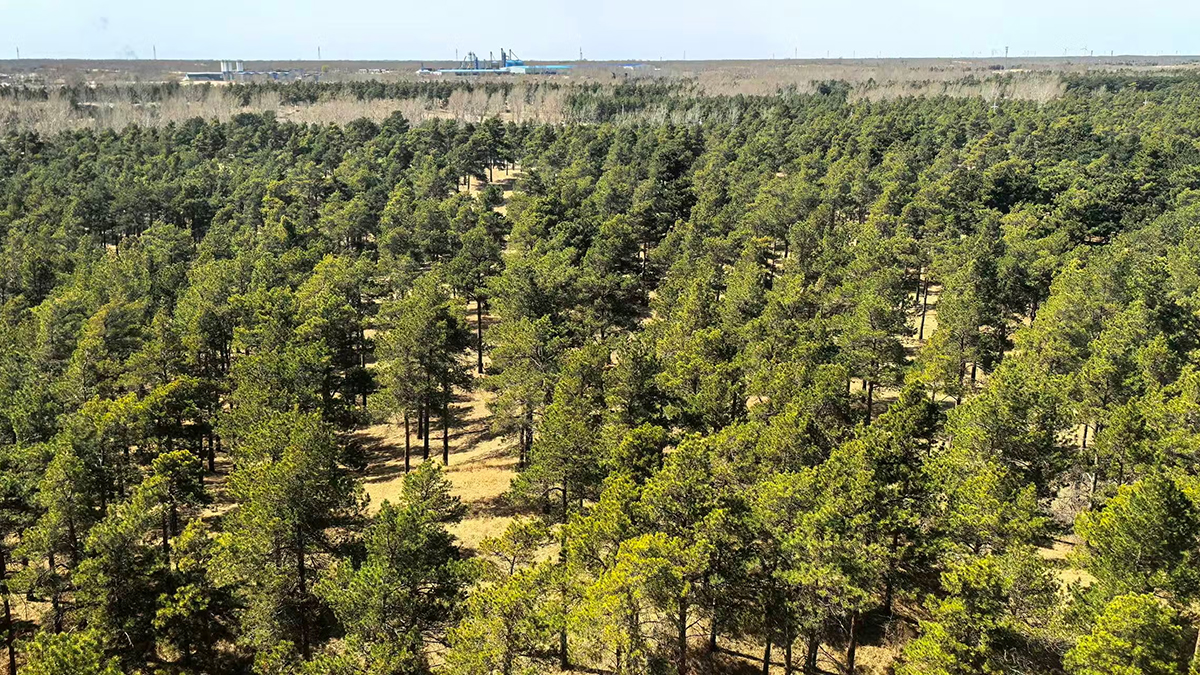
The Taklamakan Desert, one of the driest areas on Earth, is gradually being transformed into a carbon sink through decades of large-scale tree-planting efforts.
Nearly five decades of afforestation along the desert’s edges have resulted in vegetation that now absorbs more greenhouse gases than the region emits, according to a team of scientists from the University of California, Riverside and various Chinese institutions.
The researchers analyzed several years of satellite sensor data, modeling CO2 levels, vegetation cover, and local weather patterns to assess the effectiveness of the afforestation program.
While tropical forests like the Amazon capture global attention for their carbon-absorbing capacity, the Taklamakan study demonstrates that even small bands of trees and shrubs in hyperarid regions can contribute measurably to carbon reduction.
Atmospheric scientist King-Fai Li of the University of California highlighted that although the planted areas are largely shrublands rather than dense forests, the consistent CO2 uptake is a measurable and positive impact on the local carbon balance.
The Taklamakan Desert covers approximately 337,000 square kilometers and has been described as a “biological void” due to its extremely harsh, hyperarid climate.
Afforestation along its margins has also provided additional environmental benefits, including reducing wind erosion, lowering the frequency and intensity of sandstorms, and protecting surrounding agricultural lands.
The project forms part of the larger Three-North Shelterbelt Program, which aims to increase forest cover across 13 northern Chinese provinces from 5.05 percent to nearly 15 percent by 2050.
Researchers caution that the carbon uptake remains modest relative to global emissions, with full afforestation potentially offsetting around 60 million tons of CO2 compared to roughly 40 billion tons emitted worldwide annually.
Special geographic features, such as surrounding mountains that provide rain runoff, have facilitated the program’s success, meaning similar results may not be easily replicated in other deserts.
Despite limitations, the study offers hope that carefully planned, long-term afforestation initiatives can contribute to mitigating climate change, enhance local ecosystems, and improve environmental resilience.
The findings have been published in the journal PNAS, providing valuable insights into how hyperarid regions can play a role in global carbon management strategies.
