

By Faridat Salifu
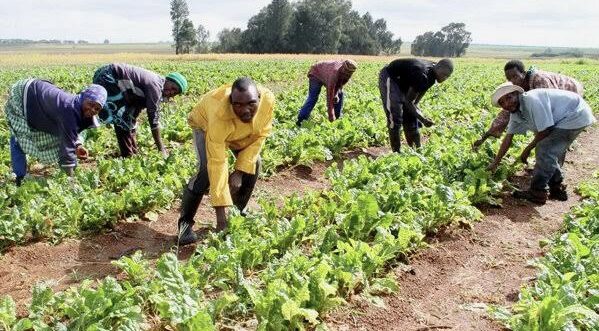
The House of Representatives has called on the Federal Government and agricultural stakeholders to prioritise climate‑resilient farming methods capable of withstanding prolonged drought and increasing dust storms threats that are reshaping Nigeria’s agricultural landscape.
At a plenary session on Monday, February 9, 2026, lawmakers emphasised that Nigeria’s rain‑fed agricultural system remains highly vulnerable to climate change impacts, including irregular rainfall patterns, prolonged dry spells, and frequent dust storms that damage soil, reduce crop yields, and undermine rural livelihoods.
Experts say such climate hazards are worsening food insecurity and threatening farmers’ productivity across the country.
In a motion adopted by the House, members urged the Federal Ministry of Agriculture and Food Security, research institutions and state agricultural departments to support the widespread adoption of drought‑tolerant crops, water‑efficient irrigation systems, and soil conservation techniques that can help farmers maintain yields under harsh conditions.
The motion cites rising climate risks and the need to modernise farming practices to safeguard food production and rural incomes.
Lawmakers also called for enhanced investment in climate‑smart agriculture, which includes early‑maturing crop varieties, effective water management, agroforestry, and integrated farming systems that can shield Nigeria’s food systems from extreme weather.
Climate experts and international agencies increasingly recommend such strategies as key to building resilience in vulnerable agricultural zones.
The resolution aligns with broader government commitments to climate‑resilient agriculture.
Recent national workshops and policy dialogues have emphasised similar priorities, including scaling up climate‑smart practices, expanding access to resilient seed varieties, and improving extension services to help farmers adapt to drought and other climate stressors.
Lawmakers noted that adopting resilient methods is not only an environmental necessity but also an economic imperative, as Nigeria’s agricultural productivity directly affects food prices, rural employment, and national stability.
The House urged a coordinated push across federal, state, and local levels to implement climate adaptation strategies, provide targeted support to farmers, and ensure long‑term sustainability of Nigeria’s agricultural sector.
