

By Abbas Nazil
Kenya has commenced efforts at transforming its Great Rift Valley into a hub for carbon removal with the launch of the Great Carbon Valley initiative.
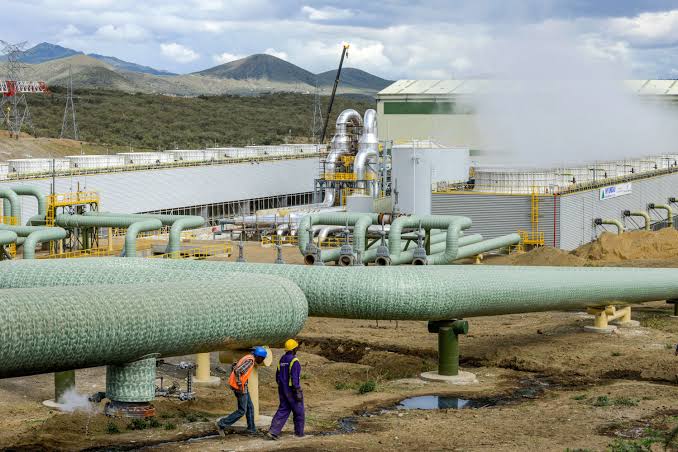
The project aims to harness the region’s abundant geothermal energy to power direct air capture (DAC) technology that can remove carbon dioxide from the atmosphere.
The effort is led by local entrepreneurs and international partners, including Octavia Carbon, Cella, and Climeworks, who are testing pilot DAC units in the town of Gilgil.
Octavia Carbon’s devices use a chemical amine filter to capture CO2 from the air, which is then released under heat and stored underground in volcanic basalt rock formations, where it reacts to form solid minerals.
Each prototype currently captures a modest 60 tons of CO2 per year, but the long-term goal is to scale operations to demonstrate that DAC can be a viable tool to combat climate change globally.
Supporters of the project point out that Kenya’s geothermal capacity provides a low-cost, renewable energy source to power DAC without diverting electricity from other industries, while also creating job opportunities for young engineers and technicians.
The initiative has attracted high-profile attention from investors and governments, with the potential to generate economic growth while contributing to climate mitigation efforts, particularly for countries in the Global South.
However, the project faces significant challenges, including high costs, technological uncertainties, and skepticism about the effectiveness of DAC at scale.
Critics argue that DAC is expensive compared with natural carbon capture methods like reforestation and that relying on it may allow polluters to delay the transition to renewable energy.
Local communities, particularly the Maasai people, have expressed concerns over displacement and limited access to electricity, highlighting the need for equitable benefits and stronger community engagement.
Despite these hurdles, proponents like Bilha Ndirangu and Martin Freimüller are optimistic that Great Carbon Valley can serve as a model for combining climate action, industrial innovation, and economic development.
If successful, the project could validate DAC technology in the tropics, expand Kenya’s renewable energy infrastructure, and provide proof of concept for carbon removal initiatives across Africa and other developing regions.
