By Abdullahi Lukman
The Wildlife Conservation Society’s Bronx Zoo has helped rescue and rehabilitate more than 800 North American box turtles confiscated from suspected wildlife trafficking operations since October 2024, as U.S. authorities confront what they describe as an unprecedented increase in turtle trafficking.
The zoo works with the U.S. Fish and Wildlife Service (USFWS) to provide emergency treatment, quarantine, rehabilitation and long-term placement for turtles seized from traffickers, most of which are believed to have been collected from the wild for the international pet trade.
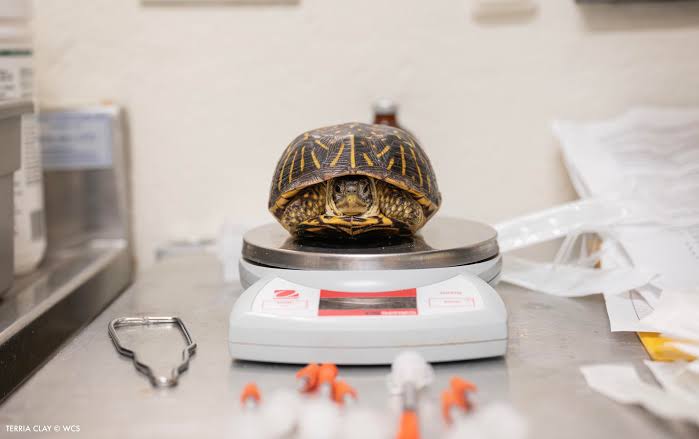
The confiscated turtles are often found in poor condition after being subjected to inadequate transport and holding conditions. Many arrive dehydrated, severely underweight, injured or suffering from infectious diseases.
The Bronx Zoo has particularly received Eastern, three-toed, ornate and Florida box turtles. Other species seized in trafficking cases have included Gulf Coast box turtles, spotted turtles and diamondback terrapins.
Upon arrival, veterinary and animal-care teams conduct detailed health assessments, provide fluids and treatment, test for diseases, document injuries and determine the appropriate quarantine or rehabilitation programme. While many recover, some animals arrive in critical condition and die despite intensive care, while others require euthanasia because of severe health problems.
Once rehabilitated, the turtles are placed according to USFWS plans. Depending on their species, health, legal status and the circumstances of their seizure, they may be transferred to accredited zoos or conservation organisations or, where permitted and biologically appropriate, returned to protected areas in the wild.
Wildlife officials warn that removing large numbers of turtles from natural populations can cause long-term ecological damage. Box turtles are particularly vulnerable because they are long-lived, mature slowly and have relatively low reproductive rates, making it difficult for populations to replace adults removed from the wild.
Many of the species involved are protected under the Convention on International Trade in Endangered Species of Wild Fauna and Flora (CITES) or state wildlife laws. In New York and New Jersey, for example, collecting or possessing Eastern box turtles is prohibited.
The Bronx Zoo has provided care for confiscated wildlife for decades in cooperation with law enforcement agencies. The operation now extends beyond turtles, with WCS zoos and aquariums in New York City receiving more than 500 confiscated animals annually by 2025, compared with slightly more than 100 in 1996.
The increase in seizures reflects both intensified enforcement and continuing international demand for turtles as pets and hobby animals, according to wildlife experts.
To address the growing number of confiscated animals, the Association of Zoos and Aquariums established the Wildlife Confiscations Network in 2023. The network connects accredited zoos, aquariums and other qualified facilities with USFWS to coordinate the care and placement of seized wildlife.
WCS is also supporting bipartisan legislation known as the Wildlife Confiscations Network Act, which would strengthen the system for placing confiscated wildlife with qualified care facilities while allowing law enforcement agencies to concentrate on investigating and prosecuting traffickers.
For the Bronx Zoo, the work combines immediate animal rescue with broader efforts to disrupt illegal wildlife trafficking and protect vulnerable turtle populations in the wild.
Quality journalism costs money. Today, we're asking that you support us to do more. Support our work by sending in your donations.
The donation can be made directly into NatureNews Account below