

By Obiabin Onukwugha
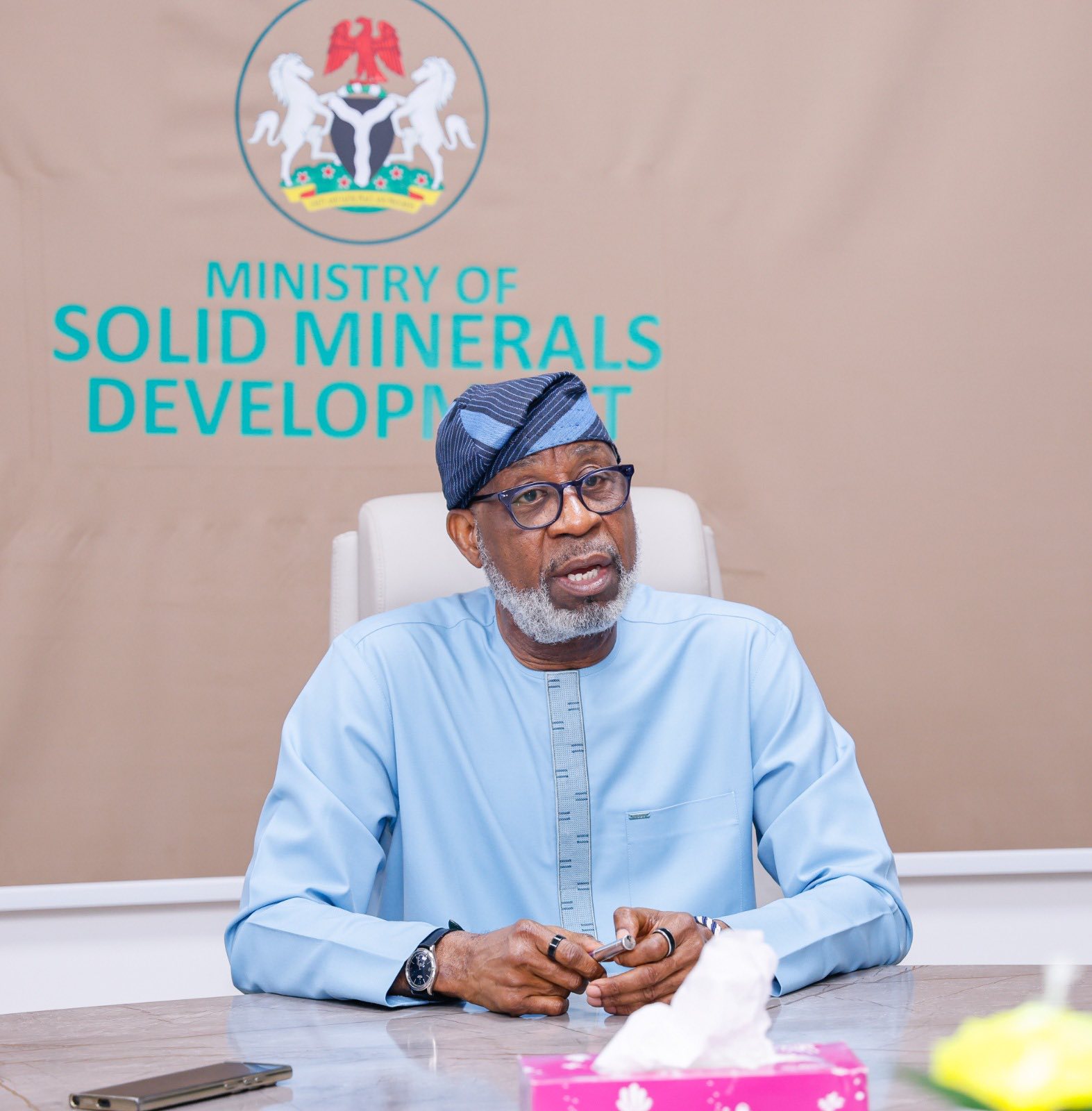
Minister of Solid Minerals Development, Dr. Dele Alake has stated that reforms in Nigeria’s mining sector unlocked ₦68.1 billion in 2025 revenue and attracted $800 million in processing investments.
Alake disclosed this while delivering a keynote address at the Africa Commodities Conference and Exhibition, ACCE 2026, in Abuja at the weekend.
He also stated that Nigeria’s mining sector is shifting from informal extraction to structured industrialization under President Bola Tinubu’s Renewed Hope Agenda.
Alake, who was epresented by the Deputy Director of Investment Promotion and Minerals Trade at the Ministry of Solid Minerals Development, Etido Umoakpan, highlighted Nigeria’s 44 commercially viable minerals, including gold, lithium, and iron ore, stating, “the past paradox: “enormous mineral potential, but weak formalisation; rising global demand, but inadequate geological confidence; abundant extraction, but limited beneficiation.”
He explained that the reforms are built on the 2007 Minerals and Mining Act and 2011 Regulations, modernized via digital cadastre (eMC+ platform), stricter title administration, and mandatory value-addition plans for mining leases introduced in November 2024.
“Nigeria would no longer be satisfied with a pit-to-port model. The mining law is under review to match global standards,” he stated.
The Minister further revealed federal government investments in the mining sector, including a $600 million lithium processing plant, $200 million refinery near Abuja, $50 million ASBA lithium plant in the FCT, $600 million Avatar project in Nasarawa, and a $1 billion iron ore-to-steel initiative in Kogi, totaling over $2 billion in midstream projects by May 2025.
Earlier, Convener of the Conference, Michael Akueche, said the reform drive will attract thousands of undocumented miners into regulated cooperatives.
He appealed for the deployment of young professionals, including geologists, mining engineers, and health, safety, and environment experts, to manage the expanded cooperatives and improve operational standards.
