

By Abdullahi Lukman
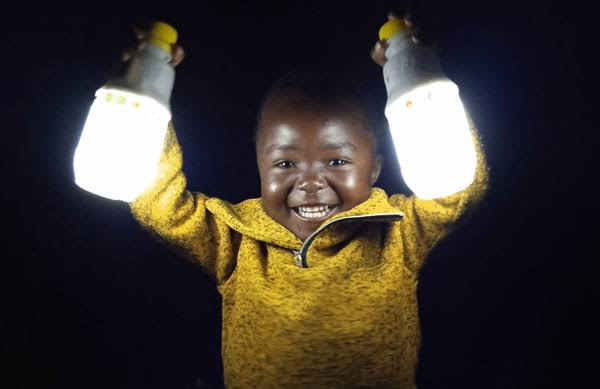
Monica Ben, a 12-year-old student from Manyoshwa Primary School in rural Seke, Zimbabwe, uses a unique lantern made from recycled materials to complete her homework at home.
Known as the “Chigubhu lantern,” this portable light, designed by local innovator Aluwaine Tanaka Manyonga, provides essential lighting for students in areas without reliable electricity.
The Chigubhu lantern is constructed from plastic bottles, tins, and LED lighting waste, and can be charged using solar energy during the day.
Ben, like many students in her community, lives in a home that is not connected to the national electricity grid, making it difficult to study after dark.
Before the Chigubhu lantern, she had no choice but to either complete her homework in the early morning or fail to submit assignments.
“I take the lantern home after school, and it gives me about four hours of light,” says Ben. “It’s a big help because candles are too expensive, and I can now finish my homework on time.”
The initiative began in 2019 when Manyonga, inspired by both the lack of electricity and growing electronic waste, installed a solar system at Manyoshwa Primary School.
Over the years, he has provided students with the tools to make their own lanterns from recycled materials, teaching them skills in sustainability, waste management, and renewable energy.
“The situation for learners without light at home is dire. Many students could not study at night, so we needed an intervention,” said Godwin Kadiramwando, headteacher of Manyoshwa Primary School.
“This innovation is helping them improve in their studies.”
With support from UNICEF, the Australian Embassy, and local companies, Manyonga has distributed over 1,500 lanterns across Zimbabwe, teaching hundreds of students to make the lanterns themselves.
The lanterns are designed to be durable and maintainable, with students also learning basic repair skills.
Manyonga’s work not only addresses the issue of unreliable electricity but also tackles Zimbabwe’s growing plastic waste problem, which contributes significantly to environmental degradation.
The country produces about 342,000 tonnes of plastic waste annually, a challenge that Manyonga’s lantern project helps to mitigate.
Ben and her classmates are not only gaining practical skills but are also being inspired to pursue careers in engineering. “I want to make more lanterns and reduce waste,” says Ben, proudly showing off her creation. “It feels good to help the environment while doing something useful.”
With the ongoing challenges of electricity access—only 44 percent of Zimbabwe’s population has power, and rural areas face even lower rates—many communities are turning to innovative solutions like the Chigubhu lantern to power their future.
