

By Barbara Nwaiwu
Public health advocates have called on the Federal Government to increase annual funding for tobacco control to at least N300 million, warning that current allocations are insufficient to effectively implement Nigeria’s tobacco control laws and tackle tobacco-related diseases.
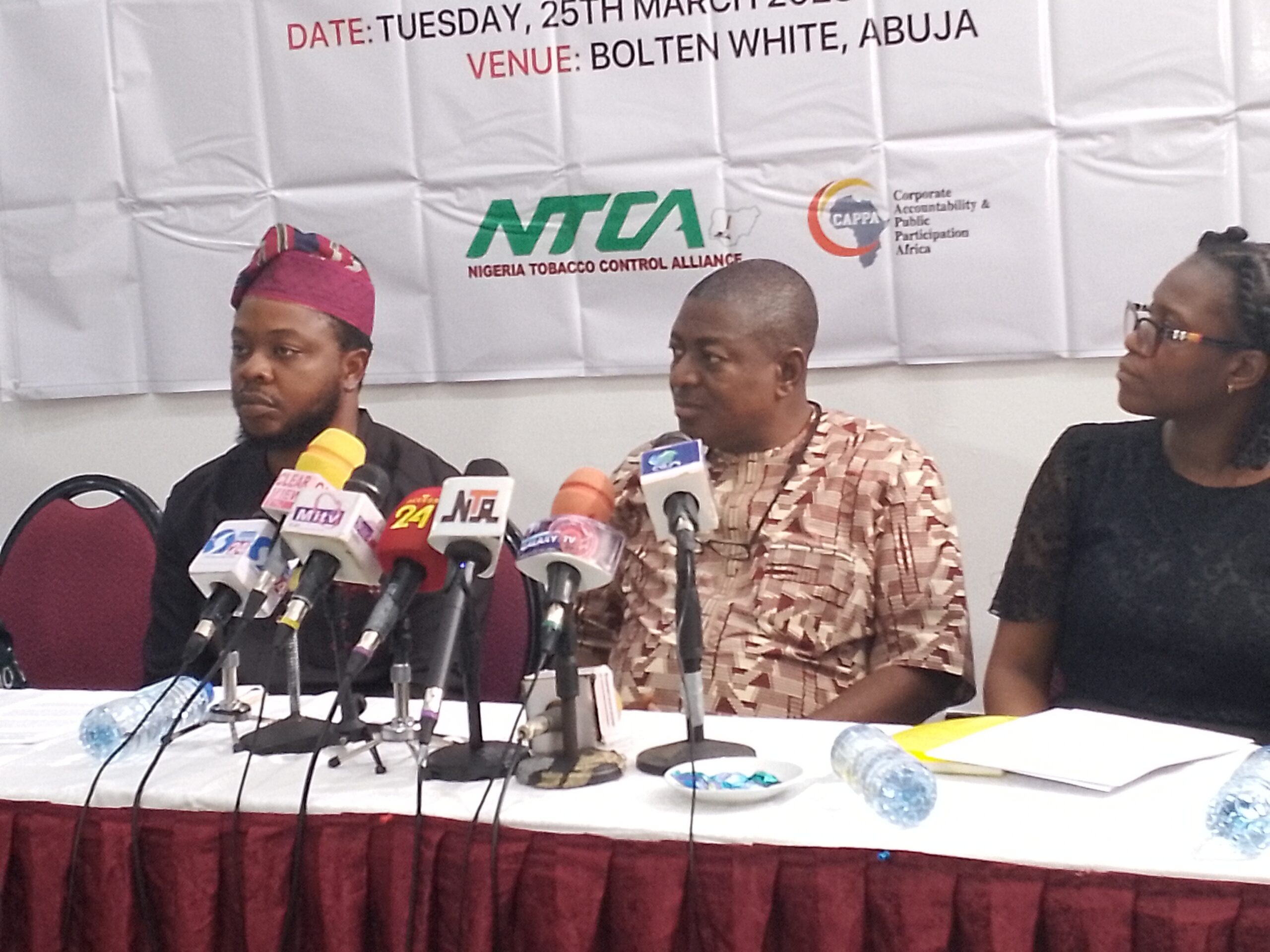
The call was made on Wednesday in Calabar by the Nigeria Tobacco Control Alliance (NTCA), which disclosed that only N28 million was allocated to tobacco control between 2023 and 2025.
Speaking in an interview, the spokesperson for the NTCA, Mr Emmanuel Onwuka, described the funding as grossly inadequate, saying it threatened the implementation of the National Tobacco Control Act (NTCA) 2015 and weakened efforts to address tobacco-related illnesses across the country.
According to Onwuka, domestic investment in tobacco control stood at N4.7 million in 2023, N10 million in 2024 and N13 million in 2025, despite growing public health challenges associated with tobacco use.
He said the allocations were insignificant when compared with the estimated N526.4 billion Nigeria spent treating tobacco-related illnesses in 2019, citing data from the Centre for the Study of the Economies of Africa.
Onwuka also referenced estimates by the World Health Organisation (WHO), which indicate that more than 3.5 million Nigerians use tobacco, while about 16,100 people die annually from tobacco-related diseases.
“Enforcement of smoke-free laws, public awareness campaigns, cessation services, research and tobacco industry monitoring remained largely dependent on international donor funding. Bloomberg Philanthropies, Vital Strategies, Campaign for Tobacco-Free Kids and the WHO have sustained advocacy, policy reforms and implementation support in Nigeria,” he said.
He warned that declining international development funding could weaken tobacco control programmes, leaving the country more vulnerable to aggressive tobacco industry marketing and increased public health risks.
Onwuka urged the government to establish sustainable domestic financing by earmarking tobacco tax revenues exclusively for tobacco control programmes and enforcement activities.
He cited Gabon, which allocates one per cent of tobacco tax revenues to tobacco control, and Côte d’Ivoire, which channels special tobacco levies into health programmes as examples Nigeria could adopt.
The Executive Secretary of the Rivers Contributory Health Protection Programme, Dr Vetty Agala, said sustainable tobacco control financing required effective revenue generation, resource pooling and strategic purchasing of health interventions.
“Sustainable tobacco control financing depends on effective revenue generation, resource pooling and strategic purchasing of health interventions,” Agala said.
He said dedicated funding would provide consistent support for enforcement, public education, cessation services, research, institutional capacity and the effective implementation of existing tobacco control laws.
Agala noted that the NTCA, Corporate Accountability and Public Participation Africa, and the Campaign for Tobacco-Free Kids had consistently advocated an annual allocation of at least N300 million for tobacco control.
He described the proposed N300 million allocation as a practical investment, considering Nigeria’s rising healthcare costs, productivity losses and preventable deaths linked to tobacco consumption.
Onwuka called on the Federal Government, the National Assembly and state governments to prioritise sustainable financing for tobacco control, saying increased investment would protect lives, reduce healthcare costs and improve national productivity.
