Naturenews.africa
Advertisement
  • Environment
    • Ecology
    • Climate
    • Desertification 
    • Flooding
    • Erosion
    • Oil spillage
    • Ozone layer
  • Sustainability
    • Energy
    • Green House
    • Wildlife
    • Maritime
    • Tourism
  • Agriculture
  • Advisory Board
    • Emir Muhammad Hamim Nuhu Sanusi CFR
    • Prof. Abdoulaye Bathily
    • Mr. Nnimmo Bassey
    • Prof. Mark Mwandosya
    • Ms. Hawe Hamman Bouba
    • Professor Salah Arafa
    • Mr. Desmond Majekodunmi
    • Ms. Ikal Angelei
    • Professor Jimmy Adegoke
  • UN Days
  • Fact Check
  • Donate
  • Africa
    • Central Africa
    • East Africa
    • North Africa
    • Southern Africa
    • West Africa
Naturenews.africa
  • Environment
    • Ecology
    • Climate
    • Desertification 
    • Flooding
    • Erosion
    • Oil spillage
    • Ozone layer
  • Sustainability
    • Energy
    • Green House
    • Wildlife
    • Maritime
    • Tourism
  • Agriculture
  • Advisory Board
    • Emir Muhammad Hamim Nuhu Sanusi CFR
    • Prof. Abdoulaye Bathily
    • Mr. Nnimmo Bassey
    • Prof. Mark Mwandosya
    • Ms. Hawe Hamman Bouba
    • Professor Salah Arafa
    • Mr. Desmond Majekodunmi
    • Ms. Ikal Angelei
    • Professor Jimmy Adegoke
  • UN Days
  • Fact Check
  • Donate
  • Africa
    • Central Africa
    • East Africa
    • North Africa
    • Southern Africa
    • West Africa
No Result
View All Result
Naturenews.africa
No Result
View All Result
Home Waste management

New breakthrough in polystyrene recycling promises environmental and economic benefits

by Editor
May 26, 2024
in Waste management
Reading Time: 2 mins read
0
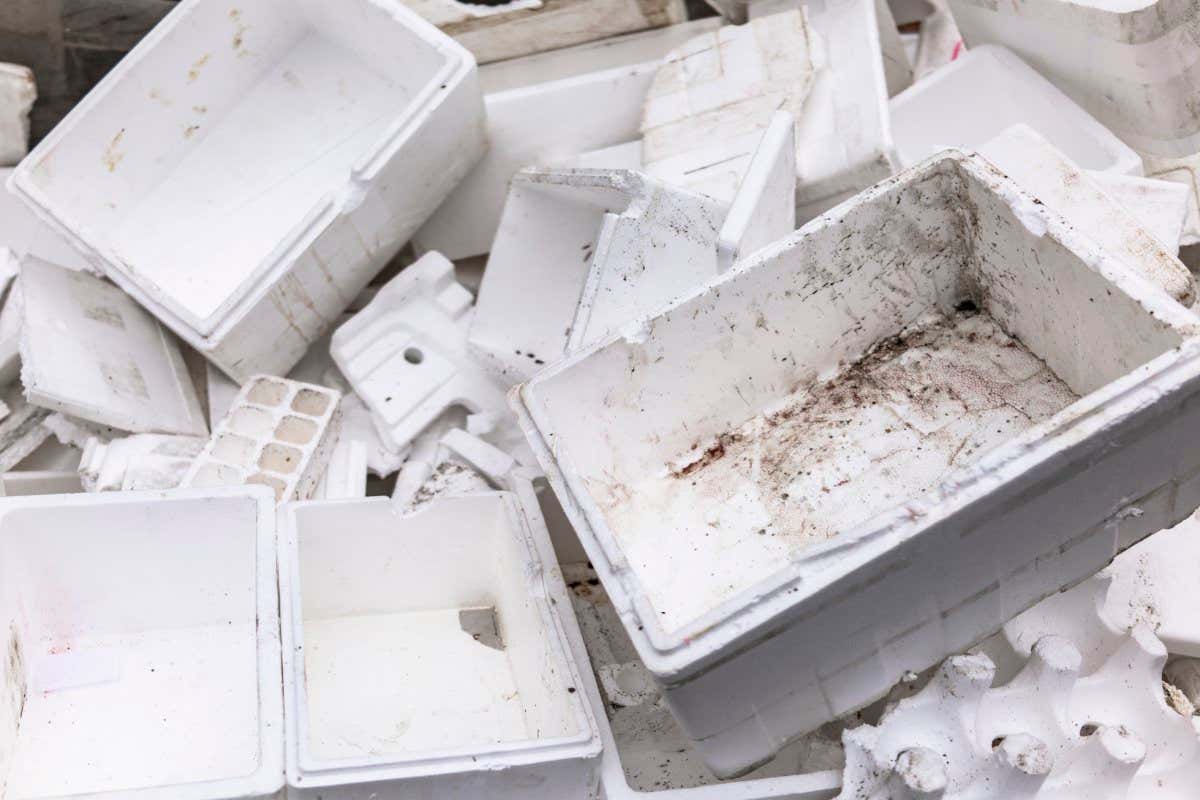
New breakthrough in polystyrene recycling promises environmental and economic benefits
Share on FacebookShare on Twitter

By George George Idowu

A pioneering method for recycling polystyrene, developed by a team of chemical engineers, could revolutionize plastic recycling and significantly reduce environmental impact.

Researchers from the University of Bath in the UK and Worcester Polytechnic Institute (WPI) in the US have unveiled a novel chemical recycling process, known as pyrolysis, which breaks down polystyrene into its fundamental components.

This technique not only enhances recycling efficiency but also promises to be both cost-effective and energy-efficient.

The new method addresses a long-standing challenge with polystyrene recycling. Traditionally, less than 5% of polystyrene is recycled due to its bulkiness and the inefficiencies of conventional recycling methods.

The innovative pyrolysis technique developed by the collaborative team could enable up to 60% of polystyrene to be recycled into reusable styrene.

“Chemical recycling techniques are a major focus within chemical engineering right now,” explains Dr. Bernardo Castro-Dominguez, senior lecturer at the University of Bath and co-director of the Centre for Digital, Manufacturing & Design (dMaDe). “Cost- and energy-efficient ways to break down plastics like polystyrene are urgently needed.”

Pyrolysis involves heating polystyrene to extremely high temperatures in an oxygen-free environment. This process prevents the material from igniting and instead breaks it down into monomers, which are then purified and reconstituted into new polystyrene.

Remarkably, producing 2.2 pounds (one kilogram) of this new material requires less than 10 megajoules of energy—equivalent to running a typical microwave for about 30 minutes.

Michael Timko, professor of chemical engineering at WPI, highlights the potential impact of this technique: “Our analysis finds polystyrene to be an ideal candidate for a chemical recycling process. Surprisingly, the process is energetically efficient and potentially economically competitive.

Traditional recycling methods degrade polystyrene over time, compromising its strength and flexibility. Additionally, its bulkiness leads to high transportation costs and limited acceptance at recycling facilities.

In contrast, the new process utilizes a pyrolysis reactor, a heat exchanger, and two distillation columns to decompose polystyrene into high-purity monomer grade styrene and reusable petroleum-like by-products.

The process yields a 60% efficiency rate, meaning 600 grams of 99% pure styrene can be recovered from each kilogram of used polystyrene.

The environmental benefits of this method are significant. The cost to reduce carbon emissions through this process is about $1.5 per ton of CO2, considerably lower than many existing recycling methods.

The researchers also advocate for policies to incentivize polystyrene recycling, which would enhance the economic viability of this new technique and address a major waste management issue.

This breakthrough is part of a broader trend in polystyrene recycling innovation. Earlier research by Dr. Xiaodan Li and Professor Dirk Tischler identified a bacterial enzyme capable of degrading styrene, suggesting future potential for biological recycling methods.

In summary, this new pyrolysis-based recycling process offers a promising solution to the global challenge of polystyrene waste, combining economic feasibility with substantial environmental benefits. As the technique gains traction, it could significantly transform the recycling landscape and contribute to more sustainable plastic management practices.

Related Posts

Global Recycling Rates Decline Amid Materials Consumption Surge – Report

Global Recycling Rates Decline Amid Materials Consumption Surge – Report

May 18, 2025
Tunisian Entrepreneur Converts Olive Waste Into Eco-friendly Fuel, Slashes Emissions

Tunisian Entrepreneur Converts Olive Waste Into Eco-friendly Fuel, Slashes Emissions

May 18, 2025
LAWMA Chief Urges Lagosians to See Waste as Economic Opportunity

LAWMA Chief Urges Lagosians to See Waste as Economic Opportunity

May 17, 2025
From Cradle to Landfill: The Hidden Cost of Your Smartphone in the Age of E-waste

From Cradle to Landfill: The Hidden Cost of Your Smartphone in the Age of E-waste

May 7, 2025

Today’s Weather

Abuja, Nigeria
Monday, August 31, 2026
Fog
22 ° c
93%
8.3mh
28 c 21 c
Tue
25 c 19 c
Wed
  • Trending
  • Comments
  • Latest
COP17 unlocks $1.3bn for Africa as expert urges Nigeria to compete with data

COP17 unlocks $1.3bn for Africa as expert urges Nigeria to compete with data

August 29, 2026
Nigeria must act now on drought resilience, says Ifatimehin

Nigeria must act now on drought resilience, says Ifatimehin

August 29, 2026
Pan-Amazon forum rejects jaguar carbon credits

Pan-Amazon forum rejects jaguar carbon credits

August 28, 2026
NBTI unveils Tinubu Light Initiative, targets one million MSMEs

Why Mongolia’s COP17 Matters for Nigeria’s Climate Action

August 23, 2026
Ex-MD of Nigeria’s Daily Times Unveils Environment Newspaper, NatureNews

Ex-MD of Nigeria’s Daily Times Unveils Environment Newspaper, NatureNews

4
Sports Minister Dare to tee-off Liz-Ulumaranma inaugural golf tourney

Sports Minister Dare to tee-off Liz-Ulumaranma inaugural golf tourney

1
PwC Identifies Poor Infrastructure as Major Barrier to Agricultural Trade in Nigeria

PwC Identifies Poor Infrastructure as Major Barrier to Agricultural Trade in Nigeria

1

FAO Says 9.8 Million Residents across 16 States, FCT are Hungry

1
Sanga Moses: Turning agricultural waste into clean energy for Africa

Sanga Moses: Turning agricultural waste into clean energy for Africa

August 30, 2026
Abuja city with cattle  grazing unbated

Masterplan Review Amidst Prevailing Contraventions

August 30, 2026
Shortage of foundation seed threatens West Africa’s improved crop supply

Shortage of foundation seed threatens West Africa’s improved crop supply

August 30, 2026
WCS urges stronger global action on rangeland conservation

WCS urges stronger global action on rangeland conservation

August 30, 2026
Show Transparency Report
Naturenews.africa

© 2026 Nature News

  • Home
  • Advertisement
  • Contact Us
  • Privacy & Policy
  • Donation

No Result
View All Result
  • Environment
    • Ecology
    • Climate
    • Desertification 
    • Flooding
    • Erosion
    • Oil spillage
    • Ozone layer
  • Sustainability
    • Energy
    • Green House
    • Wildlife
    • Maritime
    • Tourism
  • Agriculture
  • Advisory Board
    • Emir Muhammad Hamim Nuhu Sanusi CFR
    • Prof. Abdoulaye Bathily
    • Mr. Nnimmo Bassey
    • Prof. Mark Mwandosya
    • Ms. Hawe Hamman Bouba
    • Professor Salah Arafa
    • Mr. Desmond Majekodunmi
    • Ms. Ikal Angelei
    • Professor Jimmy Adegoke
  • UN Days
  • Fact Check
  • Donate
  • Africa
    • Central Africa
    • East Africa
    • North Africa
    • Southern Africa
    • West Africa

© 2026 Nature News

This website uses cookies. By continuing to use this website you are giving consent to cookies being used. Visit our Privacy and Cookie Policy.