

By Abdullahi Lukman
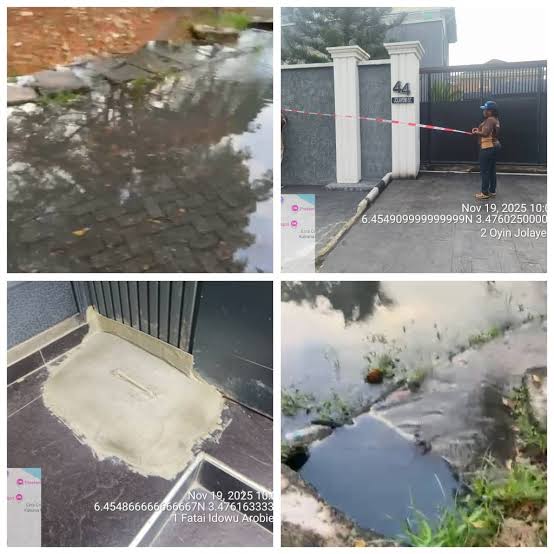
Residents of Lekki, one of Lagos’ fastest-growing urban areas, continue to grapple with severe water challenges, relying on discoloured and sometimes foul-smelling borehole water for daily use.
Despite years of complaints, the issue remains unresolved, forcing families and businesses to adapt by purchasing bottled water, tanker deliveries, or investing in costly household treatment units.
In neighbourhoods like Chevron Drive, Ajah, Ikate, and Lekki Phase 1, borehole water is increasingly restricted to non-essential purposes such as flushing toilets and cleaning. For drinking, cooking, and bathing, many depend on more expensive alternatives.
This reliance on borehole water, however, comes with serious environmental and health risks, with experts warning that continued over-extraction could lead to land subsidence and contamination from surrounding water bodies.
The crisis is a result of decades of underinvestment in public water infrastructure and the challenges posed by Lekki’s soft, marshy soil and high water table.
Many estates were developed without central water provisions, leaving private boreholes as the only option for residents.
However, the area’s geology amplifies the problem, with contaminants easily seeping into groundwater, leading to brownish water with high sediment levels and occasional odours.
The cost of water is also rising. Residents like Kayode Opeyemi, who live in Ajah, report spending between N3,500 and N5,000 on 2,000-litre tanker deliveries every four to six weeks.
Some high-end developments use estate-wide purification systems, such as reverse osmosis, but these systems are expensive, costing millions of Naira for installation and maintenance, with monthly fees of up to N50,000.
Health experts, including Dr. Doyin Odubanjo of the Nigerian Academy of Science, warn that many boreholes in Lekki contain harmful microbial and chemical contaminants, making untreated water unsafe for consumption.
Dr. Odubanjo advocates for centralized water treatment systems to ensure consistent water quality, as household-level solutions are costly and inefficient.
In response to the crisis, Lagos State Government has outlined plans to expand water access, including refurbishing mini waterworks with support from USAID.
Major projects like the Adiyan Phase II and Iju Waterworks, which are expected to deliver millions of gallons of water per day, are part of long-term solutions.
However, officials acknowledge that water services will not be free, and subsidies will be necessary to support low-income households.
Independent researcher, Tonami Playman points out that without significant upgrades to the city’s ageing water distribution network, increased production capacity will be of limited benefit.
He stresses the need for a comprehensive sewer system, as wastewater management must progress alongside potable water supply.
Playman also highlights the risks of private borehole reliance, warning that uncontrolled groundwater extraction could lead to land subsidence, a problem seen in cities like Venice and Shanghai.
As Lekki’s population grows, the pressure on its water infrastructure intensifies.
Environmental experts urge immediate intervention to prevent further degradation of the region’s fragile ecosystem and avoid escalating costs in the future.
