

By Abbas Nazil
Indonesia’s Riau province is taking center stage in global climate action with the launch of the Green for Riau initiative, a collaborative effort designed to protect forests, empower local communities, and align with the nation’s 2060 net-zero emissions target.
The programme, backed by the Government of Indonesia, the UN Environment Programme (UNEP), the Food and Agriculture Organization (FAO), and supported by the United Kingdom, seeks to turn Riau into a model of sustainable forest management.
Indonesia’s climate strategy calls for forests to absorb 140 million tonnes of CO₂ annually, equivalent to removing 30 million cars from the road, and Riau’s role is critical given its history of deforestation, peatland degradation, and frequent fires.
Through Green for Riau, local leadership and customary knowledge are at the heart of implementation.
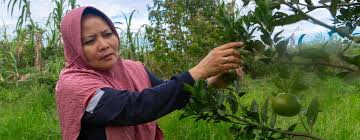
Governor Abdul Wahid stressed that economic growth and climate goals can coexist, highlighting agroforestry, eco-tourism, and non-timber forest products as ways communities can earn while conserving forests.
Nearly half of Riau’s seven million residents depend on forest resources, making their involvement central to the initiative’s success.
The programme also integrates the REDD+ mechanism, which rewards measurable emission reductions.
With five million hectares of carbon-rich peatlands, Riau is poised to become the first province in Indonesia to access REDD+ finance.
Technology plays a role as international organizations apply artificial intelligence, satellite imagery, and carbon forecasting to measure emissions, but leaders emphasize the importance of integrating adat, or customary knowledge, developed over generations.
Customary communities signed a joint declaration to align with national frameworks, ensuring safeguards and equitable benefit-sharing.
According to UNEP’s Marlene Nilsson, the initiative is not only protecting forests but also empowering people, serving as a model for inclusive climate action.
The approach is expected to unlock hundreds of millions of dollars in carbon finance annually, attracting global investors and creating a sustainable pipeline for conservation and development.
Riau’s efforts also safeguard critical biodiversity, including endangered species such as the Sumatran orangutan, tiger, and elephant, strengthening both ecological and climate resilience.
UN officials praised Riau for becoming the first Indonesian province to adopt global standards for sustainable forest management, noting that its bold leadership demonstrates how local action can drive national and global impact.
