

By Abbas Nazil
Scientists are warning that climate change is significantly expanding the global range of mosquitoes, increasing the risk of infectious diseases such as dengue, chikungunya, Zika and yellow fever as warming temperatures create more favourable breeding and survival conditions for the insects.
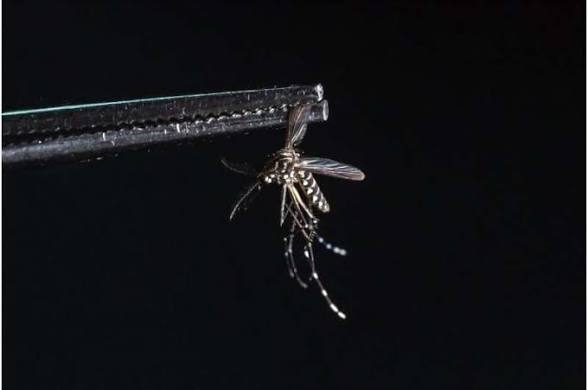
The warning comes amid growing research and field observations showing that mosquito populations are spreading beyond traditional tropical zones into temperate regions, including parts of Europe such as France, where tiger mosquitoes have been detected in increasing numbers in recent years.
Anna-Bella Failloux, an entomologist at France’s Pasteur Institute who has spent decades studying mosquitoes and the diseases they transmit, said rising global temperatures have created an “increasingly vast playing field” for the insects and the pathogens they carry.
She explained that mosquito-borne diseases, once largely confined to tropical regions, are now becoming a growing concern in areas that previously experienced little or no transmission risk.
Failloux, who grew up in Tahiti and witnessed the severe health impacts of mosquito-borne illness such as lymphatic filariasis, said her early experiences motivated her lifelong commitment to studying vector-borne diseases.
She noted that decades ago, climate change was not widely discussed in scientific circles, but it has now become a central factor in understanding how mosquito habitats and disease transmission patterns are evolving globally.
Researchers and health experts have linked rising temperatures, changing rainfall patterns and increased humidity to the expansion of mosquito breeding grounds, particularly in urban and peri-urban environments where stagnant water provides ideal conditions for reproduction.
Failloux emphasized that mosquito-borne diseases collectively kill more than one million people each year worldwide, with a significant proportion of victims being children, according to global health estimates.
The World Health Organization has also warned that a large majority of the global population is now at risk of exposure to mosquito-transmitted diseases that were previously considered geographically limited.
In France, surveillance efforts have intensified as tiger mosquitoes continue to spread across new regions, prompting increased monitoring of mosquito traps to detect potential outbreaks of diseases they may carry.
These traps are regularly checked during warmer months to identify the presence of invasive mosquito species and assess risks of local transmission of tropical viruses.
Failloux and her team at the Pasteur Institute are working on new strategies to control mosquito populations, including research into their microbiota and biological mechanisms that could be used to reduce their capacity to transmit disease.
A major new research centre is expected to further support these efforts, focusing on innovative mosquito control approaches and interdisciplinary collaboration.
Experts also stress that public participation remains a crucial component of mosquito control, highlighting simple preventive actions such as removing stagnant water, cleaning gutters and maintaining gardens to reduce breeding sites.
Failloux has incorporated social and behavioural sciences into training programmes for young entomologists, arguing that effective mosquito control requires both scientific innovation and public engagement.
Health authorities continue to warn that without stronger global climate action and improved vector control strategies, mosquito-borne diseases are likely to expand further into new regions, increasing the risk of outbreaks and placing additional pressure on health systems worldwide.
