

By Faridat Salifu
Nigeria’s youth population could be a driving force in the country’s bio-economy if properly engaged in agriculture-related ventures, especially the cassava bio-ethanol value chain.
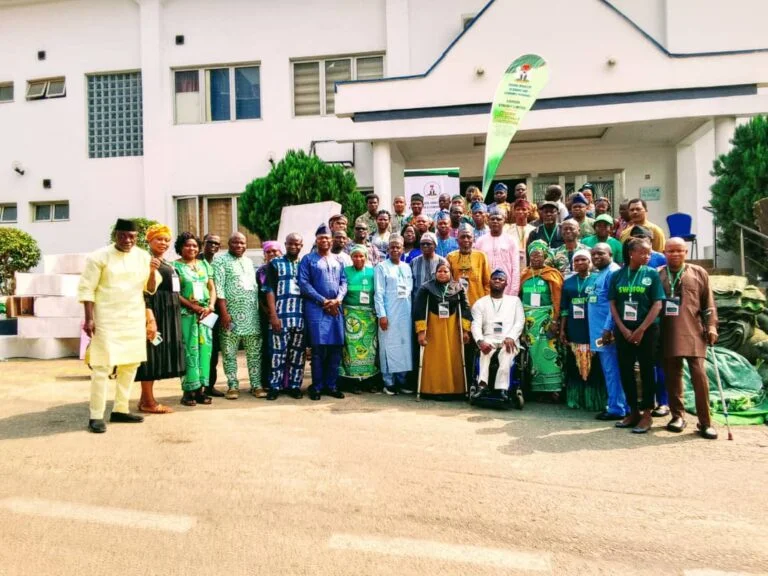
Experts expressed this position during a two-day public-private dialogue on the implementation of the cassava bio-ethanol project, held on Friday in Ibadan.
The workshop brought together civil society organisations, research institutions, academia, youths, and farmers’ groups from the South-West geopolitical zone.
Organised by the Federal Ministry of Budget and Economic Planning, the dialogue explored how cassava bio-ethanol could be leveraged in the industrial and energy sectors to drive economic growth and diversification.
Executive Secretary of the Nigerian Academy of Science, Doyin Odubanjo, said the nation has yet to fully harness its youth population, describing young people as “an ignored potential wealth” and a critical advantage for Nigeria and Africa.
He urged the government to encourage young citizens to participate actively in agriculture and bio-ethanol projects to promote alternative and cleaner energy solutions.
“Our youths must be incentivised to be part of this project. Instead of seeking only white-collar jobs, numerous opportunities exist in cassava and ethanol value chain projects,” Odubanjo said.
He added that the academy is providing technical support and advisory services to ensure the project is evidence-based and avoids becoming a white elephant.
Project consultant Lanre Adekanye stressed the need for government interventions to lower entry barriers for youths, including better access to resources and information.
A youth representative from Ekiti State, Ayuba Akinola, commended the president’s Renewed Hope Agenda for sustaining economic diversification efforts.
“Diversification into the bio-economy not only enriches people and restores investor confidence, but is also environmentally friendly,” he said.
Patricia Amaechi-Obi of the Federal College of Agriculture, Ibadan, highlighted the importance of empowering women and youth in agriculture to overcome challenges such as land acquisition and funding.
The workshop also featured presentations on project monitoring and evaluation, tracking mechanisms, and concluded with the presentation of certificates to participants.
Source: NAN
