

By Abbas Nazil
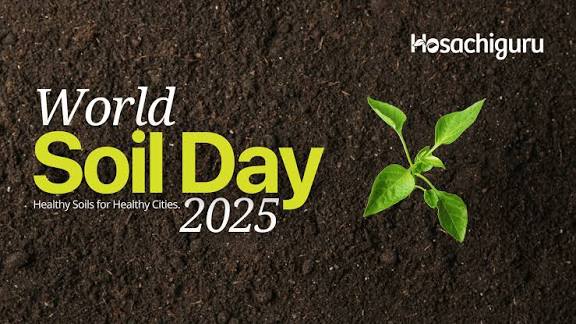
World Soil Day 2025, commemorated globally on 5 December, is drawing worldwide attention to the urgent need to revitalise soil health in rapidly expanding urban environments as this year’s theme, “Healthy Soils for Healthy Cities”, underscores the critical connection between soil quality, urban resilience, and the well-being of city populations.
The United Nations, through the Food and Agriculture Organization which has facilitated the observance since 2014, emphasises that beneath the concrete, asphalt, and infrastructure that define modern cities lies a living resource capable of transforming climate responses, enhancing water regulation, and improving air quality when properly managed.
The 2025 campaign highlights the underestimated value of urban soil, stressing that permeable and vegetated soils naturally absorb rainwater, helping cities withstand floods, regulate temperature during extreme heat, store significant amounts of carbon, and filter pollutants that would otherwise degrade urban air quality.
Experts warn that as cities expand, soil sealing—where land is covered by cement, buildings, and roads—continues at an alarming scale, reducing the soil’s natural functions and exposing urban residents to serious environmental risks.
This year’s commemoration seeks to mobilise governments, city planners, developers, environmental organisations, and citizens to rethink how urban spaces are designed, encouraging policies that promote green spaces, urban forests, community gardens, permeable pavements, and soil restoration programs capable of reversing decades of degradation.
Globally, World Soil Day 2025 calls for stronger urban planning frameworks that prioritise nature-based solutions, especially in regions experiencing rapid population growth and climate pressures.
The FAO notes that healthy urban soils are crucial for climate adaptation, particularly in megacities struggling with heatwaves, flash floods, declining air quality, and shrinking biodiversity.
The organisation stresses that if global urbanisation trends continue without sustainable soil management practices, many cities could face increases in heat-related illnesses, worsening pollution, infrastructure damage, and long-term ecological decline.
Across Asia, Europe, and the Americas, national governments and municipal authorities are adopting soil rehabilitation strategies, with increasing efforts to integrate soil permeability standards into building codes, revamp stormwater systems using soil-based green infrastructure, and invest in urban agriculture to strengthen food security.
The theme resonates strongly in Africa, where urban centres are rapidly expanding amid significant infrastructure deficits and growing climate-related hazards.
African cities like Lagos, Nairobi, Accra, Johannesburg, and Cairo face intense environmental pressure due to soil sealing, poor drainage, and unplanned urban growth, contributing to frequent flooding, extreme heat conditions, and urban pollution.
Environmental experts in Africa say that healthy urban soils can provide nature-based solutions to many of these challenges, offering low-cost alternatives to expensive grey infrastructure while enhancing community resilience.
In regions heavily affected by erosion, deforestation, and waste mismanagement, the restoration of urban soils can play a crucial role in stabilising landscapes, improving stormwater absorption, supporting green jobs, and creating healthier living conditions for millions of residents.
The African Union and various national ministries responsible for environment, water, and urban development are expected to use World Soil Day to reinforce commitments to climate adaptation strategies that centre on soil health, sustainable land use, and expansion of urban green zones.
In Nigeria, where rapid urbanisation continues to reshape cities such as Lagos, Abuja, Kano, Port Harcourt, and Onitsha, the 2025 theme is particularly relevant as poor soil management and land degradation exacerbate flooding, heat stress, and pollution across major urban areas.
Environmental analysts highlight that many Nigerian cities have witnessed the loss of natural soil surfaces due to unchecked construction, deforestation of urban trees, poor drainage systems, and widespread use of non-permeable materials in housing and road development.
These trends have contributed to recurring flooding episodes, with the soil’s natural ability to absorb stormwater severely compromised.
Nigeria’s Ministry of Environment, alongside state environmental protection agencies, is expected to use this year’s global observance to draw attention to urgent reforms needed in urban planning, including enforcing environmental impact assessments, expanding urban green belts, promoting soil-friendly building designs, and supporting citywide tree planting initiatives.
Experts also note that restoring urban soils in Nigeria can boost food production through urban agriculture, enhance carbon storage as part of national climate commitments, and improve community health by reducing dust and pollution levels in dense settlements.
Furthermore, civil society groups, environmental journalists, youth climate movements, and academic institutions across the country are intensifying awareness campaigns to educate the public on the importance of soil protection in cities and the risks associated with soil sealing.
The United Nations encourages Nigerians and global citizens to participate in the 2025 online celebration scheduled for 9 a.m. GMT on 5 December, aimed at deepening understanding of soil’s hidden contributions to urban health and inspiring collaborative solutions to restore degraded city environments.
By drawing global, continental, and national attention to the essential role of soil beneath urban spaces, World Soil Day 2025 hopes to inspire lasting policy reforms and citizen-led actions that will help create greener, safer, more climate-resilient cities for current and future generations.
As the world continues to urbanise and environmental pressures intensify, the campaign affirms that the path to sustainable cities begins with the soil beneath our feet and that safeguarding this resource is indispensable to the health, resilience, and prosperity of urban populations worldwide.
