

By Abdullahi Lukman
The United States has intensified pressure on the International Energy Agency, warning it could withdraw from the Paris-based body unless it returns to its core mandate of safeguarding global energy security.
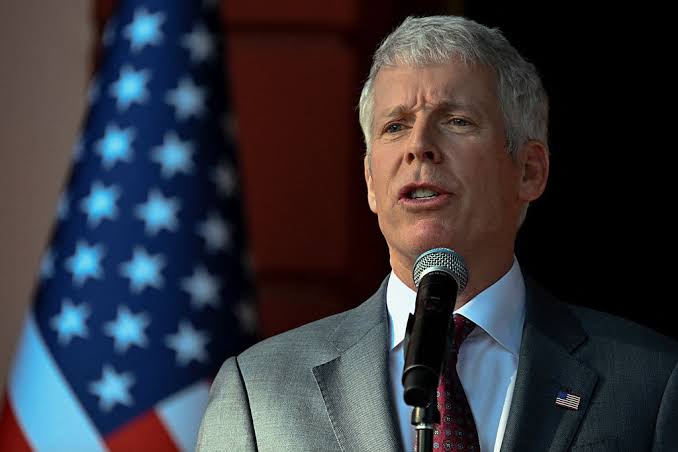
U.S. Secretary of Energy, Chris Wright, said Washington is dissatisfied with the agency’s current direction, arguing that its modelling and policy outlooks have been shaped more by climate ideology than practical energy realities.
He urged the IEA to prioritise energy access and scalable clean cooking solutions, particularly for developing regions.
The remarks come amid long-standing criticism from African leaders and private sector stakeholders who contend that the IEA has drifted from its founding purpose.
The African Energy Chamber (AEC) maintains that the agency’s policy stance has discouraged investment in Africa’s oil and gas sector, contributing to capital flight and slowing efforts to address widespread energy poverty.
At the centre of the debate is the IEA’s 2021 net-zero roadmap, updated in 2025, which proposed ending new fossil fuel supply investments after 2021 and phasing out sales of combustion engine vehicles by 2035.
Critics argue that such recommendations have been used by global financiers, including BNP Paribas and HSBC, to halt or restrict oil and gas financing. Institutions such as World Bank have also scaled back upstream oil and gas investments.
The AEC’s Executive Chairman, NJ Ayuk, described the restrictions as “financial apartheid,” arguing that African energy projects are not assessed on equal commercial terms compared to projects in Western countries.
He said oil and gas remain critical to funding development and expanding access to electricity and clean cooking across the continent.
Energy access remains a pressing concern, with hundreds of millions of Africans lacking reliable electricity and clean cooking solutions.
Speaking at the IEA’s 2026 Ministerial, Wright said an estimated $4 billion annually could significantly accelerate clean cooking deployment and lift nearly two billion people out of energy poverty.
He criticised the scale of global climate spending, noting that renewable sources such as solar and wind still account for a small share of global energy consumption.
A 2024 report by U.S. Senator John Barrasso also faulted the IEA’s modelling approach, arguing that it relies on hypothetical emissions-reduction scenarios rather than demand-driven forecasts.
Established in 1974 following the oil crisis, the IEA was created to ensure reliable and affordable energy supplies. Critics say its recent policies have diverged from that mandate.
However, the agency has announced plans to host the Clean Cooking Alliance and collaborate with governments and industry to accelerate universal access to clean cooking, integrating the initiative into its operations.
While stakeholders view this as a positive step, the AEC insists that meaningful reform must go beyond statements and include a reassessment of investment outlooks, differentiated development pathways and recognition of Africa’s hydrocarbons as compatible with global climate objectives.
