

By Abbas Nazil
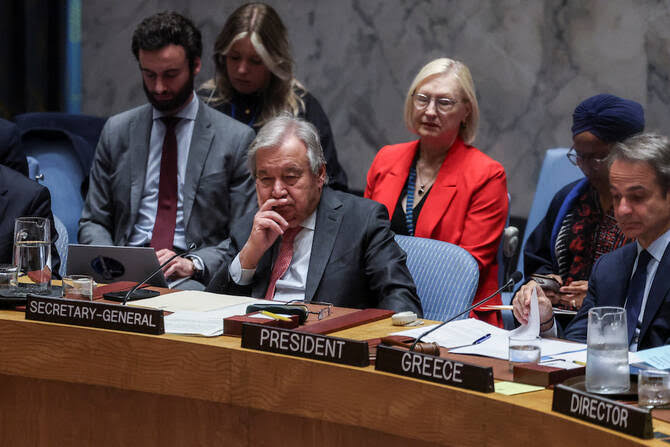
The United Nations Security Council convened a high-level open debate on maritime security, addressing the prevention of threats, the role of innovation and the importance of international cooperation in tackling emerging challenges.
The meeting, chaired by Panama’s President José Raúl Mulino, brought together senior representatives from the International Maritime Organization (IMO), the International Criminal Police Organization (INTERPOL) and the Panama Canal Authority.
Panama’s Permanent Representative emphasized that the discussion aimed to approach maritime security from a “global and multidimensional perspective,” underlining its direct links to international peace, economic stability and environmental sustainability.
Maritime security has become an increasingly urgent concern as global shipping faces a growing number of risks, including piracy, armed robbery, trafficking in illicit goods, geopolitical tensions, and cyber vulnerabilities in port and shipping infrastructure.
With more than 80 percent of global commerce transported by sea, the stakes are high for protecting sea lanes and critical chokepoints.
The IMO highlighted that the safety and security of maritime routes are fundamental to sustaining economic development and safeguarding livelihoods worldwide.
It also pointed to nearly 150 incidents of piracy and armed robbery reported in 2024, with Southeast Asia seeing a sharp increase.
INTERPOL warned that maritime routes, historically the first truly global network, are being exploited by increasingly sophisticated criminal groups that threaten not just navigation and trade, but also the stability that underpins sustainable development.
The organization raised alarms over “poly-criminality at sea,” in which various illegal activities converge, complicating law enforcement efforts.
As ports adopt more digital systems for cargo tracking and vessel management, they are becoming targets for cyberattacks that could disrupt power, communications and logistics.
INTERPOL further warned that cybercriminals could weaponize artificial intelligence, launching attacks with unprecedented speed and precision, creating vulnerabilities faster than they can be addressed.
The IMO outlined ongoing initiatives to strengthen security, including binding requirements for ships and ports, cybersecurity protocols, capacity-building projects and partnerships with other UN bodies, regional organizations and donor states.
The debate also underscored the environmental dimension of maritime security, with calls to integrate ocean protection efforts into broader safety strategies.
The Panama Canal Authority’s CEO, Ricaurte Vásquez Morales, presented the canal as a model of neutrality and cooperation, noting it is governed by an international treaty ensuring equal access in both peace and wartime.
He highlighted infrastructure improvements, climate adaptation measures, water conservation initiatives and technological upgrades designed to increase resilience against both environmental and cyber threats.
Participants concluded that safeguarding maritime security will require sustained international cooperation, innovation, and strict adherence to international law, ensuring that global sea routes remain safe, efficient and open for generations to come.
