

By Abdullahi Lukman
Tunisia has advanced its energy transition agenda with the award of new renewable energy concessions to major international developers, as part of its 1,700MW renewable energy tender programme aimed at reducing reliance on imported natural gas and increasing the share of renewables in its power mix to 35 percent by 2030.
Under the latest round of awards, the government selected several global companies to develop large-scale wind and solar projects across the country. French renewable energy firm Voltalia secured a 132MW solar project in the Gabès region,
strengthening its footprint in Tunisia. The company already operates the Sagdoud and Menzel Habib projects, and the new award brings its planned renewable capacity in the country to nearly 400MW.
Wind energy also featured prominently in the concessions.
Norway’s Scatec and Japan’s Toyota Tsusho Group, through its subsidiary Aeolus, are jointly developing the 75MW El Fahs wind farm in Zaghouan governorate.
The project benefits from a 25-year power purchase agreement with the state-owned utility, Société Tunisienne de l’Électricité et du Gaz (STEG), providing long-term revenue certainty.
In the solar sector, Qair International emerged as another key beneficiary, winning contracts for several utility-scale projects, including an almost 200MW solar plant at El Khobna. Meanwhile, earlier developments are moving into operation.
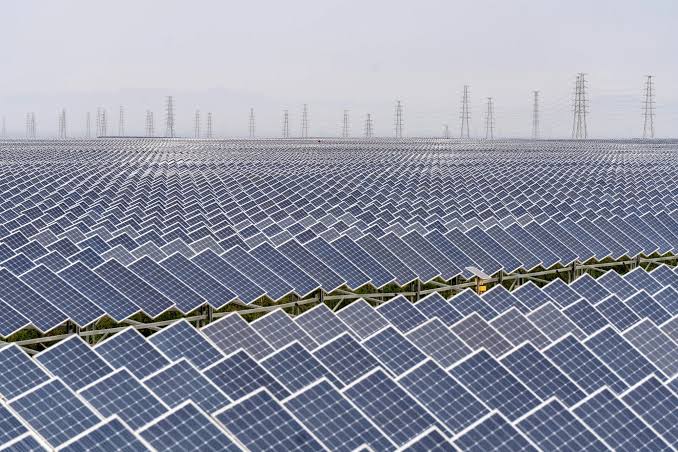
The 120MW Kairouan solar plant, developed by a consortium led by Chinese firms, has recently been commissioned, becoming Tunisia’s first solar facility to exceed 100MW in capacity.
The latest awards reflect a shift in Tunisia’s renewable energy strategy towards large, utility-scale projects developed under a concession framework, particularly for projects above 10MW. The approach is intended to attract experienced developers with strong technical expertise and financial capacity.
To support the rapid scale-up of renewable power, Tunisia is also working with international financial institutions such as the World Bank and the European Investment Bank to modernise the national grid and strengthen the energy sector’s financial resilience.
Collectively, the new wind and solar projects are expected to save Tunisia hundreds of millions of dollars by reducing gas imports, while lowering carbon emissions, improving energy security and creating thousands of jobs during construction and operation—marking a significant milestone in the country’s clean energy transition.
