

By Abdullahi Lukman
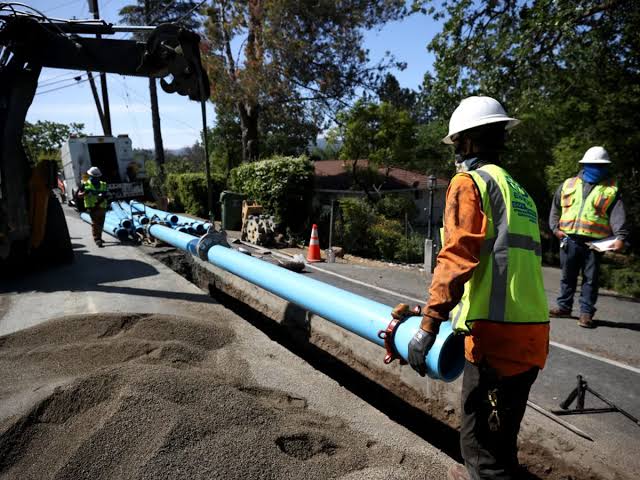
Texas’ aging water infrastructure and rapid population growth have put the state’s water supply under severe strain, raising urgent questions about where future water will come from and who will pay for it.
These concerns were the focus of a Texas Tribune panel discussion held Wednesday at the Longview Community Center.
The event, titled “Running Out: Texas’ Water Crisis and the Path Forward,” brought together water experts, state officials, and residents to address Texas’ worsening water shortage.
With current supplies unable to meet demand during a severe drought, experts warned that time is running out.
A major factor is the deteriorating infrastructure, particularly in East Texas, where 76% of public water systems issued boil water notices in the past month.
Kelley Holcomb of the Angelina & Neches River Authority revealed that nearly 20% of systems in his district are failing, putting water access at risk for thousands.
Texas voters will soon decide on Proposition 4, a constitutional amendment that proposes allocating $1 billion annually to improve the state’s water infrastructure. While the measure is not a tax increase, experts say it’s only a start.
Texas 2036 policy director Jeremy Mazur estimates the state needs at least $154 billion over 50 years to meet water demands and repair infrastructure.
Meanwhile, water-rich East Texas is increasingly seen as a solution for water-scarce regions.
Projects like the proposed Marvin Nichols Reservoir and large-scale groundwater extraction from the Carrizo-Wilcox Aquifer have sparked backlash from rural communities, who argue the plans threaten farmland, the timber industry, and local water supplies.
“This is creating a huge controversy and a huge rift between the demands of urban areas and the survival of rural ones,” said Janice Bezanson of the Texas Conservation Alliance.
She and others criticized weak oversight by the Texas Commission on Environmental Quality, which has approved controversial projects despite environmental and legal concerns.
The conversation also addressed a looming labor shortage: by 2027, 70% of water system operators are expected to retire.
Holcomb warned that higher water bills may be unavoidable to attract new workers.
State Rep. Daniel Alders (R-Tyler) urged East Texans to stay engaged, stressing the need for balanced, science-based decisions that protect rural resources while meeting statewide needs.
Youth involvement was also highlighted, with local students attending the forum expressing new interest in water policy.
As Texas braces for worsening drought conditions and a growing population, panelists agreed that proactive investment and thoughtful planning are essential to avoid a full-blown water crisis.
