

By Abbas Nazil
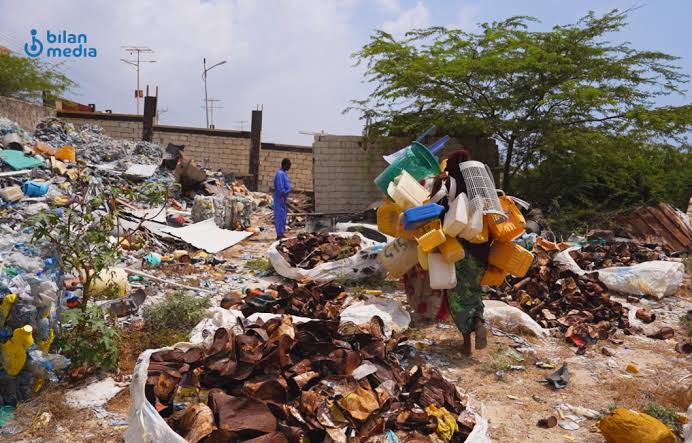
Plastic waste is emerging as a serious environmental and public health threat in Mogadishu and the wider Banadir region, according to a new academic study.
The research warns that weak waste management systems and rising plastic consumption are accelerating pollution across the Somali capital.
Conducted by researcher Abdirahman Omar Abdi, the study examines how plastic waste is generated, managed and disposed of in Mogadishu.
The findings show that current practices are insufficient to cope with the growing volume of plastic waste produced by the city’s expanding population.
The study is based on Environmental Impact Assessment principles and focuses on the interaction between waste systems, the environment and society.
It highlights plastic pollution as a long-term challenge affecting land, water, air quality and human health.
Mogadishu has experienced rapid population growth and urban expansion between 2012 and 2023.
This growth has driven higher consumption of single-use plastics such as bags, bottles and packaging materials.
Although municipal spending on waste management has increased, plastic waste continues to accumulate faster than it can be managed.
Unlike organic waste, plastic does not decompose naturally within a short period.
Instead, it persists in the environment for decades or centuries.
The study notes that weak collection systems and limited recycling capacity have allowed plastic waste to spread across streets, open spaces and waterways.
Land pollution is identified as one of the most visible impacts.
Plastic waste is commonly dumped in markets, residential areas and along roadsides.
Over time, plastics break down into smaller particles that contaminate soil and reduce land quality.
Water pollution is another major concern highlighted by the research.
Plastic waste frequently blocks drainage systems and is washed into rivers, coastal waters and groundwater sources.
As plastics degrade, they release harmful substances that threaten ecosystems and increase the risk of waterborne diseases.
Air pollution is also linked to plastic waste disposal practices in Mogadishu.
Open burning of plastic waste is widely used as a quick disposal method.
This practice releases toxic gases and fine particles that worsen air quality and contribute to respiratory illnesses.
Beyond environmental damage, the study emphasizes serious public health risks.
Accumulated plastic waste creates breeding grounds for insects and disease vectors.
Plastics can also introduce harmful chemicals into food and water chains.
The research notes that polluted neighborhoods reduce quality of life and place additional pressure on health services.
Livestock and wildlife are also affected by plastic pollution. Animals are often injured or killed after ingesting plastic waste or becoming entangled in it.
The study identifies weak public awareness as a key driver of poor waste management.
Many residents are not fully informed about the dangers of plastic pollution or proper disposal methods.
The researcher stresses the importance of education and community engagement.
Public awareness campaigns involving schools, media, religious institutions and community leaders are recommended.
Local authorities and waste management companies are urged to strengthen coordination and enforcement.
The study calls for improved waste collection infrastructure and expanded recycling initiatives.
It also recommends reducing reliance on single-use plastics through policy reforms.
The research describes plastic waste as a growing environmental and social crisis for Mogadishu.
It warns that without coordinated action, pollution risks will continue to escalate.
The study urges collective efforts to protect public health, the environment and future generations.
