

By Abbas Nazil
Central Asia is rapidly transforming its energy landscape through large-scale investments in renewable power and hydrogen development, positioning the region as an emerging strategic partner for Europe.
The shift comes as the European Union intensifies efforts to cut dependence on Russian energy supplies while accelerating its green transition.
Analysts note that Central Asian countries are drawing growing European interest due to their vast renewable resources, critical minerals and expanding clean-energy cooperation frameworks.
While hydropower dominates electricity generation in Kyrgyzstan and Tajikistan, fossil fuels remain central to Kazakhstan, Uzbekistan and Turkmenistan, where coal and natural gas continue to play major roles.
Following Russia’s war in Ukraine, the EU has increased crude oil imports from Kazakhstan, making the country its third-largest supplier after the United States and Norway.
However, most Kazakh oil exports still rely on transit routes through Russian territory, creating strategic vulnerabilities for both sides.
To reduce this dependence, Kazakhstan is expanding alternative export routes across the Caspian Sea through Azerbaijan, strengthening links to European markets.
The country also plays a crucial role in nuclear energy supply, accounting for 40 percent of global uranium production and meeting over one-fifth of the EU’s uranium demand.
Beyond hydrocarbons, Central Asia holds significant reserves of rare earth metals and critical raw materials essential for renewable technologies.
Kazakhstan alone can supply more than 20 materials classified as critical by the EU, including tungsten, copper and chromium.
Uzbekistan also possesses notable reserves of graphite, lithium and uranium, reinforcing the region’s long-term strategic value.
Despite this abundance, exports to Europe remain limited due to infrastructure gaps, high transport costs and China’s dominance in mineral processing.
Renewable energy development is advancing rapidly as governments adopt ambitious climate targets and green economy strategies.
Uzbekistan aims to raise renewables to 40 percent of its energy mix by 2030, while Kazakhstan targets 50 percent by 2050 and carbon neutrality by 2060.
Tajikistan has pledged to generate all electricity from renewable sources by 2032.
Major regional projects are supporting these goals, including the Trans-Caspian Green Energy Corridor linking Central Asia to Azerbaijan, Türkiye and Europe.
Electricity exports through the corridor are expected to begin in 2032, supported by international financial institutions.
Additional initiatives such as the Black Sea green electricity bridge and the CASA-1000 transmission project are strengthening cross-border energy integration.
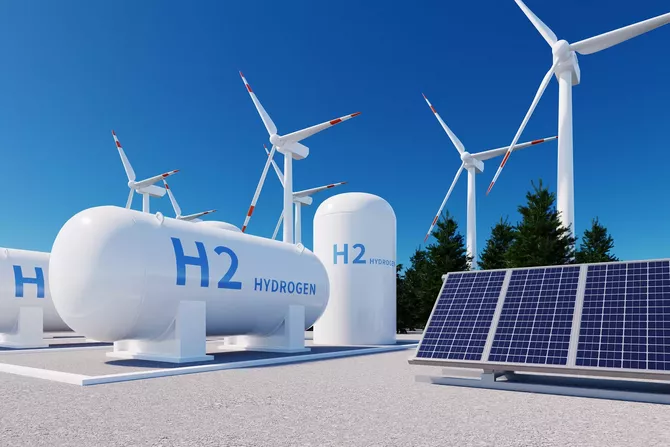
Hydrogen is emerging as a new pillar of the region’s clean-energy ambitions.
Uzbekistan launched Central Asia’s first green hydrogen plant in 2025, while Kazakhstan has adopted a national hydrogen development strategy extending to 2040.
One of the largest projects, Hyrasia One, aims to produce up to two million tonnes of green hydrogen annually by the early 2030s.
Together, these initiatives signal a long-term shift that could integrate Central Asia into global clean-energy supply chains.
By linking renewable production, critical minerals and hydrogen exports, the region is steadily reshaping its economic and geopolitical role in Europe’s energy transition.
