

By Abdullahi Lukman
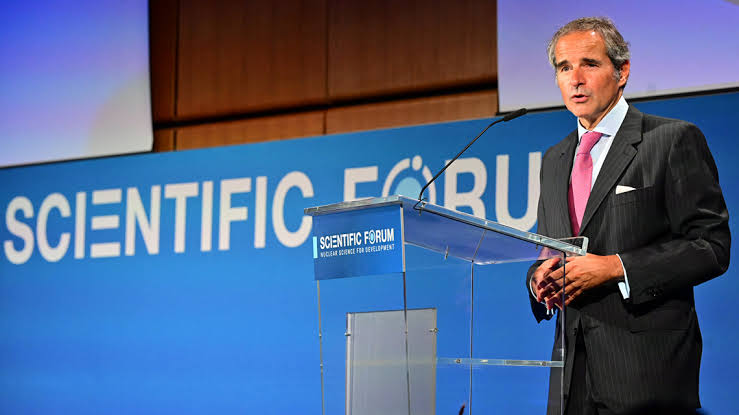
Nuclear science and isotope hydrology are playing a growing role in addressing global water challenges, according to experts at the 2025 IAEA Scientific Forum held alongside the 69th IAEA General Conference in Vienna.
The event, themed: Atoms for Water, drew over 350 participants, including ministers and global water experts.
IAEA Director General Rafael Mariano Grossi emphasized the urgency of protecting water resources under stress from climate change, population growth, and pollution.
He said nuclear techniques can help better understand, manage, and protect water sources, while turning science into practical solutions.
The IAEA showcased several initiatives, including the use of radiation to treat wastewater and control plastic pollution through its NUTEC Plastics programme.
The Philippines will host a high-level forum on NUTEC in November 2025. New technologies such as mobile electron beam units are also being deployed to decontaminate water supplies.
Nuclear techniques like isotope hydrology help track water movement, assess groundwater quality, and monitor climate impacts.
They also support desalination and irrigation efficiency, equipping policymakers with critical data to manage water scarcity and safeguard freshwater ecosystems.
Speakers at the forum stressed the need to strengthen links between science and policy, invest in capacity building, and improve communication to raise awareness.
The IAEA’s Global Water Analysis Laboratory (GloWAL) Network is now open for applications, aiming to support countries with water data, policy planning, and international collaboration.
Leaders from France, China, Niger, Peru, and other countries highlighted how nuclear science, backed by IAEA support, is helping improve national water infrastructure and resilience. Niger, for example, has partnered with the IAEA and World Bank to establish a national water quality lab.
The forum concluded with calls to mobilize resources and forge stronger partnerships. IAEA officials, development banks, and UN leaders agreed that while science is essential, substantial investment and private sector involvement are critical.
Currently, private financing makes up just 2% of global water funding, despite needs running into the trillions.
Looking ahead, water finance and nuclear innovation will be key themes at the 2026 UN Water Conference.
IAEA leaders pledged continued collaboration to help countries integrate nuclear technologies into sustainable water management and climate adaptation strategies. E
