

By Abbas Nazil
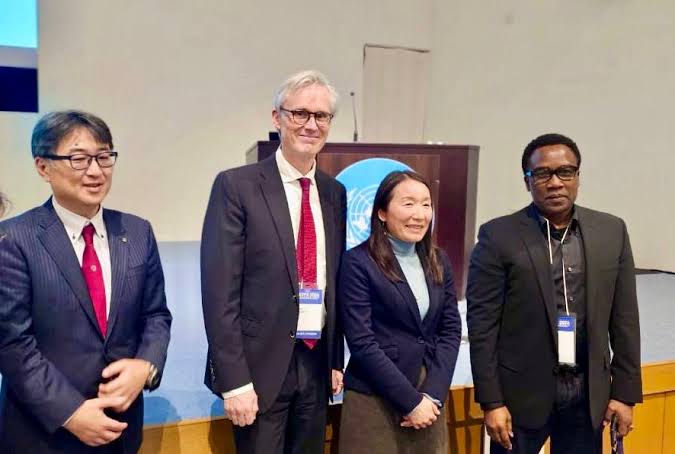
Climate and environmental experts from across the world gathered in Tokyo, Japan, to discuss climate governance, technology deployment and sustainable development during the 5th Network for Education and Research on Peace and Sustainability conference held at the United Nations University Headquarters.
The event, which concluded on March 8, 2026, brought together policymakers, researchers and international stakeholders to examine emerging approaches to climate action, disaster resilience, migration management and environmental sustainability on land and in marine ecosystems.
The conference served as a platform for dialogue on how advanced technology can support multilateral cooperation for peace, climate mitigation and sustainable agriculture while strengthening global environmental governance systems.
The Nigerian delegation participated actively in the discussions, with representation led by the Director General and Chief Executive Officer of the Nigerian Meteorological Agency, Prof. Charles Anosike.
The Federal Government’s involvement highlighted Nigeria’s commitment to contributing to global conversations on climate governance, transboundary resource management and climate justice.
Delegates from Nigeria engaged in reviews and policy dialogues that focused on strengthening urban resilience, improving climate monitoring systems and enhancing prediction capabilities to support decision-making processes.
Participants also examined strategies to ensure equitable access to climate finance and improve state-level capacity to meet international environmental obligations.
The discussions emphasised the importance of integrating technology into climate adaptation efforts, particularly through improved data collection, forecasting systems and digital tools that enhance transparency in environmental governance.
Speakers at the conference included Prof. Tshilidzi Marwala, Rector of the United Nations University and UN Under-Secretary-General, who delivered the welcome address and stressed the need for stronger global collaboration to address sustainability challenges.
Keynote addresses were also delivered by Dr. Måns Nilsson, Executive Director of the Stockholm Environment Institute, and Rumiko Seya, President of Reach Alternatives, who shared insights on innovation, policy coordination and inclusive development.
Experts at the event noted that climate change impacts are increasingly linked to issues of peace and security, especially in regions facing resource conflicts, environmental degradation and extreme weather events.
They argued that strengthening governance frameworks at national and sub-national levels is essential to improving accountability and ensuring effective implementation of climate policies.
The Nigerian delegation’s participation reinforced the country’s efforts to position itself as an active contributor to global climate discussions while seeking partnerships that enhance access to technology, finance and capacity-building support.
Organisers concluded that sustained collaboration between governments, research institutions and international organisations will remain critical in advancing practical solutions to climate challenges and promoting long-term sustainability worldwide.
