

By Abbas Nazil
Nigeria has reaffirmed its commitment to achieving net-zero greenhouse gas emissions by 2060 while ensuring universal access to modern energy by 2030, as part of efforts to combat climate change and drive sustainable development.
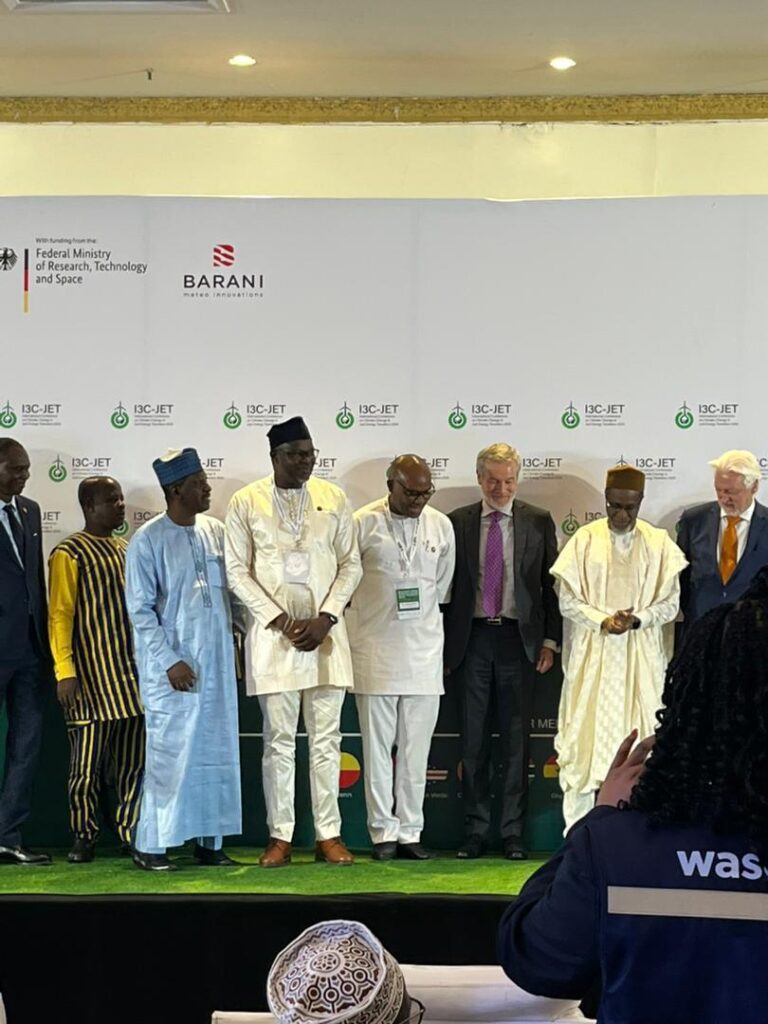
Minister of Environment, Balarabe Lawal, made the reaffirmation during the opening of the first International Conference on Climate Change and Just Energy Transition held in Abuja.
The event, themed “Sustainable Climate Resilience and Just Energy Transition in Africa,” was organised by the West African Science Service Centre on Climate Change and Adapted Land Use (WASCAL) in partnership with the Federal Government.
Lawal stated that Nigeria’s Climate Change Act and the Green Bond Programme provide both legal and financial frameworks to drive the country’s low-carbon transition.
He explained that Nigeria’s Energy Transition Plan outlines the path to achieving net-zero emissions by 2060 and modern energy access for all citizens by 2030, noting that these efforts reflect a “clear and deliberate commitment” to a just transition where no one is left behind.
The minister urged policymakers, scientists, and development partners to translate research findings into actionable policies that protect livelihoods, promote inclusivity, and unlock the economic potential of the green economy.
Lawal also acknowledged WASCAL’s contributions in building climate science capacity across West Africa, commending its role in research, capacity development, and the establishment of a climate competence centre in Ouagadougou.
He emphasised that Nigeria’s third Nationally Determined Contribution (NDC 3.0) further strengthens the nation’s mitigation and adaptation goals, demonstrating leadership in Africa’s climate response.
WASCAL Executive Director, Professor Emmanuel Ramde, praised Nigeria’s leadership, highlighting that WASCAL has trained over 700 postgraduate climate experts and advanced regional climate services across 12 West African member countries.
Ramde said the conference serves as a platform to bridge science, policy, and society through collaboration, innovation, and shared strategies that enhance Africa’s resilience to climate change.
He maintained that by uniting science, government, and local communities, Africa can build a fair and sustainable energy future that supports both people and the planet.
