

By Abdullahi Lukman
Nigeria has signed renewable energy deployment agreements worth $500 million with five state governments and the Netherlands Development Organisation (SNV), targeting the development of solar power generation and local manufacturing of solar panels and battery storage systems.
The agreements, facilitated by the Rural Electrification Agency (REA), were formalised during the Nigeria Renewable Energy Innovation Forum (NREIF) 2025 in Abuja. Participating states include Ogun, Lagos, Akwa Ibom, Kano, Bayelsa, as well as the Federal Capital Territory (FCT).
The initiative is expected to add 3,950 megawatts (MW) of renewable energy capacity across the country.
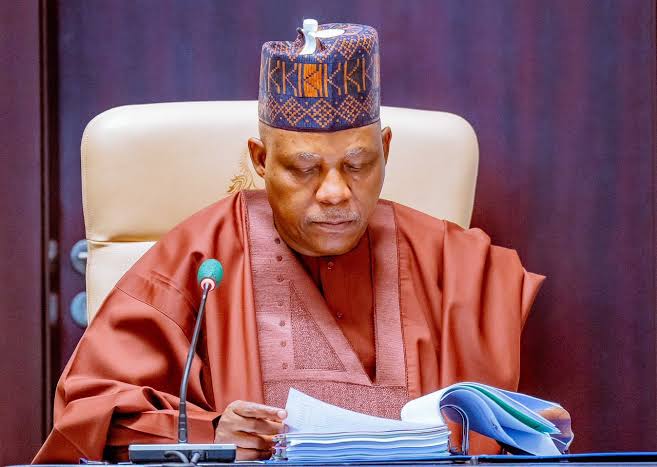
Speaking at the forum, Vice President Kashim Shettima described the country’s ongoing energy transition as a massive opportunity, estimating it could unlock $410 billion in investment by 2060.
This is more than energy access — it’s about building an energy future driven by innovation, industrialisation, and inclusive growth,” Shettima said.
He emphasized that local content development, technology transfer, and private sector participation are central to the administration’s energy strategy, as Nigeria works toward an ambitious target of 277GW of installed capacity by 2060.
Shettima urged industrialists, innovators, and state governments to play a central role in the transition by investing in renewable industrial clusters and building local capacity.
“The Federal Government cannot do it alone. We need state actors to lead, and we count on the private sector to drive investment, job creation, and manufacturing,” he said.
Themed “Implementing the Nigeria First Policy: Facilitating Local Content Development and Manufacturing in the Renewable Energy Ecosystem,” the NREIF 2025 brought together policymakers, development partners, and private investors to develop strategies for building a homegrown renewable energy industry.
Also speaking at the event, Minister of Power, Chief Adebayo Adelabu, noted that government efforts have increased average electricity generation from 4,000MW in 2023 to 5,300MW in 2025, adding that new reforms are aimed at boosting investor confidence and sector liquidity.
“We are strengthening payment frameworks, enabling cost-reflective tariffs, and encouraging both local and international financing,” Adelabu said.
“The future of Nigeria’s power sector will be defined by what we build here — not by what we import.”
REA Managing Director, Engr. Abba Aliyu, provided a breakdown of the new solar allocations under the agreement: Ogun (1,100MW), Akwa Ibom (1,100MW), Kano (1,100MW), FCT (500MW), and Lagos (150MW). He said the REA now oversees a project portfolio of nearly $3 billion.
Aliyu stressed that the agency’s mandate has evolved from rural electrification alone to supporting local value-chain development, especially in renewable energy manufacturing.
“To secure Nigeria’s energy future, we must ensure that what we deploy is increasingly designed, assembled, and manufactured in Nigeria,” he said.
The new agreements signal a broader shift in Nigeria’s energy strategy — from dependency on imported technology to the domestication of clean energy infrastructure, aimed at reducing energy poverty, creating jobs, and positioning Nigeria as a clean energy manufacturing leader on the continent.
