

By Abbas Nazil
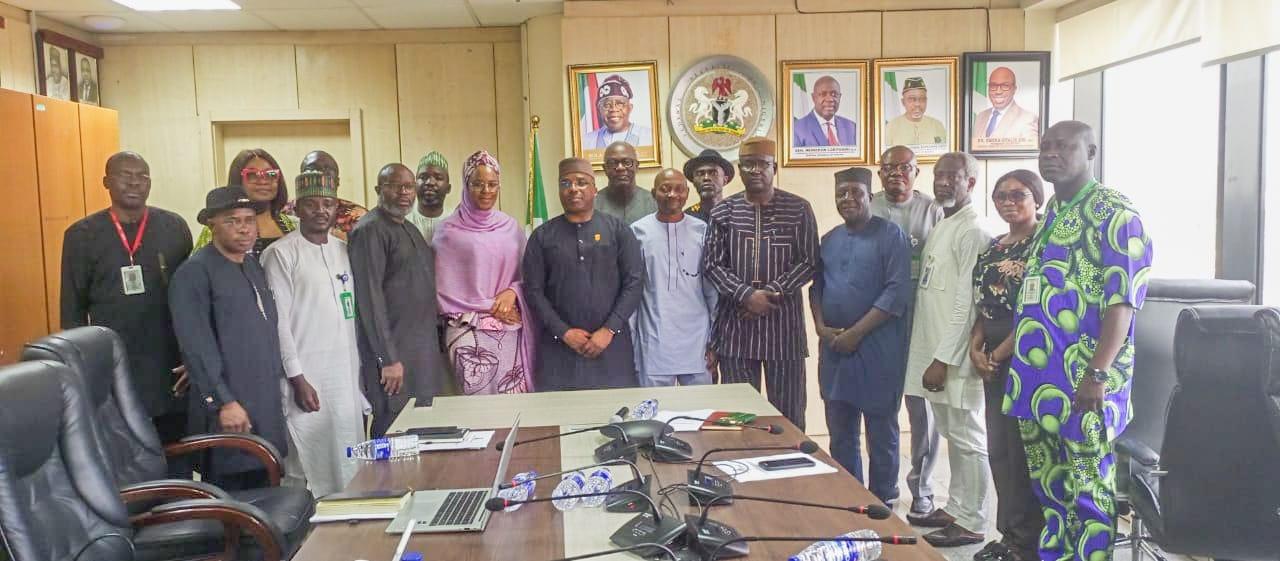
The Federal Government of Nigeria has inaugurated a Technical and Steering Committee to oversee the creation and management of the Nigeria Green Climate Fund and Sovereign Carbon Credits.
The move aims to position Nigeria as a significant player in global climate finance and the transition to cleaner energy.
The inauguration, which took place in Abuja, was conducted by Dr. Emeka Vitalis Obi, Permanent Secretary of the Ministry of Petroleum Resources, who described the initiative as a “bold step” toward integrating economic growth, energy security, and environmental responsibility.
Dr. Obi emphasized that the committee’s work represents economic statecraft and climate diplomacy, ensuring the country’s energy transition is deliberate rather than externally pressured.
The committee is tasked with developing financial, institutional, and regulatory frameworks to help Nigeria access international climate capital, monetize emission reductions, and transform the Ministry of Petroleum Resources into a climate-smart institution.
Dr. Obi highlighted that the global voluntary carbon market is projected to exceed $50 billion by 2030 and could reach $1 trillion by 2037, yet Africa currently receives less than five percent of climate finance despite contributing under three percent of global emissions.
He noted the petroleum sector remains central to addressing climate challenges, particularly methane emissions, which are 84 times more potent than carbon dioxide.
Nigeria has pledged under its updated Nationally Determined Contributions to cut emissions by 47 percent by 2030, equivalent to 60 million metric tonnes, contingent on international support.
Gas flaring in Nigeria has declined from 2.5 billion standard cubic feet per day in 2000 to about 700 million today, but it still emits over 25 million metric tonnes of CO₂ annually.
Dr. Obi stated that capturing and trading these emissions as carbon credits could generate over $500 million annually for the country.
The committee is expected to play a pivotal role in unlocking climate finance, promoting sustainable energy, and supporting Nigeria’s economic and environmental objectives.
