

By Abbas Nazil
The Niger Delta Power Holding Company has announced plans to expand its operations into renewable energy development and direct electricity supply to industrial clusters as part of a broader strategy to improve power reliability and support economic growth across Nigeria.
The Managing Director and Chief Executive Officer, Engr. Jennifer Adighije, disclosed that the company is diversifying its energy portfolio to include solar and small hydro power projects while strengthening efficiency within its existing gas-fired generation assets under the National Integrated Power Project.
She explained that integrating cleaner energy sources will enhance Nigeria’s energy mix, improve resilience in the power sector and reduce dependence on conventional generation systems that face operational challenges.
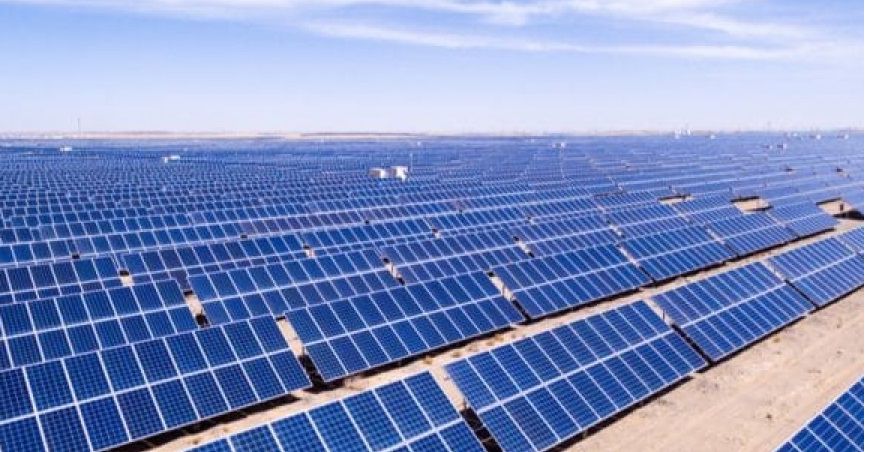
According to her, NDPHC is developing a solar power project targeted at industrial clusters in Kano State as a pilot scheme that could later be replicated in other industrial hubs nationwide.
The initiative aims to provide dedicated and reliable electricity to manufacturing zones, reduce reliance on diesel generators, lower production costs and improve competitiveness for local industries.
Adighije added that the company is exploring direct electricity supply arrangements with electricity distribution companies and eligible customers under existing regulatory frameworks to ensure efficient power delivery to high-demand areas.
She stated that the approach aligns with the Light Up Nigeria initiative, which focuses on delivering reliable and affordable electricity to industrial estates, markets, universities and residential communities through embedded and independent power solutions.
The programme is expected to stimulate job creation, attract investment and strengthen small and medium enterprises that depend heavily on stable electricity supply for productivity.
Providing operational updates, she revealed that NDPHC has constructed 10 power plants across 10 states under the NIPP programme, with eight already commissioned and six currently operating commercially.
She noted that the company’s installed generation capacity stands at about 4,000 megawatts, representing nearly 30 percent of Nigeria’s total grid-connected capacity, demonstrating its significant contribution to national power supply.
Within the past year, the company recovered approximately 900 megawatts of previously dormant generation capacity through improved plant performance, predictive maintenance and operational optimisation.
Additionally, NDPHC recovered 110 abandoned containers and 216 packages of critical power equipment from Nigerian ports, which will be deployed to complete ongoing generation, transmission and distribution projects.
Despite these achievements, challenges remain, including transmission constraints, gas supply shortages and liquidity issues within the electricity market that limit efficient power evacuation and financial stability across the sector.
Adighije stressed that gas costs account for a major portion of generation expenses and that only a fraction of sector invoices are currently settled, creating financial pressure on operators.
She advocated for gradual implementation of cost-reflective tariffs, removal of subsidy distortions and full enforcement of the Electricity Act 2023 to attract investment and strengthen market sustainability.
She expressed optimism that continued reforms, infrastructure optimisation and expansion into renewable energy will enhance electricity access and support Nigeria’s industrial development trajectory.
