
Friday, September 11, 2026
Naturenews.africa
Advertisement
  • Home
  • Environment
    • Ecology
    • Climate
    • Desertification 
    • Flooding
    • Erosion
    • Oil spillage
    • Ozone layer
  • Sustainability
    • Energy
    • Green House
    • Wildlife
    • Maritime
    • Tourism
  • Agriculture
  • Advisory Board
    • Emir Muhammad Hamim Nuhu Sanusi CFR
    • Prof. Abdoulaye Bathily
    • Mr. Nnimmo Bassey
    • Prof. Mark Mwandosya
    • Ms. Hawe Hamman Bouba
    • Professor Salah Arafa
    • Mr. Desmond Majekodunmi
    • Ms. Ikal Angelei
    • Professor Jimmy Adegoke
  • UN Days
  • Fact Check
  • Donate
  • Africa
    • Central Africa
    • East Africa
    • North Africa
    • Southern Africa
    • West Africa
  • More
    • About Us
    • Advisory Board
    • Contact Us
    • Terms of Use
    • Donation
Naturenews.africa
  • Home
  • Environment
    • Ecology
    • Climate
    • Desertification 
    • Flooding
    • Erosion
    • Oil spillage
    • Ozone layer
  • Sustainability
    • Energy
    • Green House
    • Wildlife
    • Maritime
    • Tourism
  • Agriculture
  • Advisory Board
    • Emir Muhammad Hamim Nuhu Sanusi CFR
    • Prof. Abdoulaye Bathily
    • Mr. Nnimmo Bassey
    • Prof. Mark Mwandosya
    • Ms. Hawe Hamman Bouba
    • Professor Salah Arafa
    • Mr. Desmond Majekodunmi
    • Ms. Ikal Angelei
    • Professor Jimmy Adegoke
  • UN Days
  • Fact Check
  • Donate
  • Africa
    • Central Africa
    • East Africa
    • North Africa
    • Southern Africa
    • West Africa
  • More
    • About Us
    • Advisory Board
    • Contact Us
    • Terms of Use
    • Donation
No Result
View All Result
Naturenews.africa
No Result
View All Result
Home Big Story

Moon-dust shield could help fight climate change on Earth

by Editor
March 6, 2023
in Big Story, Climate change , News, Space
Reading Time: 3 mins read
0
Moon-dust shield could help fight climate change on Earth
Share on FacebookShare on Twitter

Astronomers are exploring solutions to mitigate climate change, one of humanity’s biggest challenges, by using some tiny players — dust particles.

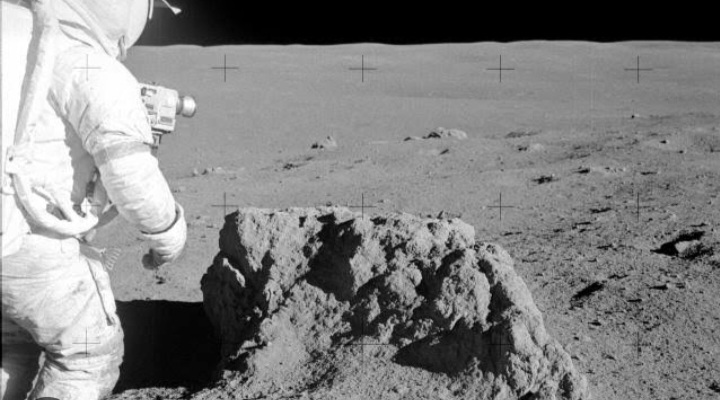
In recent research, they propose mining, scooping and blasting dust from the moon’s surface and placing it between Earth and the sun, where the newly placed clouds would shade our planet for a few days before solar wind and radiation pressure dispersed them. In a year, researchers say, such dust shields could reduce Earth-bound sunlight by 1.8%, which falls within the range needed to slow our planet’s rising temperature.

Creating such a shade would require 22 billion pounds (10 billion kilograms) of dust per year, which is “roughly 100 times more mass than humans have sent into space to date,” the authors wrote in their study.

“From Earth, about 700x more launches than we’ve done to date,” Benjamin Bromley, an astrophysicist at the University of Utah and the study’s lead author, told Space.com in an email. “But from the moon, we envision an electromagnetic launcher, whose specifications are not yet determined.”

The astronomers are suggesting that dust particles could be used to block sunlight before it reaches Earth. This proposed solution is not new. In 2012, astronomers ambitiously considered pushing the largest near-Earth asteroid, the 22-mile-wide (35 kilometers) 1036 Ganymed, between the sun and Earth to both create a dust cloud and gravitationally hold it in place. Astronomers have also explored expensive and resource-intensive geoengineering projects like gigantic screens and reflective mirrors to cool Earth.

The newly proposed solution uses dust readily available on the moon’s surface, so it would be simpler, cheaper and more effective compared to previous methods, researchers argue. (Launching from the moon requires much less energy than launching from Earth, because lunar gravity is just one-sixth as strong as that of our planet.)

The team analyzed the sizes, shapes and compositions of different particles like coal dust, porous glass, sea salt and moon dust. They also compared the effectiveness of launching dust from a platform in space to blasting it from the moon’s surface. Once placed at or near the first Lagrangian Point, or L1 — a gravitationally stable spot between the sun and Earth, about 1 million miles (1.5 million km) from our planet — the team used computer simulations to study how long these particles would hover.

For example, in their modeling work, researchers launched a test particle from the moon’s northern pole to an orbit close to L1. They found that the particle, launched at 1.7 miles per second (2.8 km per second), spent a total of five days in front of the sun before being dispersed.

The team concluded that launching moon dust at about 1.9 to 3 miles per second (3 to 5 km per second) toward L1 would be the most promising strategy, shading Earth for the equivalent of up to a week every year. For such an effort, they estimated an energy equivalent of about 2,500 Saturn V rocket launches would be needed.

“It is amazing to contemplate how moon dust — which took over four billion years to generate — might help slow the rise in Earth’s temperature, a problem that took us less than 300 years to produce,” Scott Kenyon, an astrophysicist at the Harvard-Smithsonian Center for Astrophysics and a co-author of the latest study, said in a statement.

The researchers say their study only evaluates the potential impact of this approach, as it could be “an option in addressing climate change if what we need is more time,” Bromley said in a different statement(opens in new tab). The logistical, legal and technological challenges of implementing such an effort are not touched upon in the study.

One of the important unknowns, for example, is the impact of repeatedly placing huge amounts of dust at or near L1 orbits, which is home to NASA’s Solar and Heliospheric Observatory as well as the Deep Space Climate Observatory.

“In most scenarios, dust would steer clear, but we have not checked in detail,” Bromley told Space.com in an email.

Related Posts

45% of migratory bird species in decline, BirdLife report warns

45% of migratory bird species in decline, BirdLife report warns

September 11, 2026
Why Language and Indigenous Knowledge Matter for Socioecological Transformation (SeT)

Why Language and Indigenous Knowledge Matter for Socioecological Transformation (SeT)

September 11, 2026
Jigawa launches soil health scheme for sustainable agriculture

Jigawa launches soil health scheme for sustainable agriculture

September 10, 2026
Kaduna prioritises agriculture, health, education in 2027 budget

Kaduna prioritises agriculture, health, education in 2027 budget

September 10, 2026

Today’s Weather

Abuja, Nigeria
Friday, September 11, 2026
Patchy rain nearby
23 ° c
91%
6.8mh
25 c 21 c
Sat
26 c 21 c
Sun
  • Trending
  • Comments
  • Latest
$1bn forest funding: FG unveils 10-year plan  to restore 2m hectares,  create 1.5m green jobs

$1bn forest funding: FG unveils 10-year plan to restore 2m hectares, create 1.5m green jobs

September 4, 2026
Daily Times@100, My 40 Years On The Beat

Daily Times@100, My 40 Years On The Beat

September 5, 2026
COP17 unlocks $1.3bn for Africa as expert urges Nigeria to compete with data

COP17 unlocks $1.3bn for Africa as expert urges Nigeria to compete with data

August 29, 2026
Human activities fueling environmental crisis across Nigeria —EDEN

Human activities fueling environmental crisis across Nigeria —EDEN

September 1, 2026
Ex-MD of Nigeria’s Daily Times Unveils Environment Newspaper, NatureNews

Ex-MD of Nigeria’s Daily Times Unveils Environment Newspaper, NatureNews

4
Sports Minister Dare to tee-off Liz-Ulumaranma inaugural golf tourney

Sports Minister Dare to tee-off Liz-Ulumaranma inaugural golf tourney

1
PwC Identifies Poor Infrastructure as Major Barrier to Agricultural Trade in Nigeria

PwC Identifies Poor Infrastructure as Major Barrier to Agricultural Trade in Nigeria

1

FAO Says 9.8 Million Residents across 16 States, FCT are Hungry

1
45% of migratory bird species in decline, BirdLife report warns

45% of migratory bird species in decline, BirdLife report warns

September 11, 2026
Youth coalition seeks stronger role in Nigeria’s NDC 3.0 implementation

Youth coalition seeks stronger role in Nigeria’s NDC 3.0 implementation

September 11, 2026
Why Language and Indigenous Knowledge Matter for Socioecological Transformation (SeT)

Why Language and Indigenous Knowledge Matter for Socioecological Transformation (SeT)

September 11, 2026
When a City Burns: Environmental Lessons from the GNI Building Fire in Lagos

When the Mountains Move: What Nepal’s Catastrophic Flood Teaches Africa About Living with a Changing Climate

September 10, 2026
Show Transparency Report
Naturenews.africa

© 2026 Nature News

  • Home
  • Contact Us
  • Privacy & Policy
  • Donation

No Result
View All Result
  • Home
  • Environment
    • Ecology
    • Climate
    • Desertification 
    • Flooding
    • Erosion
    • Oil spillage
    • Ozone layer
  • Sustainability
    • Energy
    • Green House
    • Wildlife
    • Maritime
    • Tourism
  • Agriculture
  • Advisory Board
    • Emir Muhammad Hamim Nuhu Sanusi CFR
    • Prof. Abdoulaye Bathily
    • Mr. Nnimmo Bassey
    • Prof. Mark Mwandosya
    • Ms. Hawe Hamman Bouba
    • Professor Salah Arafa
    • Mr. Desmond Majekodunmi
    • Ms. Ikal Angelei
    • Professor Jimmy Adegoke
  • UN Days
  • Fact Check
  • Donate
  • Africa
    • Central Africa
    • East Africa
    • North Africa
    • Southern Africa
    • West Africa
  • More
    • About Us
    • Advisory Board
    • Contact Us
    • Terms of Use
    • Donation

© 2026 Nature News

This website uses cookies. By continuing to use this website you are giving consent to cookies being used. Visit our Privacy and Cookie Policy.