

By Abbas Nazil
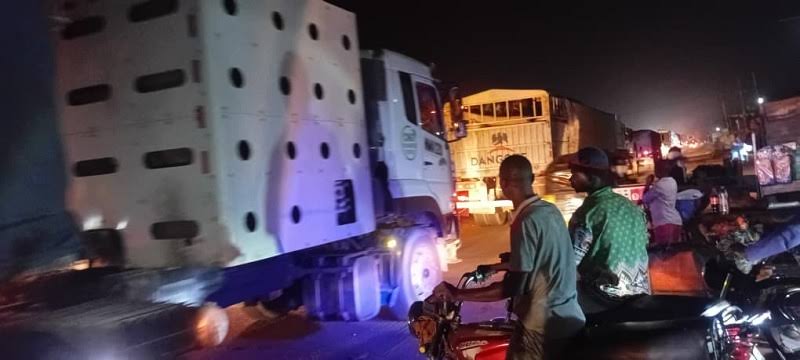
Recurring traffic gridlock on the Abuja–Lokoja highway has again highlighted the growing environmental consequences of Nigeria’s fragile transport infrastructure, as thousands of vehicles were trapped for hours on Sunday, January 18, 2026.
Travellers moving from Lagos and other southern states toward northern Nigeria reported near-complete traffic paralysis, with delays lasting up to eight hours for some passengers.
Others said they spent close to two days on the road, burning fuel continuously while vehicles remained stationary.
The incident came only weeks after a similar gridlock in December, when motorists were stranded overnight along the same corridor despite official claims that traffic flow had been restored.
Lokoja occupies a strategic position in Nigeria’s transport system, linking the south, north and eastern regions of the country.
However, its limited road capacity has failed to match rising vehicle numbers, heavy-duty truck movement and seasonal travel surges.
Each disruption quickly escalates into prolonged congestion, leaving thousands of idling vehicles emitting exhaust fumes into the atmosphere.
Environmental experts warn that such gridlocks significantly increase carbon emissions, air pollution and fuel wastage.
They note that hours of stationary traffic release avoidable greenhouse gases that worsen climate change while degrading local air quality.
Travellers described the experience as physically exhausting and environmentally troubling, with thick fumes hanging over long stretches of the highway.
As night fell, concerns grew not only about personal security but also about prolonged exposure to polluted air.
Commercial drivers attributed the congestion to broken-down vehicles, narrow road sections and the absence of alternative routes.
A driver explained that once movement is obstructed in Lokoja, there is no bypass to divert traffic.
Sources familiar with the Ganaja axis suggested that disruption linked to nearby water infrastructure may have worsened the delays, though authorities have yet to issue an official statement.
In previous incidents, the Federal Road Safety Corps has cited traffic volume and obstructions as major causes, often deploying personnel to manage vehicle flow.
Transport and environmental analysts argue that traffic control alone cannot address the deeper sustainability problem.
They stress that Nigeria’s dependence on overstretched highways, limited rail freight options and weak urban transport planning continue to intensify environmental damage.
Prolonged gridlocks also contribute to noise pollution, increased roadside waste generation and stress on nearby communities.
Observers warn that without long-term solutions such as bypass roads, efficient freight rail systems and climate-smart transport planning, Lokoja will remain an emissions hotspot.
Although traffic gradually eased after several hours, the environmental impact lingered long after vehicles moved.
The recurring Lokoja gridlock has once again raised urgent questions about Nigeria’s commitment to environmentally sustainable transportation and climate-resilient infrastructure.
