

By Obiabin Onukwugha
Recently civil society organisations are turning to building capacity for local communities on soil and eco system restoration.
This is coming amid asset divestment by major multinationals in the Niger Delta region. Host communities in the region, which has suffered decades of pollution, are left to suffer the impacts. Farmers suffer low crop yield with polluted water and air.
To provide solution, a civil society organisation, Kabetkache Women Development Resource Centre, is leading women action on ecosystem restoration and soil treatment.
With this, Kabetkache has embarked on capacity building on how local communities can treat their soil, while waiting for proper remediation.
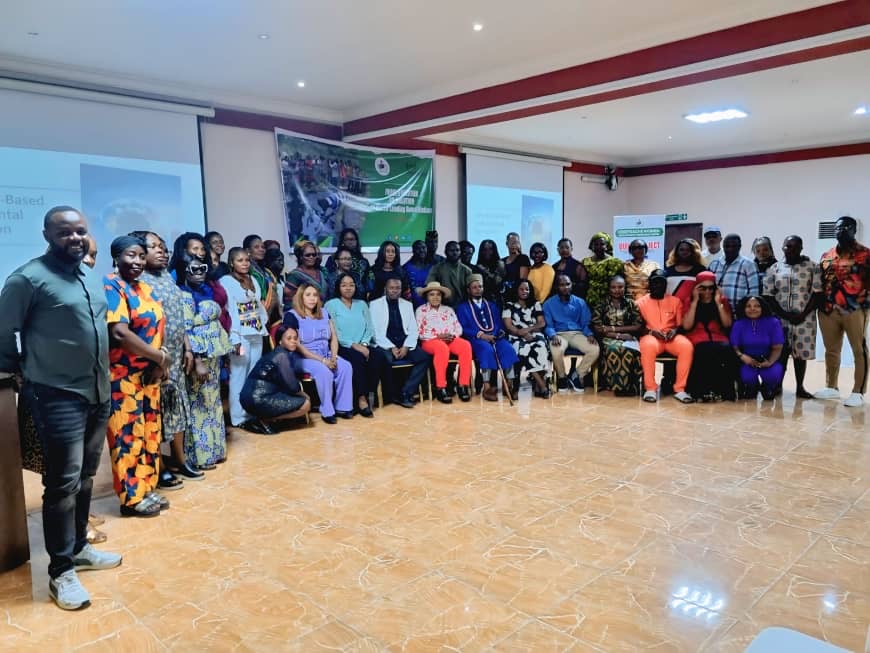
The two-days training, which took place in Port Harcourt, Rivers State capital, attracted participants from Bayelsa, Akwa Ibom and Rivers States. Participants were exposed to the knowledge of detecting and reporting oil spills by personnel of the National Oil Spills Detection and Response Agency (NOSDRA).
The participants also shared experiences of how pollution have impacted on their environment and farmlands.
Speaking with journalists shortly after a practical session at a remediation site at Baraliagbo, Norkpo community, Tai local government area, Executive Director, Kabetkache Women Development Resource Centre, Dr. Emem Okon, emphasised that women play critical role in remediation, noting that they are mostly impacted by pollution.
“We were on a training, learning what remediation is and how to carry it out. And also, finding out, is there something community can engage in, is it something women can engage in. And why are we doing this, we have been campaigning and advocating for environmental remediation in the Niger Delta.
“We have campaigned against the pollution, we have campaigned for ecosystem restoration and we also know that women have critical roles to play in protecting the environment and also to promote environmental sustainability.
“So this is part of the process of enhancing what we have been doing, gaining capacity, gaining knowledge, acquiring skills on how to contribute to ecosystem restoration. So that is why we have to take this step to learning more, and what can we do as civil society organisations, what can we do as communities. So we have gone through this with NOSDRA yesterday having the class room discussions and today being in the field to observe how it’s being done,” she said.
Okon mentioned that the peogram is the beginning of series of trainings for communities. “This two days is not enough but it’s just the beginning of a process. So more actions will come because you cannot say within 48 hours you have been able.to learn all there is about remediation. This is just an introductory aspect. So expect more actions, expect more activities and demonstrations within the communities,” she stated.
Some of the participants who spoke, lauded the initiate by the Kabetkache Women Development Resource Centre.
Henry Eferebo, a participant from Obele community in Emohua local government area of Rivers State, expressed happiness about the knowledge gained.
“I am very happy that Kabetkache Women Development Resource Centre is setting a pace for all the activists and the NGOs in the Niger Delta. It’s not all about advocating that our lands have been polluted, it’s also about knowing what it takes to clean up he environment. I will advocate and request that communities should key into this type of activities that Kabetkache has started by actually setting up their indigenes, especially women to understand the rudiments in cleanup processes. Because it will come to the point where communities and individuals can begin to plan, especially when the spill is not much.
“You see what has happened during divestment. The company has polluted the environment and has sold to Renaissance and left. Renaissance has gone into the communities, just like ExxonMobil, Agip and the likes of them. They have not told the community what they ought to do to clean up the places. And the communities, if you leave these pollution within you, it will impact on a lot of people.
“So we’ve seen that if it is what the people can easily carry out to ensure that the environment is restored within their confines, especially when the pollution is not much, they could easily do something to the land to ensure that you restore it.
“In as much as we encourage the government and regulators to mandate these companies to do what is necessary we should also play a part to see that our environment is restored as community people.
Gloria Alexander, from Ibeno community, Akwa Ibom State, mentioned that one of the striking things she learnt in course of this training, is that every farmer is a recreator.
“So, going back as a community leader, one of the things I’m going to really advocate especially among the locals, especially women, is to let them know that as a woman, as long as you are a farmer you can start the process of remediating your land. You don’t wait for any agency or to come and help you. You start the process. As long as you are a farmer you can do it,” she stated.
During the practical session at the remediation site, personnel of NOSDRA and Renaissance Africa Energy company, explained the practical steps in clean up and remediation in the event of pollution.
