

By Abbas Nazil
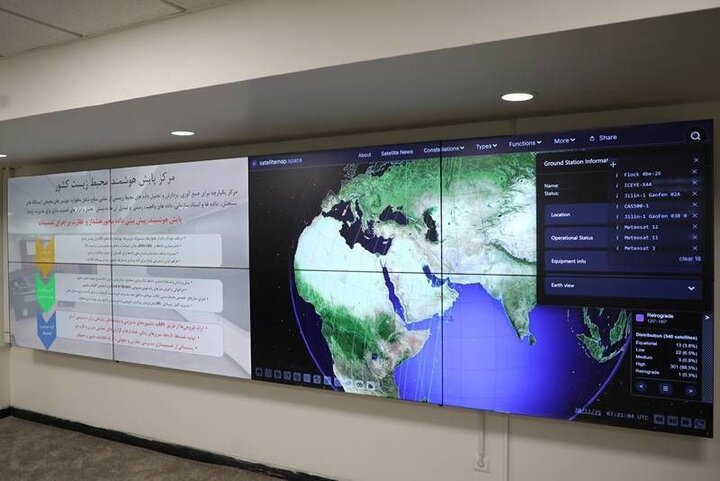
The Department of Environment (DOE) in Iran has launched a smart monitoring center designed to deliver real-time environmental data and improve disaster risk management, marking a major shift from traditional field monitoring to technology-driven ecosystem oversight.
The center, inaugurated on Sunday, uses smart sensors, artificial intelligence, and big data analysis to collect, process, and analyze environmental information instantly, enabling faster and more accurate responses to ecological changes.
According to IRIB, the system replaces conventional methods that depend on physical sampling, manual field visits, and periodic measurements, which are often slow, labor-intensive, costly, and susceptible to human error.
While physical monitoring remains essential for validating data and understanding actual on-site conditions, it is no longer sufficient for the scale and speed required in sustainable environmental management.
Smart monitoring allows continuous, automated data collection and supports the rapid identification of pollution sources, contamination spread, and ecosystem stress, ultimately improving resource management and preservation efforts.
The initiative aligns with broader national goals to strengthen resilience in the face of climate change.
Speaking earlier at a national conference on natural resource conservation held in Tehran on March 9, DOE chief Shina Ansari emphasized that Iran must develop adaptation strategies and foster cooperation among institutions to mitigate escalating environmental pressures.
Ansari noted that one-third of global natural resources has been lost over the past century, and Iran has experienced both quantitative and qualitative depletion driven by multiple factors.
She explained that the DOE is valuing 64 percent of the country’s sensitive ecosystems to better understand their economic worth beyond timber and land value.
The assessment includes key non-market services such as carbon storage, soil protection, biodiversity habitats, and water regulation, which are often overlooked in development planning.
Ansari stressed that recognizing natural capital is essential for making informed decisions balancing economic growth and ecological stability.
She also underscored the need for environmental education, community engagement, restoration of degraded lands, sustainable forest management, and wider use of modern technologies such as smart monitoring.
The DOE further reported progress in stabilizing 2.5 million hectares of sand and dust storm hotspots over six years, with cooperation from national watershed and natural resource agencies.
Ali-Mohammad Tahmasbi, an official with the DOE, stated that sand and dust hotspots span 35 million hectares across 23 provinces, generating widespread dust pollution.
He highlighted the stabilization of 120,000 hectares in the southeast as a key success, citing it as evidence of strong inter-agency coordination.
Tahmasbi added that effective sand and dust mitigation must consider local soil, climate, water availability, and scientific parameters to achieve sustainable results.
