

By Barbara Nwaiwu
Millions of people across some of the world’s most vulnerable regions are expected to face worsening hunger between June and November 2026, as conflict, economic shocks, climate pressures and declining humanitarian funding deepen food crises.
This warning is contained in the latest Hunger Hotspots Report jointly released by the Food and Agriculture Organisation (FAO) and the United Nations World Food Programme (WFP) through the Global Network Against Food Crises (GNAFC).
The report identified 13 countries and territories where acute food insecurity is projected to deteriorate during the period under review, with Sudan, South Sudan, Yemen and Palestine remaining the world’s most critical hunger hotspots.
Northeast Nigeria and Somalia were newly elevated into the category of highest concern following worsening conditions and increasing famine risks.
According to the report, projections indicate that populations in Borno State may experience Catastrophe levels of acute food insecurity during the period covered.
In Northeast Nigeria, about 15,000 people are projected to face Catastrophe (CH Phase 5) conditions between June and August 2026, while approximately 2.3 million people remain internally displaced across the region.
The report identified conflict and violence as the leading drivers of acute food insecurity, affecting 12 of the 13 hotspots.
It stated that these conditions are being intensified by economic pressures, severe humanitarian funding shortfalls and the growing threat of an anticipated El Niño event expected to trigger uneven rainfall, drought and flooding across already vulnerable regions.
FAO and WFP warned that funding support for food assistance, emergency agricultural interventions and nutrition responses declined by an estimated 59 per cent between 2022 and 2025, returning to levels last recorded nearly a decade ago.
At the same time, the number of people facing high levels of acute food insecurity across the identified countries has risen to approximately 266 million.
FAO Deputy Director-General, Beth Bechdol, said urgent and early action remains necessary to prevent the situation from worsening.
“We already know where the next hunger emergencies will occur. The challenge is whether we act early enough and at the necessary scale. When farmers cannot plant, herders lose their animals and markets are disrupted, food insecurity deepens quickly.”
“Early investment in emergency agricultural assistance and resilience is one of the most cost-effective ways to protect livelihoods, sustain local food production and reduce future humanitarian needs.”
The Acting Executive Director of WFP, Carl Skau, said the findings of the report required immediate global attention.
“The warnings in this report cannot be ignored. Conflict, shocks, and disasters are forcing families to make impossible decisions about who gets to eat and who goes to bed hungry.”
“Without action now, millions more are expected to face worsening levels of hunger in the months ahead, pushing some closer to famine. Our teams are ready to respond at speed and scale. We need resources to deliver food and access to reach people before hunger turns into catastrophe.”
The report noted that additional pressures are worsening food insecurity, including spillover effects from conflict in the Middle East and the Ebola outbreak affecting parts of eastern Democratic Republic of the Congo, both of which continue to disrupt livelihoods, markets and humanitarian operations.
In Sudan, famine risks remain severe, with 14 areas across North Darfur, South Darfur and South Kordofan identified as facing famine conditions through September 2026.
The report stated that an estimated 19.5 million people, representing 41 per cent of Sudan’s population, experienced high levels of acute food insecurity through May 2026.
South Sudan is projected to have 7.8 million people, representing 55 per cent of its population, facing Crisis or worse levels of food insecurity between April and July 2026.
In Yemen, earlier estimates projected that 18.3 million people would experience crisis-level hunger or worse during 2026.
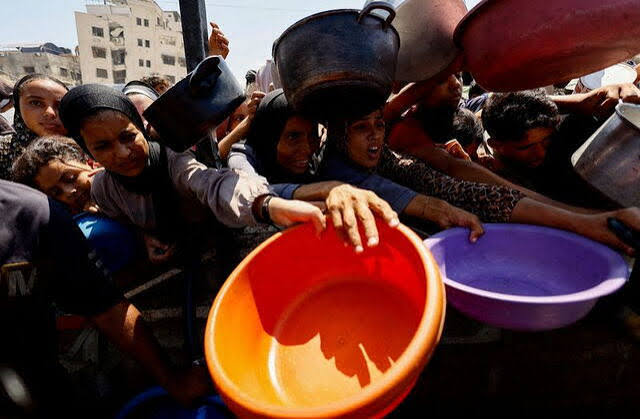
Meanwhile, conditions in Palestine’s Gaza Strip improved following the October 2025 ceasefire but remained fragile, with about 1.6 million people requiring urgent food assistance.
Somalia was also elevated to the highest-risk category, with approximately six million people projected to face severe food insecurity and famine risks identified in Burhakaba District.
Other countries identified as hotspots include Afghanistan, Democratic Republic of the Congo, Haiti, Myanmar, Mali, Lebanon and Madagascar.
FAO and WFP called for urgent and coordinated international action to expand humanitarian support, protect livelihoods, improve access to vulnerable communities and strengthen resilience.
The agencies stressed that acting early remains more cost-effective than responding after hunger crises escalate and warned that without stronger political commitment, predictable financing and collective action, food emergencies could worsen significantly in the coming months.
