

By Awyetu Asabe Hope
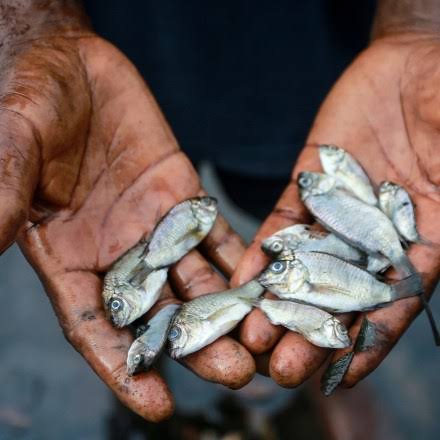
Fishes and periwinkles from Ogoni waters in Rivers state, Nigeria have consumed heavy metals and petroleum hydrocarbons, says a new research facilitated by the Pulitzer Centre Crisis Reporting.
The independent research revealed that the sea foods spread cancer disease and, therefore, unsafe for human consumption
The centre also noted that consumers of such seafood, particularly children, stand the risk of coming down with cardiovascular disorders if nothing is done to halt the development.
The report was made public at a one-day multiple stakeholders engagement by the Centre, tagged, “Restoring Rivers, reviving livelihood, renewing life”, held in Akpor community, Gokana Council area of Rivers state, at the weekend.
The event was attended by HYPREP, Nigeria Oil Spill Regulating Agency (NOSRA), Nigeria’s National Environmental Standards and Regulations Enforcement Agency (NESREA), civil society groups, the academia, media, women and youths.
Speaking at the event, Pulitzer Centre representative, Anuoluwapo Adelakun, said the investigation was inspired by the plights of the locals who reside in the Niger Delta communities.
According to her, “People were constantly going to the river to fish, pick periwinkles, swim and even fetch water for their daily chores while the environment is being cleaned up.
“Most often, some of the catch they made were found to be laced with sludge suspected to be crude oil spill, which they would rinse in the river before taking them home for consumption, or even taken to the markets for sale”, she said.
Expatiating on methods adopted, she said: “It was out of curiosity of the possible health implication of consuming sea food from contaminated water that made us take samples from Bodo, K-Dere, Mogho and Gbee rivers.
“We discovered that while the cleanup is being carried out, people are still engaging with the water, fishing and eating the fish and periwinkle from the river, bathing and fetching the water for use despite the contamination.
“When we discovered this, we took samples of the water and the sediments of the fish and the periwinkle, and it was discovered that there is still high levels of heavy metals and petroleum hydrocarbons in the fish through viral accumulations, in other words, most of the people who are eating the fish, periwinkles and whatever they are catching from the polluted waters are likely to fall very ill in the long run, especially children,”Adelakun told journalists.
Pressed further, Adelakun noted the dialogue was meant to address the critical health issues raised when the team went to the Ogoni communities
She however admitted that HYPREP has clarified that some of the areas the samples were reportedly taken from as the cleanup is ongoing.
Part of the issues she noted was the complaints by the Ogoni indigenes over lack of access, communication gap between them and HYPREP.
In their different presentations, the spokesperson of the affected communities, Chief Nadabel John, Chief Emmanuel Pii and Mrs Grace Namon, expressed worry over the health implications of dwelling in, eating foods and using water from the polluted environments.
Fielding questions from newsmen, Mrs. Namon said, “Most of the things that are happening to us in life we didn’t know it’s as a result of the pollution both in the air, water and the creeks.
The Technical Assistant to the HYPREP Project Coordinator on Shoreline Cleanup, Peter Lenu however disagreed with the claims that fishes and periwinkles picked up by fisher forks were covered in crude, insisting that it is scientifically impossible.
“Talking about fishes, especially periwinkle, fishermen go to pick periwinkles laden in hydrocarbon, fresh crude oil and then they literally have to wash it and then they take it home for eating.
He said scientifically, live periwinkles can not be found in fresh hydrocarbons, “that is an area that we need to set the record straight.”
He cited a UNEP report that revealed: “it will take several years, 25-30 years and the intervention is ongoing, the water quality is improving,” adding that “one of their findings said that the TPH levels in one of the locations sampled was about 277.5 milligram per kilogram.
“Scientifically when you have been able to get that kind of result of 277.5 milligram per kilogram for an area that was so contaminated that the baseline values for the average was over a 20,000 milligram per kilogram, that’s about 98% success in that area, he said.
