

By Obiabin Onukwugha
Former President of the Nigerian Economic Society, Prof. Adeola Adenikinju, has warned that as the world transitions to a low-carbon economy, Nigeria’s hydrocarbons could become stranded assets if we fail to act decisively.
According to him, Nigeria risks being left behind in the ongoing global energy transition if it fails to monetise its oil and gas reserves strategically.
Adenikinju, stated this while delivering a keynote address at the 18th NAEE/International Association for Energy Economics Annual International Conference, themed, “Emerging Geopolitics of Energy: Navigating Global Shifts and Impact on Emerging Countries,” in Abuja on Monday.
Adenikinju said the global energy landscape has become increasingly complex and volatile, shaped by wars, artificial intelligence, and shifting geopolitical alliances.
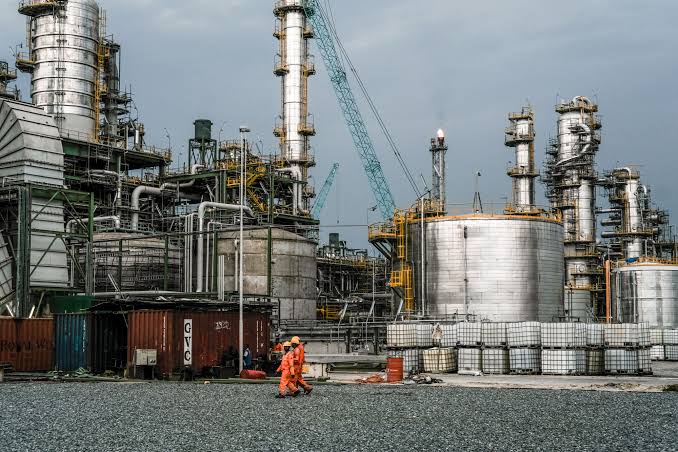
The former Nigerian Economic Society president regretted that Nigeria ranks among the top producers of oil and gas globally, yet over 87 million Nigerians have no access to electricity.
“We are the largest exporter of crude oil in Africa and yet the biggest importer of refined petroleum products. That is an unacceptable paradox.
“The options for Nigerians are very clear. Nigeria must aggressively exploit its huge oil and natural gas reserves as the world transitions away from a carbon-dominated global economy.
“As the energy transition accelerates, the global demand for oil peaks sooner than expected. Nigeria must aggressively exploit its huge oil and gas reserves while simultaneously scaling up investments in solar, hydro, and wind power,” he said.
Adenikinju noted that the war in Ukraine and the “weaponisation of energy” had upended decades of energy interdependence between Europe and Russia, sparking record prices for liquefied natural gas and crude oil.
“Before 2022, the EU relied on Russia for about 40 per cent of its natural gas imports. That figure has fallen drastically as countries scramble for alternative supplies,” he explained, adding that the resulting global shift has revived the age-old question of energy security.
“Policies like the EU Green Deal and the U.S. Inflation Reduction Act are reshaping global supply chains for critical minerals like lithium, cobalt, and copper.
“China currently controls over 80 per cent of global solar panel manufacturing and critical mineral processing. This is forcing countries, especially developing ones, to make tough choices about who to align with.
“The IMF in its July 2025 World Economic Outlook described the global outlook as one of ‘tenuous resilience amid persistent uncertainty.’ This uncertainty fuels volatility in oil and gas markets, deterring long-term investments, especially in developing countries,” Adenikinju said.
The economy expert warned that capital flight and high interest rates could jeopardise large energy projects in countries like Nigeria, saying, “When uncertainty rises, the option value of waiting increases. Developers delay financial investment decisions or demand higher returns.”
Adenikinju said with energy security back on the national agenda, Nigeria should balance profitability with sustainability while positioning itself as a credible player in the new global energy order.
He called on the government to ensure that all Nigerians have access to affordable electricity through solar energy deployment and the removal of barriers to domestic gas access to enhance the distribution and use of Liquefied Petroleum Gas.
