

By Faridat Salifu
Ghana’s cocoa sector is facing a deepening financial and structural crisis as thousands of tonnes of cocoa beans remain unsold, exposing long-standing weaknesses in pricing policy, funding systems and sector governance.
The Chief Executive Officer of the Ghana Cocoa Board (COCOBOD), Mr Randy Abbey, disclosed the situation on Friday, February 6, 2026, at a press conference held at Cocoa House in Accra.
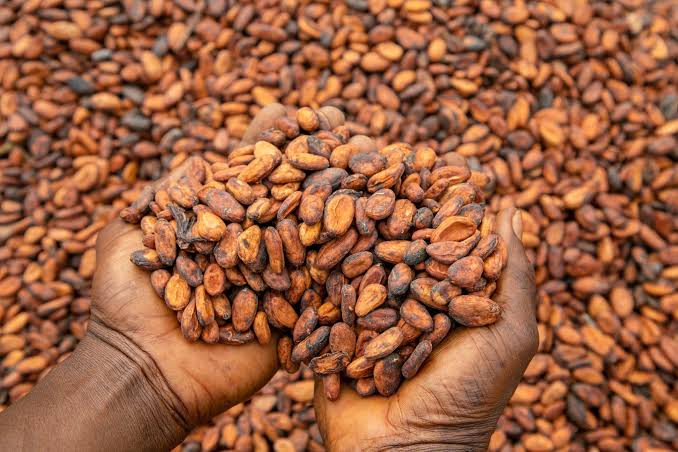
He confirmed that about 50,000 tonnes of cocoa beans are currently stranded with farmers due to Ghana’s uncompetitive farmgate pricing, even as global cocoa prices remain historically high.
Although COCOBOD has sold more than 530,000 tonnes of cocoa in the current season, the pricing structure has made Ghanaian cocoa unattractive to buyers, who are increasingly sourcing beans from alternative markets.
International cocoa prices have risen to about $6,400 per tonne, but the actual crop price is below $4,000, while Ghanaian farmers are guaranteed a much higher share, creating a pricing gap that has weakened Ghana’s competitiveness in the global market.
The situation has compounded financial stress for farmers, many of whom are facing unpaid deliveries and delayed payments, worsening livelihood insecurity across cocoa-producing communities.
Beyond the pricing crisis, COCOBOD is also grappling with a heavy debt burden that is further constraining its ability to stabilise the sector.
Mr Abbey disclosed that COCOBOD’s total debt now stands at GH¢32.91 billion, including a $481 million loan due for repayment in the 2025/26 season for which no financial provision had been made.
He also revealed that the board defaulted on forward sales contracts in the 2023/24 season after failing to deliver 333,760 tonnes of cocoa sold at $2,600 per tonne, a lapse that has cost Ghana an estimated $1 billion in potential revenue following the surge in global prices.
Structural inefficiencies have also undermined rehabilitation efforts in cocoa farms, with only 40,000 hectares completed out of a planned 156,400 hectares under a $350 million rehabilitation loan, despite additional funding injections.
Infrastructure challenges persist, as cocoa road projects have faced repeated budget cuts and stalled assessments, while operational logistics remain constrained by an ageing vehicle fleet, with more than 70 per cent of COCOBOD vehicles classified as overaged.
Sector analysts say the convergence of debt, pricing imbalances, weak infrastructure and outdated legal frameworks has created a fragile system vulnerable to market shocks and farmer distress.
Mr Abbey stressed that long-term recovery will require structural reforms, including a new COCOBOD Act to protect cocoa trees and strengthen sector governance, alongside a new funding model scheduled to take effect from the 2026/27 season.
As Ghana struggles to maintain its position as a leading global cocoa producer, the growing crisis highlights the urgent need for financial restructuring, market competitiveness and institutional reform to safeguard farmer livelihoods and the future of the cocoa economy.
