

By Abbas Nazil
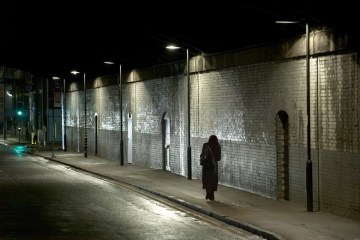
A new study in France has found that switching off public street lighting at night does not lead to a significant rise in crime, challenging widespread concerns about public safety.
The research, conducted by environmental economist Chloé Beaudet of Paris-Saclay University, shows no major increase in delinquency following the implementation of nighttime lighting reductions across various French municipalities.
By analyzing data from the French Ministry of the Interior alongside satellite observations from Cerema, the study concludes that fears linking darkness to higher crime rates are largely unfounded.
The only exception identified was a slight increase in burglaries, estimated at about 0.35 additional cases per 1,000 housing units, primarily in densely populated urban areas.
However, the research found no causal relationship between reduced lighting and other forms of crime, including violent offenses, theft, vandalism, drug-related activity, or vehicle crimes.
Beaudet suggests that public opposition to switching off street lighting is more closely tied to a perceived sense of insecurity rather than actual crime statistics.
The study also examined social attitudes in the Montpellier Metropolis, revealing that residents in densely populated city centers are less supportive of reduced lighting policies compared to those in suburban or peri-urban areas.
In less dense areas, where people rely more on vehicles and use public spaces less at night, residents tend to accept lighting reductions more readily.
The findings indicate that public lighting policies should not be applied uniformly but instead tailored to specific neighborhoods or even individual streets to reflect local needs and perceptions.
Beyond safety concerns, the research highlights the environmental importance of reducing light pollution, which has significant impacts on biodiversity and ecosystems.
Experts note that simply turning off lights is not the only solution, as some species are most active at dusk, requiring more nuanced approaches.
Alternative measures include directing light downward to prevent skyglow, reducing light intensity, and using warmer-colored lighting that is less disruptive to wildlife.
The study also points to the role of businesses and commercial establishments, noting that illuminated shop signs and displays contribute significantly to light pollution despite existing regulations requiring them to be switched off after hours.
France has made progress in modernizing its public lighting infrastructure, with increasing adoption of LED technology and reduced energy consumption, contributing to lower overall environmental impact.
National data shows that public lighting accounts for a small share of total electricity use, but ongoing reforms aim to further reduce consumption and light pollution levels.
Researchers emphasize that balancing environmental goals with public perception will be key to the success of future lighting policies.
