

BY Abbas Nazil
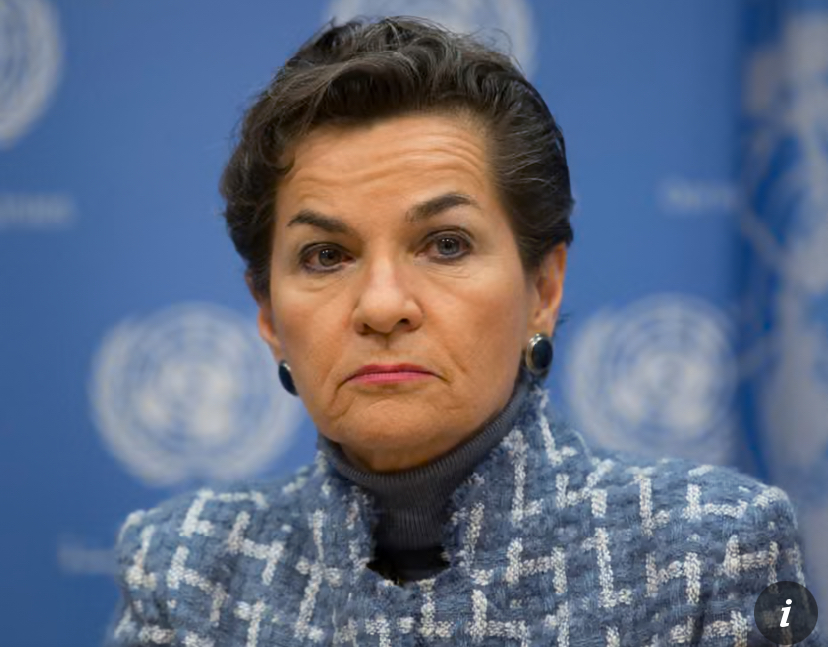
Former United Nations climate chief Christiana Figueres has urged the Australian government to adopt a greenhouse gas emissions reduction target of at least 75% by 2035, arguing it would be better for the economy and strengthen Australia’s chances of hosting a major UN climate summit.
Figueres, who helped broker the 2015 Paris Agreement as executive secretary of the UN Framework Convention on Climate Change, said such an ambitious target would not be a burden but “Australia’s ticket into the prosperity of the future.”
Her intervention comes as the Albanese government prepares to announce its updated climate commitment next month, before the prime minister attends the UN general assembly in New York.
The Climate Change Authority, chaired by former New South Wales treasurer Matt Kean, has not yet delivered its formal advice, but an earlier consultation paper suggested that a 65% to 75% cut below 2005 levels could be both ambitious and achievable with stronger action across society.
According to Figueres, adopting a 75% target would show leadership to Pacific Island nations and demonstrate that Australia is ready to play a central role in global clean energy and green industry.
She added that the goal could improve Australia’s bid to co-host COP31 in Adelaide in November 2026, where it is competing against Turkey.
Business leaders have also backed a 75% cut.
A report commissioned by the Business for 75% group – supported by companies including Atlassian, Fortescue, Canva, Ikea and Unilever – projected that such a target could boost national GDP by $370bn by 2035 compared to current forecasts.
A separate report by Climate Analytics to be released Monday is expected to argue that Australia should reduce emissions by about 81% by 2035, within a range of 76% to 89%, to align with the Paris Agreement’s 1.5C warming limit.
Bill Hare, the group’s chief executive, said achieving a reduction within the 75% range was technically and economically feasible, and that the main barriers were political rather than practical.
He stressed that other countries would be watching closely as Australia sought credibility in its Cop31 hosting bid alongside Pacific partners.
Despite this, some experts are more cautious.
Frank Jotzo, director of the Centre for Climate and Energy Policy at the Australian National University and a government climate adviser, said even a target in the 60s would be ambitious given Australia’s slow progress so far.
He explained that meeting a 65% goal would mean halving emissions in a decade, requiring major policy interventions in industry, agriculture, and transport, where pollution has been rising, and faster progress in electricity, where improvements have been stronger.
Jotzo emphasised that whatever target is chosen must be backed by credible implementation strategies to be seen as possible.
Climate change minister Chris Bowen has suggested the government may set a target range rather than a single figure, to allow flexibility in how the transition is managed.
Meanwhile, pressure is mounting from both domestic and international stakeholders, with the International Court of Justice advising that governments are obliged to take measures consistent with the 1.5C limit.
Some activists have pushed for net zero by 2035, though most experts argue such a timeline would be logistically unrealistic.
Still, Figueres and her allies maintain that aiming high is not only achievable but necessary if Australia is to secure long-term economic gains, protect vulnerable communities, and prove itself a leader in global climate action.
