

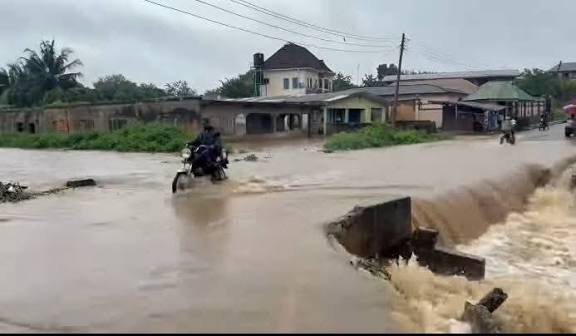
A non-governmental organisation, Safe Water Global Initiative, has raised alarm over growing health risks in flood-affected parts of Nigeria, citing widespread water source contamination and a lack of access to safe water.
Speaking in Abuja on Thursday, the organisation’s founder, Mr. Francis Uzoma, told the News Agency of Nigeria (NAN) that many communities, especially in rural areas, are now dependent on unsafe water for drinking and domestic use — a situation that could trigger outbreaks of cholera and other waterborne diseases.
“The implication of the flooding is that some Nigerians will have access only to unsafe water,” Uzoma warned.
“This has consequences for their health… That is the danger we are pointing out.”
He called for urgent action, including the relocation of people from flood-prone areas and the provision of water, sanitation, and hygiene (WASH) facilities to mitigate public health risks.
He noted that while the government had previously issued flood warnings, many communities failed to take them seriously, resulting in preventable damage and health threats.
“Unfortunately, some communities do not take them seriously, maybe thinking the flooding will not happen,” he said.
“But these are scientific warnings, and we are urging local governments and communities to heed them so that we do not lose precious lives.”
Highlighting Nigeria’s seasonal flooding patterns, Uzoma said heavy rains between July and September increase the urgency of preemptive action.
He stressed that once the floods recede, water sources should be treated and monitored for quality before use is resumed.
Uzoma also criticised the long-standing failure to provide rural communities with reliable water infrastructure, stating that water access is a fundamental human right.
He urged all levels of government to prioritise clean water supply, especially now that local governments receive direct federal allocations.
He further called on private companies and development partners to direct corporate social responsibility initiatives toward WASH programs.
According to Uzoma, several organisations already have strong policies and only need to scale up their interventions to meet growing community needs.
He praised ongoing partnerships with the Ministry of Water Resources and Sanitation, as well as the efforts of state governments and the media, but insisted that more must be done to reach underserved rural populations.
In linking the issue to Nigeria’s global obligations, Uzoma noted that the country is lagging behind in achieving Sustainable Development Goals (SDGs) 6.1 and 6.2, which relate to clean water and sanitation.
He emphasised that ending open defecation and improving public health depend on adequate investment in water infrastructure.
Uzoma appealed to religious institutions, civil society, multinational corporations, and financial institutions to contribute to the effort, adding: “If all stakeholders do a little within their own areas, the cumulative effect will be significant. Collaboration is the only way forward.”
NAN
