

By Abdullahi Lukman
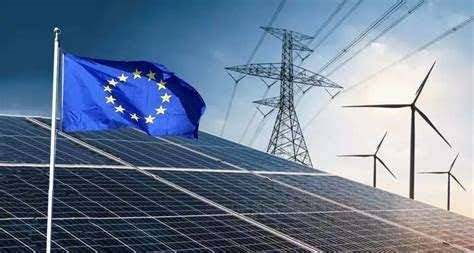
The European Union (EU) has awarded Nigeria more than €200 million in grants to expand renewable energy access, aiming to provide electricity to five million Nigerians.
This announcement was made by Godfrey Ogbemudia, Programme Manager for Energy & Circular Economy at the EU Delegation to Nigeria and ECOWAS, during a stakeholder engagement for the Nigeria Electricity Supply Industry (NESI), organized by the National Power Training Institute of Nigeria (NAPTIN).
Ogbemudia noted the EU’s longstanding partnership with Nigeria in the power sector.
Since 2008, the EU has invested over €200 million in grants focused on policy regulation, capacity building, and facilitating access to finance for stakeholders in both the public and private sectors.
Ogbemudia detailed the EU’s latest initiative, a renewable energy package worth approximately €100 million.
This program is designed to improve access to clean energy through innovative financing, technical assistance, and the development of new energy infrastructure.
The EU is also assisting the Nigerian government, through the Ministry of Power, in creating a roadmap and action plan for wind energy, with an on-site wind study scheduled to begin soon.
In addition to wind energy, the EU is collaborating with the United Nations Industrial Development Organization (UNIDO) on small hydropower projects.
Ogbemudiq pointed out that the first small hydropower project at Balanga Dam in Gombe State is under construction, with a planned hybrid system combining 320 kW of hydropower and 300 kW of solar power.
The project is expected to go live by June 2026, with more similar projects planned across the country.
The Director General of NAPTIN, Ahmed Bolaji, emphasized the importance of addressing the human capital gap in Nigeria’s power sector.
He noted that while Nigeria’s power sector has significant growth potential, success depends on a skilled, adaptable, and sustainable workforce.
Identifying and bridging skills gaps is critical for the success of technical upgrades and market reforms in the sector.
