

By Abdullahi Lukman
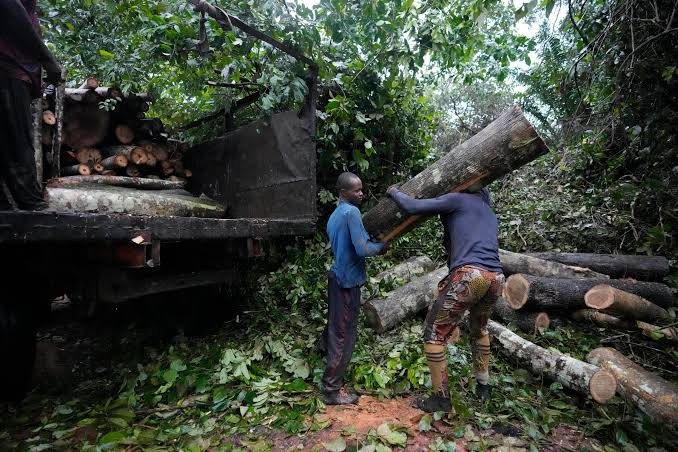
A new study warns that deforestation across Ghana, Niger, and Nigeria is intensifying West Africa’s water crisis, putting the health and livelihoods of more than 122 million people at risk.
The joint report by WaterAid and Tree Aid, covering 2013–2025, links forest loss to declining freshwater quality and quantity.
It finds that for every 1,000 hectares of forest cleared in Niger and Nigeria, 9.25 hectares of surface water disappear, increasing communities’ vulnerability to disease, food insecurity, and dehydration.
In Niger, 99.5 percent of freshwater is already unsafe for direct consumption, a situation worsened by deforestation.
Experts highlight the compounded effects of climate change, noting that rising temperatures, erratic rainfall, and extreme weather accelerate deforestation and degrade water sources.
The report estimates that 45 percent of people in the three countries now live in areas of high water risk, with roughly 85.6 million Nigerians affected by surface water loss linked to vegetation clearance.
The study also points to small successes, such as Niger’s reforestation of over 100,000 hectares since 2013, which could restore more than 1,000 hectares of surface water.
Researchers stress the importance of inclusive forest governance and reforestation efforts that balance environmental protection with local needs.
Released ahead of the COP30 climate summit in Belém, Brazil, the report urges governments to integrate forest and water protection into climate finance commitments, warning that tackling these crises separately is “doomed to failure.”
