

By Abbas Nazil
Deforestation has been linked to more than half a million deaths in tropical regions over the past two decades, according to a groundbreaking study published in Nature Climate Change.
The research found that land clearance in tropical rainforests such as the Amazon, Congo Basin, and Southeast Asia has led to dangerous local temperature increases, causing an estimated 28,330 heat-related deaths each year between 2001 and 2020.
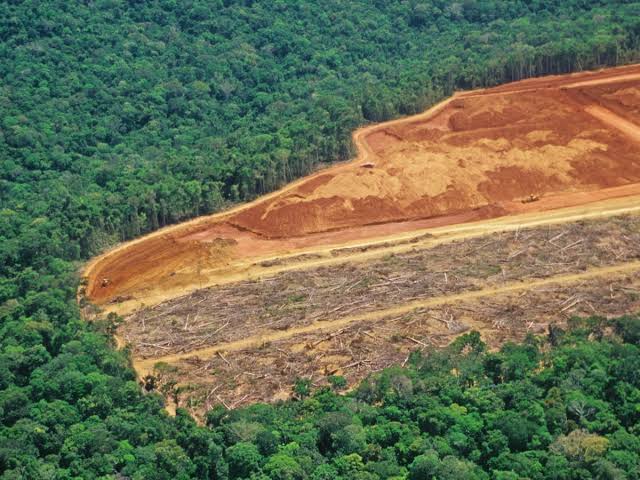
Scientists discovered that the removal of forest cover reduces shade, decreases rainfall, and increases the risk of fires, all of which contribute to hotter local climates.
The study revealed that deforestation is responsible for more than one-third of the warming directly experienced by people living in these regions, on top of broader global climate change impacts.
In total, about 345 million people across the tropics were affected by localized deforestation-driven warming during the study period.
Of these, 2.6 million people experienced an additional 3°C of heat exposure, a level that often proved deadly for vulnerable communities.
The regional distribution of deaths showed Southeast Asia bearing the highest toll, with more than half of the fatalities, due largely to dense populations living in heat-vulnerable conditions.
Roughly one-third of the deaths occurred in tropical Africa, while the remaining cases were concentrated in Central and South America.
Previous studies had already documented that cutting and burning forests creates long-term local warming.
However, this study is the first to provide a global estimate of resulting mortality, connecting environmental destruction directly to human lives lost.
Professor Dominick Spracklen of the University of Leeds, one of the study’s authors, stressed that the findings carry an urgent message: “Deforestation kills.”
He emphasized that while climate debates often focus on global carbon emissions and market-driven land expansion, the immediate and deadly local consequences of forest clearance are too often overlooked.
He pointed to Brazil’s Mato Grosso region as an example, where vast areas of forest have been cleared for soybean plantations.
Farmers there are pushing to end the Amazon soy moratorium to expand agricultural land, yet the research shows such actions could worsen heat stress and mortality for local communities.
Spracklen explained that keeping forests intact not only helps mitigate global climate change but also directly safeguards local populations by regulating temperature, increasing rainfall, and supporting agriculture.
Forests, he argued, are not passive landscapes but active systems that sustain life and livelihoods.
The authors conclude that preserving tropical forests should be seen not only as an environmental priority but also as a public health necessity.
By reducing heat exposure and preventing thousands of avoidable deaths annually, forest protection policies can save lives while also supporting food security and ecological stability. END
