

By Abdullahi Lukman
Climate-related disasters have forcibly displaced 250 million people worldwide over the past decade — an average of 70,000 people every day, according to a new report by the UN Refugee Agency (UNHCR).
Consequently, the global agency urges world leaders at the ongoing COP30 summit in Brazil to discuss the displaced population among the summit’s most-critical global climate issues of concern.
The figure includes people who have been uprooted multiple times due to floods, storms, droughts, and extreme heat, as well as slower-onset crises like desertification and rising sea levels that threaten food and water security.
By mid-2025, the number of people displaced by war, violence and persecution had reached 117 million, with the UNHCR warning that the climate emergency is sharply worsening this humanitarian crisis.
Describing the climate crisis as a “risk multiplier,” the agency said it deepens existing inequalities and instability in communities already affected by conflict and displacement.
The report, No Escape II: The Way Forward , found that the number of countries experiencing both conflict- and disaster-related displacement has tripled since 2009.
Despite this, fragile and conflict-affected nations hosting refugees receive only about a quarter of the climate finance they need.
Refugees and internally displaced people—many living in high-risk areas—are among those most exposed to the escalating climate crisis despite contributing minimally to global emissions.
In 2024, one-third of all emergencies declared by UNHCR were linked to floods, droughts, wildfires and other extreme weather events.
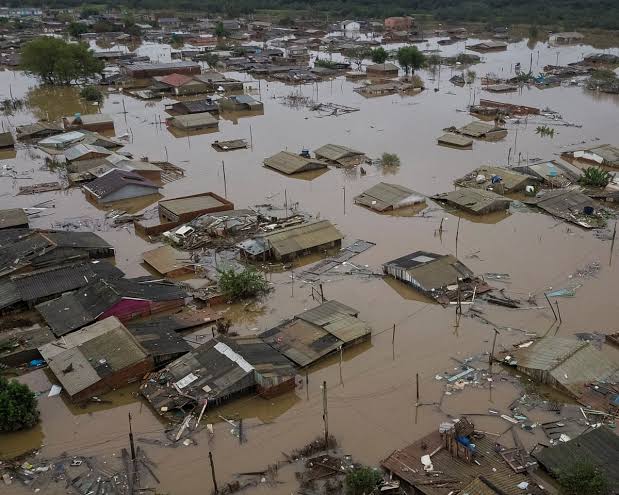
Recent examples illustrate the growing danger: in Brazil’s Rio Grande do Sul, severe flooding in 2024 displaced 580,000 people, including 43,000 refugees from Venezuela, Haiti and Cuba.
A year earlier, Cyclone Mocha devastated Myanmar’s Rakhine State, leaving tens of thousands of Rohingya refugees without shelter or livelihoods.
Three-quarters of displaced people now live in countries with high or extreme exposure to climate hazards.
In Chad, floods in 2024 forced more than 1.3 million people from their homes — exceeding the combined total of the previous 15 years — while Sudanese refugees received less than 10 litres of water per day.
Nearly half of the world’s displaced people are trapped in fragile states such as Sudan, Syria, Haiti, the Democratic Republic of the Congo, Lebanon, Myanmar and Yemen.
These countries contribute little to global greenhouse gas emissions yet face some of the most severe climate impacts and receive the least adaptation funding.
The UNHCR warns that without urgent global action, conditions will worsen dramatically.
By 2050, some refugee camps could face up to 200 days of dangerous heat stress each year, making many areas potentially uninhabitable.
UN High Commissioner for Refugees Filippo Grandi urged world leaders and negotiators at COP30 in Brazil to prioritize displaced populations in climate planning.
“Funding cuts are severely limiting our ability to protect refugees and displaced families from the effects of extreme weather,” he said.
“If we want stability, we must invest where people are most at risk.
This COP must deliver real action, not empty promises.”
