

By Abbas Nazil
The world has far fewer places to securely store carbon dioxide underground than previously believed, according to a new study that raises serious doubts about the long-term role of carbon capture and storage in fighting climate change.
The research, published in the journal, Nature, found out that global storage potential is about ten times less than earlier estimates once areas vulnerable to leaks, earthquakes, or groundwater contamination are excluded.
That means carbon capture and storage could only reduce human-caused warming by around 0.7 degrees Celsius, a steep drop from past estimates suggesting a reduction of 5 to 6 degrees.
Lead author, Matthew Gidden, a research professor at the University of Maryland’s Center for Global Sustainability, said the findings highlight the urgent need to cut emissions quickly rather than relying heavily on storage.
He described carbon storage as a limited tool and stressed that reducing emissions as fast and as soon as possible remains the most effective solution.
The study was led by the International Institute for Applied Systems Analysis, where Gidden also works as a senior researcher in the energy, climate and environment program.
For decades, the oil and gas industry has promoted carbon capture and storage as a viable solution to global warming, drawing billions of dollars in investments.
Yet despite years of development, only a tiny fraction of the billions of tons of carbon dioxide released annually is currently being captured.
The 2015 Paris Agreement set targets of limiting global temperature rise to 2 degrees Celsius above pre-industrial levels, ideally 1.5 degrees.
Many scenarios depended heavily on carbon removal and underground storage because past estimates assumed vast storage potential without fully considering risks to people and the environment.
Study co-author Alexandre Koberle, a researcher at the University of Lisbon, said this was the first attempt to systematically identify and rule out unsuitable areas, resulting in a “prudent potential” figure for safe storage.
He argued that limited storage must be prioritized for sectors difficult to decarbonize, such as cement production, aviation, and agriculture, rather than being used to extend the life of coal and oil facilities.
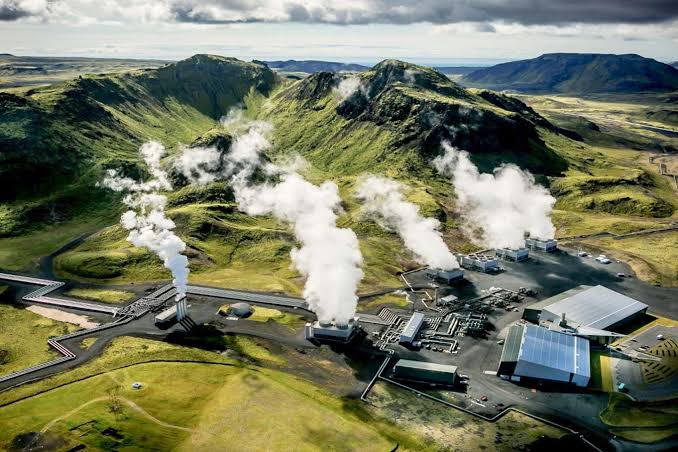
Industry groups continue to defend the practice, arguing that storage carries low risks and emerging technologies, like injecting carbon dioxide into basalt formations where it mineralizes, could expand future capacity.
Jessie Stolark, executive director of the Carbon Capture Coalition, said the technology is not optional if the world hopes to meet climate goals, but must be paired with emission reductions and energy security.
Rob Jackson, who heads the Global Carbon Project, welcomed the study’s cautious approach but warned that cost remains a huge barrier.
He expressed doubt that societies will be willing to pay for large-scale removal in the future if they are not willing to cut emissions today.
Carbon dioxide from fossil fuels traps heat for centuries, driving global warming.
It can be captured at smokestacks or directly from the air and injected deep underground into saline formations, unmineable coal seams, or basalt.
However, about three-quarters of captured carbon is currently pumped into oil fields to boost extraction, undermining its climate benefits.
In the United States, critics from across the political spectrum have questioned carbon capture projects, describing them as either too expensive or as lifelines for fossil fuel producers.
Most facilities capture around 60% of their carbon dioxide emissions, but achieving higher rates quickly becomes much harder and costlier.
Gidden said basalt storage looks promising for the future, but warned that waiting for it to scale up before slashing emissions would burden future generations with limited options.
He cautioned that banking too much on storage risks leaving people in the future with an impossible challenge of managing today’s pollution along with far fewer solutions.
